
© Dior
© Dior
© Dior
Dior
In his personal diary, Christian Dior describes the Utamaro and Hokusai prints hanging on the staircase of his house in Granville as "my Sistine Chapel." He had never set foot in Japan. In 1952, he named a dress in his collection "Tokio." In 1953, he ordered silks from the Tatsumura Bijutsu Orimono atelier in Kyoto, became the first haute couture House in the world to show in Japan — in Tokyo, Osaka, Kyoto and Nagoya — and created an ensemble named "Jardin Japonais." The relationship between Dior and Japan did not begin with a boutique. It began in the imagination of a man who had a personal Sistine Chapel hanging on a staircase in Normandy.
The History · What Monsieur Dior Wanted From Japan
Christian Dior was the first Western couturier to understand that Japan was not a commercial destination but an aesthetic conversation. His house in Granville, Normandy, was adorned with Japonismes — prints, textiles, screens — that he had been accumulating since childhood. "I think my first vocation should have been as a Japanese painter," he wrote. This fascination was not decorative. It infused his collections from the early nineteen-fifties onward — in the lightness of volume, in the care of finishing, in the way a dress could exist simultaneously as a garment and as an object. In 1952, he named a dress "Tokio" without having been there. In 1953, fabric samples from Japan reached him as part of a promotional effort to boost Japanese silk exports. Among them, a brocade from the Tatsumura Bijutsu Orimono house in Kyoto captured his attention. He ordered it, made it into an ensemble he named "Outamaro" — a reference to the printmaker Utamaro — and decided to show in Japan that same year. In the autumn of 1953, a hundred models from his Paris collection were presented in Tokyo, Nagoya, Kyoto and Osaka. Dior was the first haute couture House in the world to do this. It was not an expansion strategy. It was an act of admiration.
The Tatsumura Atelier · The 1953 Brocade Recreated In 2025
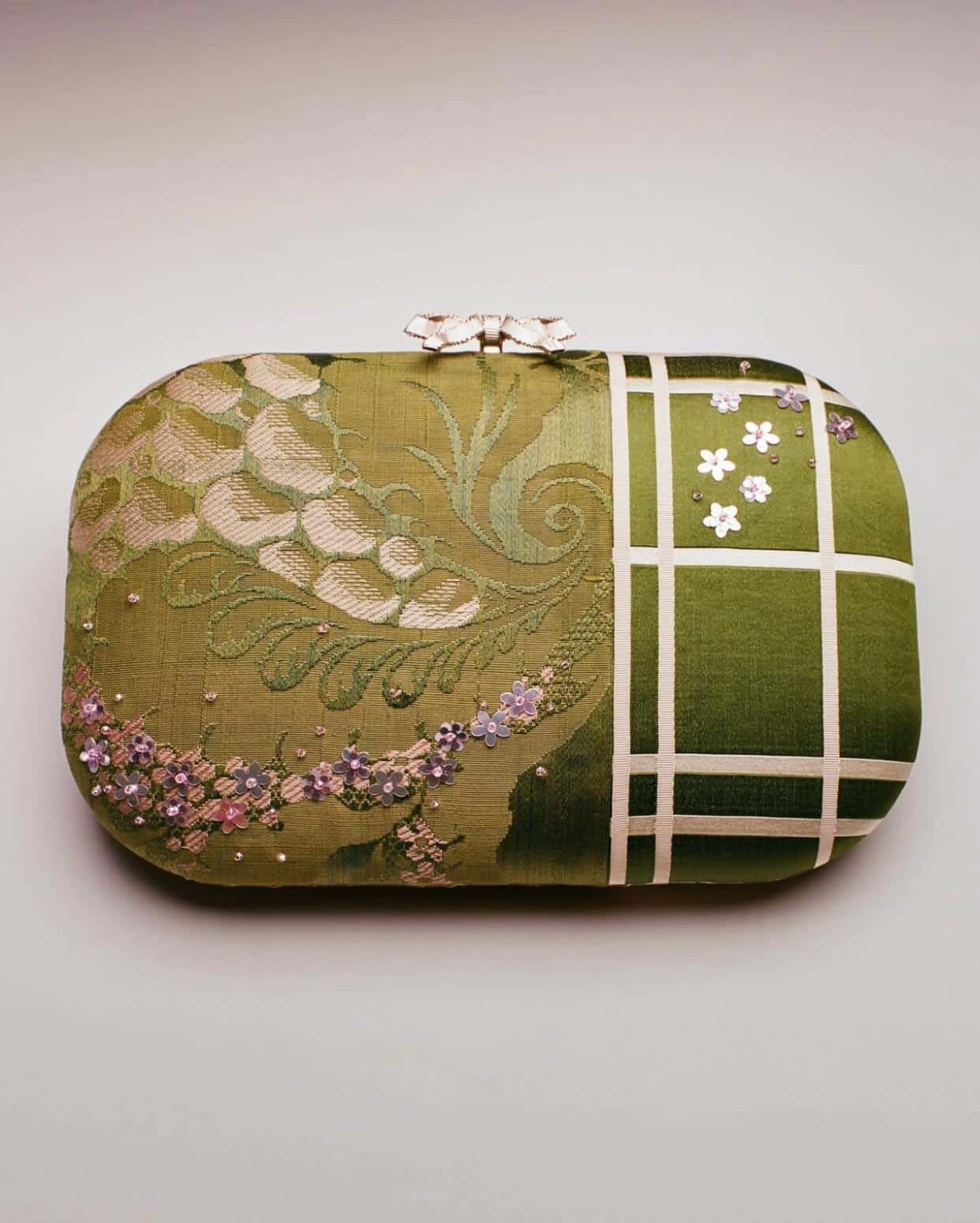
The Tatsumura Bijutsu Orimono house has existed in Kyoto since 1894. It produces art textiles of the highest technical complexity — brocades, obi, woven silks made according to techniques inherited from the imperial courts. In 1953, it sent samples to Paris as part of the promotion of Japanese silk exports. Christian Dior chose one of its brocades. The collaboration was established. Seventy years later, for the pre-fall 2025 collection presented at the Tō-ji temple in Kyoto, Tatsumura recreated the original brocade — the same fabric, the same techniques, the same hands trained in the same tradition. This is not a commercial re-edition. It is a physical, verifiable link between a decision made in 1953 and a dress worn on a runway in 2025. Few Houses can trace a continuity this precise between their founder and their present.
The Dior Bambou Pavilion is the conceptual flagship that Dior opened in 2026 in Daikanyama, Shibuya, to anchor its Tokyo presence definitively in a space that is something other than a boutique. One thousand eight hundred square metres in the prestigious Sarugakuchō neighbourhood — a zen garden, a koi carp pond, a floral oasis, a façade reinterpreting the 30 avenue Montaigne through details in golden bamboo. The interior draws on local Japanese savoir-faire — shoji paper panels, traditional hand-painted lanterns — in dialogue with the visual codes of the House. The restaurant, conceived exclusively by chef Anne-Sophie Pic, offers a menu where Dior's codes — the cannage motif, buttons, iconic silhouettes — are read in flavours: matcha, yuzu, sake, rice. Jonathan Anderson's ready-to-wear collections are presented on the ground floor. This is not a shop. It is an address.
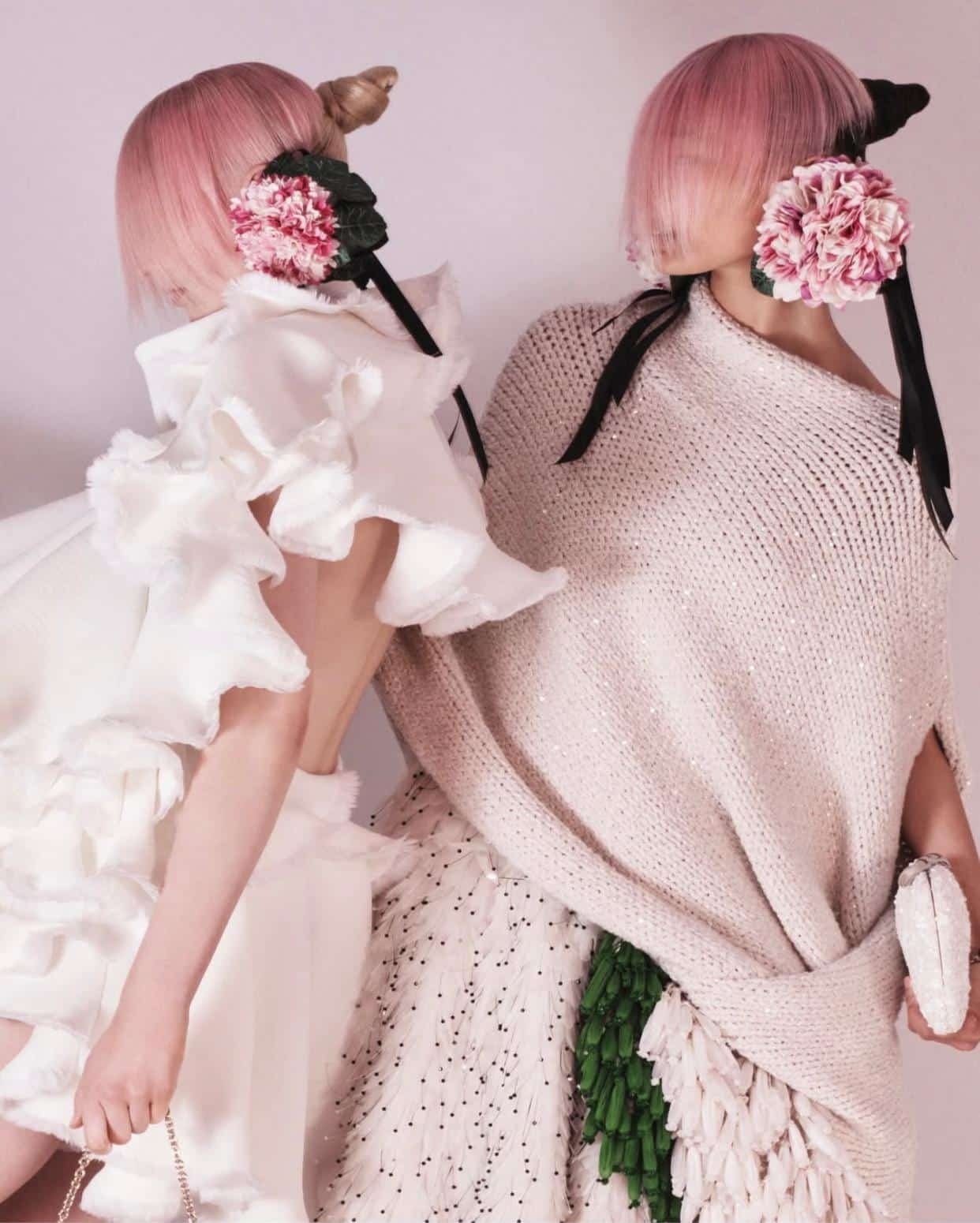
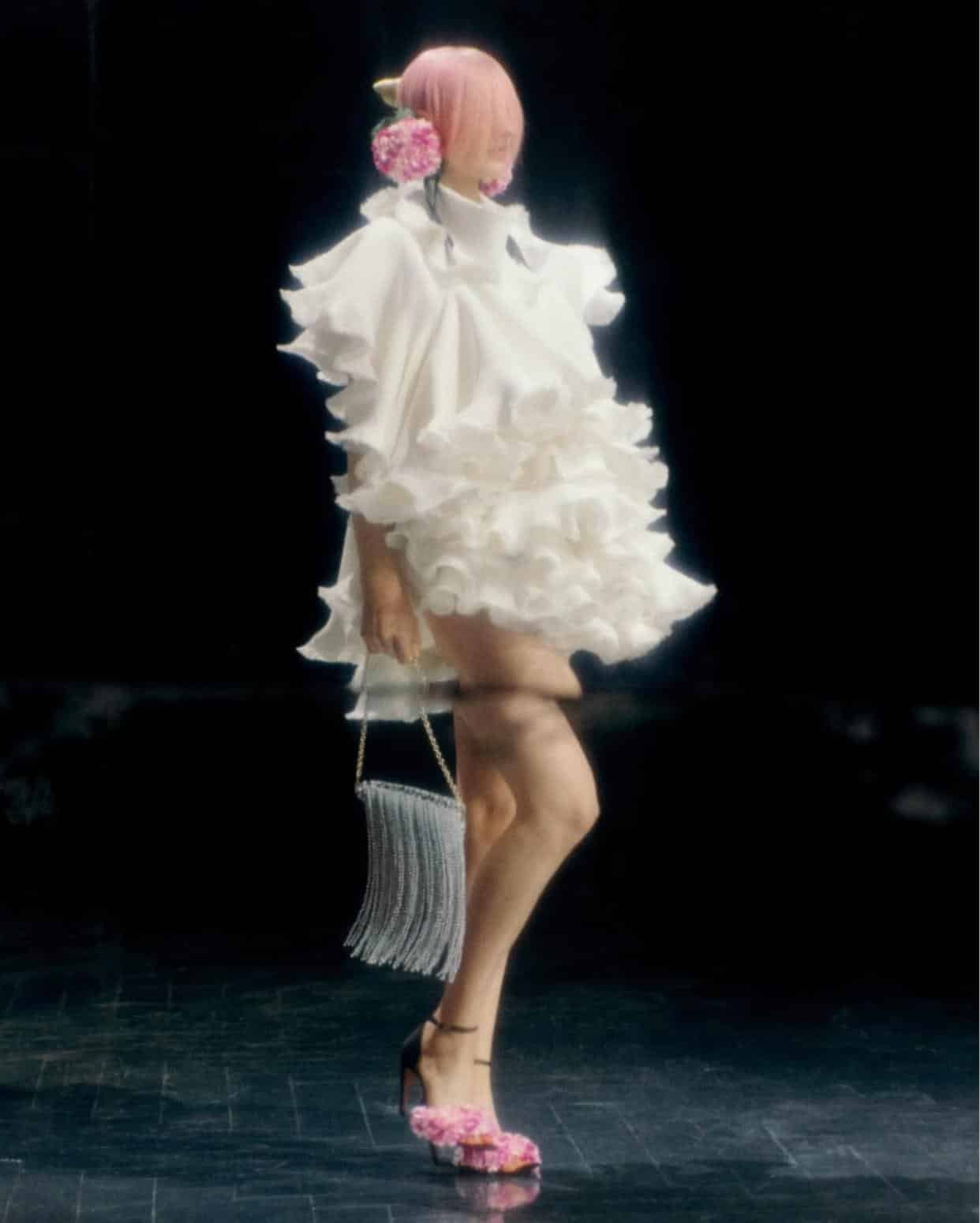
Jonathan Anderson was appointed artistic director of all Dior collections in June 2025 — the first to oversee menswear, womenswear and haute couture simultaneously since Christian Dior himself. He is forty-one years old. He left Loewe, which he had led for twelve years and transformed into one of the most coveted houses in the world, to take on the House whose foundations are the most laden in the industry. His first menswear collection was presented in June 2025, his first womenswear collection in October, in an ephemeral structure at the Tuileries with a film by Adam Curtis as the opening — a filmmaker known for his documentaries on individualism and power, a choice that says something about Anderson's intent. "My idea is that we need to decrypt and reprogram Dior," he said. The first mixed campaign in the House's history accompanied the arrival of these collections in boutique — including the Bambou Pavilion in Tokyo, which received the pieces of this new era several thousand kilometres from where they were conceived.
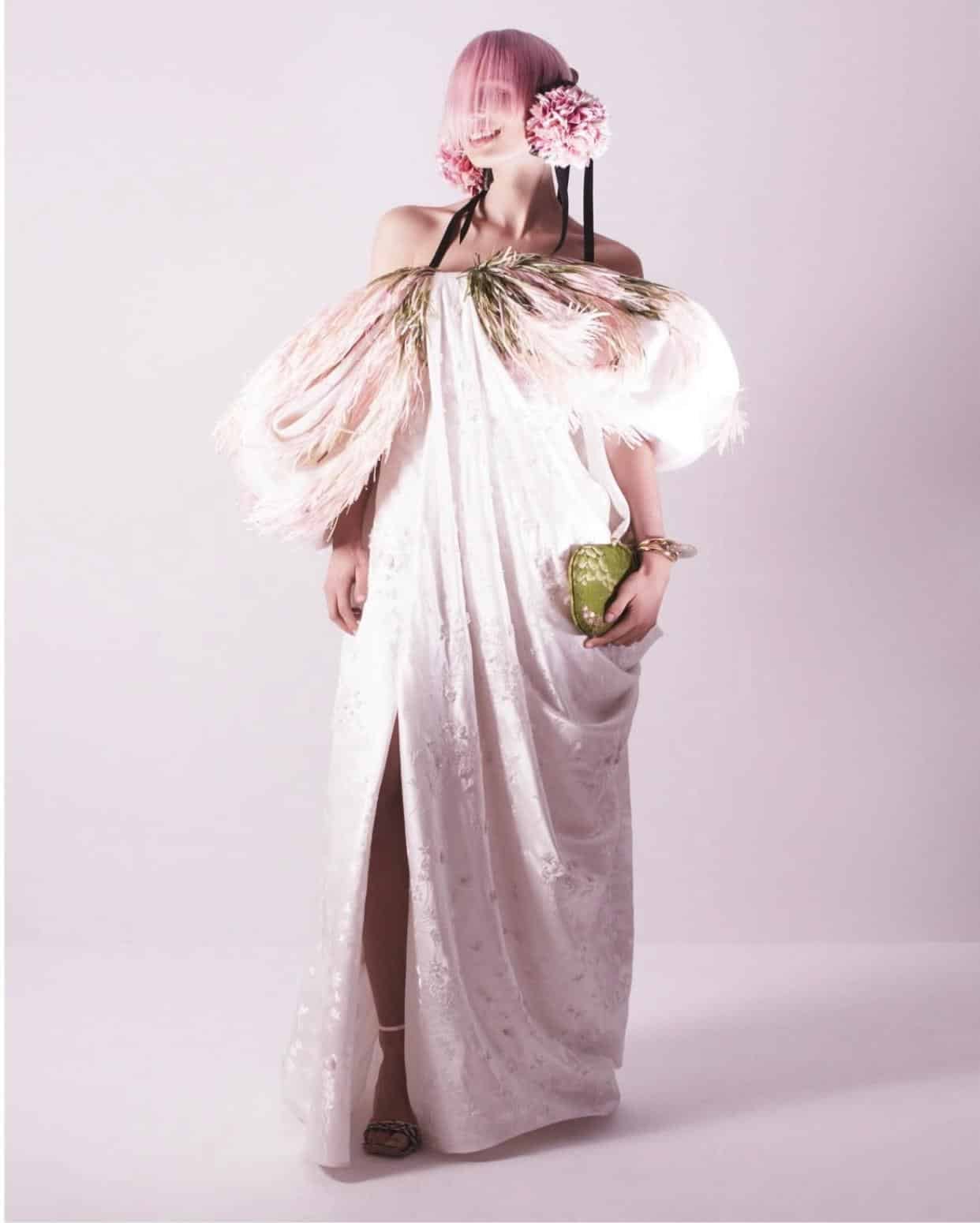
The pre-fall 2025 collection, the last womenswear collection signed by Maria Grazia Chiuri before the appointment of Jonathan Anderson, was presented on 15 April 2025 in the garden of the Tō-ji temple in Kyoto — a Buddhist temple listed as a UNESCO World Heritage site, with its five-storey pagoda, its tortoises and its koi carp in the pond. Chiuri collaborated with two Kyoto ateliers: Kihachi Tabata, a kimono dyer specialising in hikizome — brush-applied dyeing, laid down layer by layer and fixed with steam, which gives fabrics a transparency and depth that industrial methods cannot produce — and Tatsumura Textile, which recreated the original 1953 brocade for the Jardin Japonais dress. The collection makes visible what the Dior-Japan relationship has always been: not a source of folkloric inspiration, but a technical conversation between people who share the conviction that the quality of a fabric is a moral decision as much as an aesthetic one.
In 1959, six years after the first show in Japan, Dior was chosen to create the three civilian dresses for the wedding of Princess Michiko to Crown Prince Akihito. The dresses were made from Japanese textiles — a gesture saying that the House had not come to impose Paris but to engage with what Japan knew how to produce. The future empress of Japan chose a French House that had taken care to learn what Japanese fabric means before cutting it. This decision is not incidental in a country whose imperial family is the most symbolically charged embodiment of national tradition. It consecrated the Dior-Japan relationship as one of mutual respect, not aesthetic colonisation. Dior did not come to Japan with its codes. It came with its questions.
In his personal diary,
Christian Dior describes the Utamaro and Hokusai prints
hanging on his Norman staircase
as "my Sistine Chapel."
He had never set foot in Japan.
In 1952, he named a dress "Tokio."
In 1953, he ordered a brocade from Tatsumura
and became the first couturier in the world
to show in Japan.
In 1959, Princess Michiko
chose Dior for her imperial wedding —
dresses made from Japanese fabric.
Seventy years later,
Tatsumura recreates the same brocade.
Dior did not come to Japan with its codes.
It came with its questions.
Dior's relationship with Tokyo — and with Japan in its broader sense — is the most complete demonstration of what the House has always been at its best: a House that learns before it speaks. Christian Dior did not show in Japan because he was looking for a market. He showed there because Japan was for him an aesthetic reference he wanted to encounter in person. His successors continued — Marc Bohan showing in Tokyo and Osaka in 1964, John Galliano creating his spring-summer 2007 haute couture collection from the opera Madame Butterfly, Kim Jones presenting his pre-fall 2019 in Tokyo in collaboration with artist Hajime Sorayama, Maria Grazia Chiuri recreating the Jardin Japonais dress with the same ateliers as in 1953, Jonathan Anderson opening the Bambou Pavilion in Daikanyama with a zen garden and a Kyoto brocade in the window. Each artistic director has found their own way to continue this conversation — proof that it is not a museified legacy but a living dialogue. The Bambou Pavilion, with its koi carp and its golden bamboo façade, is the 2026 version of the same decision Dior made in 1953: to come to Japan not to sell something, but to recognise something.
Dior Bambou Pavilion · Daikanyama
Sarugakuchō, Daikanyama, Shibuya-ku, Tokyo
1,800 m² · Zen garden · Anne-Sophie Pic restaurant
Jonathan Anderson collections · Opening 2026
Dior Ginza
Ginza, Chūō-ku, Tokyo
A Sistine Chapel on a Norman staircase.
A Kyoto brocade ordered without ever having been there.
One hundred looks shown in Tokyo, Osaka, Kyoto, Nagoya
in 1953 — the first couture House in the world
to do so.
Seventy years later,
Tatsumura recreates the same fabric.
The Bambou Pavilion opens in Daikanyama.
The koi carp are in the pond.
The brocade is in the window.
The conversation continues.
© Dior
© Dior
© Dior
© Dior
© Dior
© Dior
© Dior
© Dior
© Dior
© Dior
© Dior
© Dior
© Dior

© Dior
© Dior
© Dior
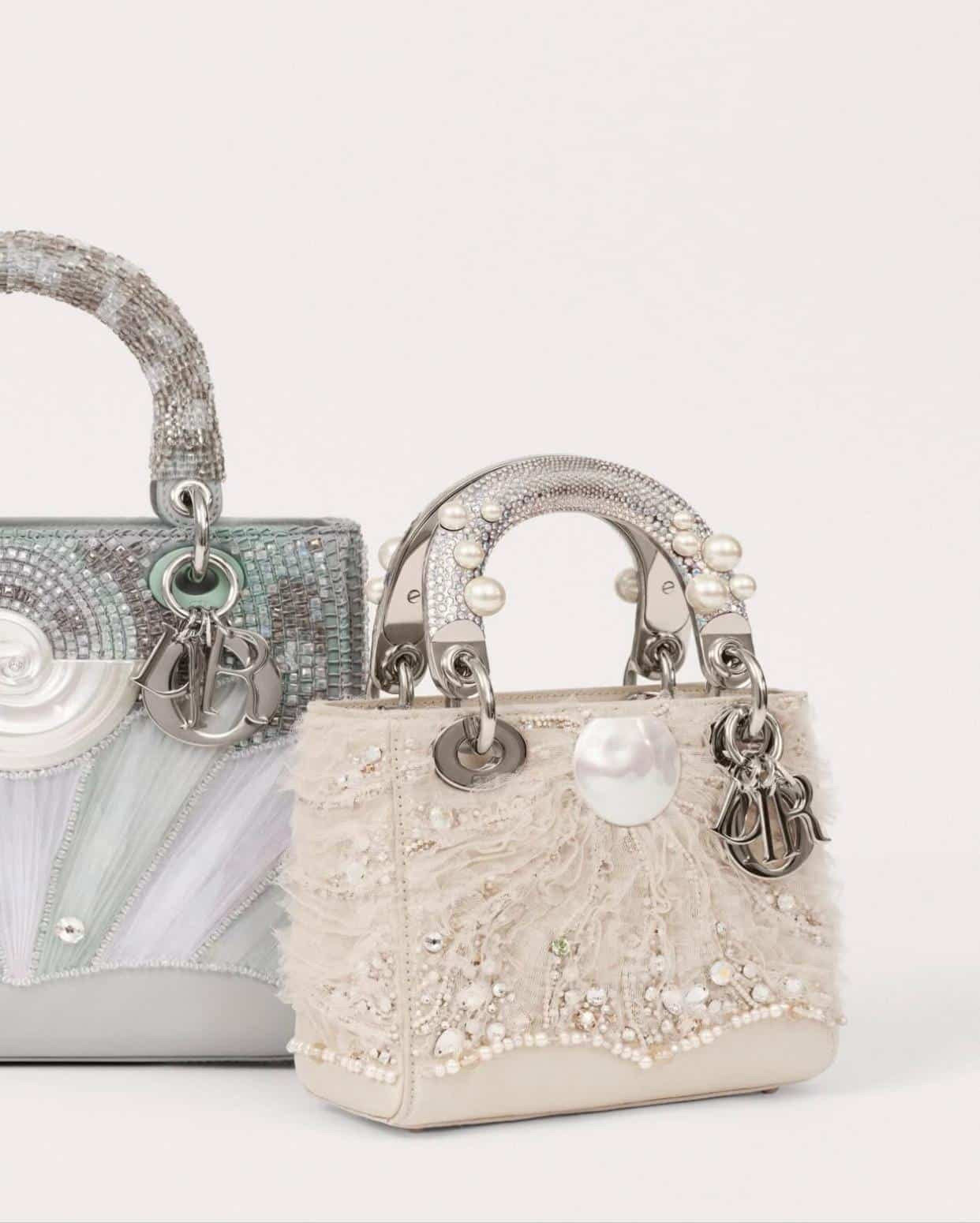
© Dior

© Dior
DIOR
© Dior