
© Dior
© Dior
© Dior
Dior · Skincare
Christian Dior, as a child, spent his days in the catalogues of a seed merchant. He knew the scientific name of every flower. From adolescence, he was already sketching the pond and pergola of the family garden at Les Rhumbs, in Granville. His mother Madeleine taught him roses. Between 1947 and 1957, more than fifty designs in his collections bore the names of flowers. When Dior Science searched for a rose for its exceptional skincare line, it did not choose from existing roses — of which there are forty thousand varieties. It had a new one created. The product of seven hybridisations, cultivated twenty kilometres from the Villa Les Rhumbs, the Rose de Granville is the first rose ever created for cosmetic skincare. This is not an ingredient. It is a biography.
The History · A Garden · A Rose · A Science
The Villa Les Rhumbs sits on a cliff above Granville, facing the English Channel. Christian Dior was born there in 1905, spent his childhood there, sketched the pond and pergola with his mother. In his Memoirs, he notes that the house is "rendered in a very gentle pink, mixed with grey gravel" — two colours that would become his preferred tones in couture. The flowers of the garden, and above all the roses, were at the centre of his imagination from childhood onward. In 1947, a month before the first show on the avenue Montaigne, he simultaneously founded a company dedicated to fragrances, convinced that perfume is "the indispensable complement of the feminine personality, the finishing touch of a dress." Miss Dior was launched on the day of the New Look show. Cosmetic skincare arrived in 1973 with the first skincare lines, then in 1986 with the Capture line — a pioneer in the science of stem cells in cosmetics. But it is Dior Prestige, founded on the Rose de Granville, that closes the loop between the child's garden and the science of the twenty-first century. The hybridiser Jérôme Rateau created this rose in 2010 after seven successive hybridisations — selected for its resilience to the marine winds of Normandy, its capacity to rebloom twice a year, its unique genetic signature whose cellular vitality indicators Dior laboratories demonstrate to surpass those of the Damask rose and the Old Blush rose.
Dior Prestige · The Rose De Granville · The Rosapeptide
The Rose de Granville is cultivated in the Dior Rose Garden, the House's first rose garden, inaugurated in June 2021, twenty kilometres from the Villa Les Rhumbs. Seven hectares, twenty plots, more than fifty thousand rose plants at maturity, UEBT-certified — Union for Ethical BioTrade. In 2022, a mobile extraction laboratory was installed at the heart of the garden itself: the fresh petals are processed on site immediately after hand-harvesting, to preserve the full breadth of their molecular richness. From this rose, Dior Science isolated the Rosapeptide — a complex of four complementary actives: rose fraction, rose sap and two bio-peptides. The rose sap demonstrates an efficacy four times greater than retinoic acid for skin revitalisation. This complex acts on each stage of the synthesis of Collagen I — the essential protein for skin density and elasticity. These data are produced in collaboration with Professor Gao, an expert in functional genomics and rose phytochemistry, and with LabSkin, a French 3D bio-printing start-up that reproduces skin models for formula testing.
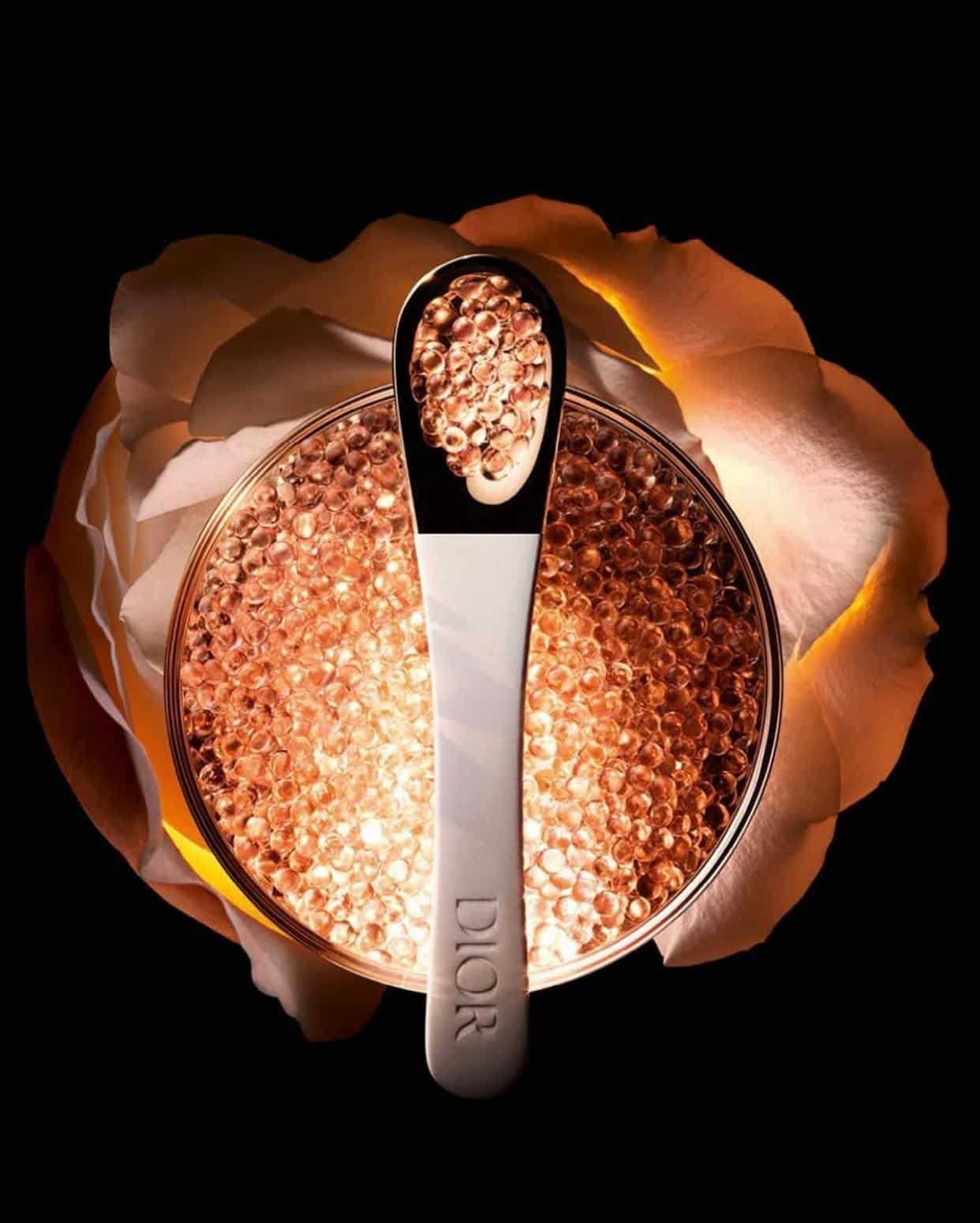
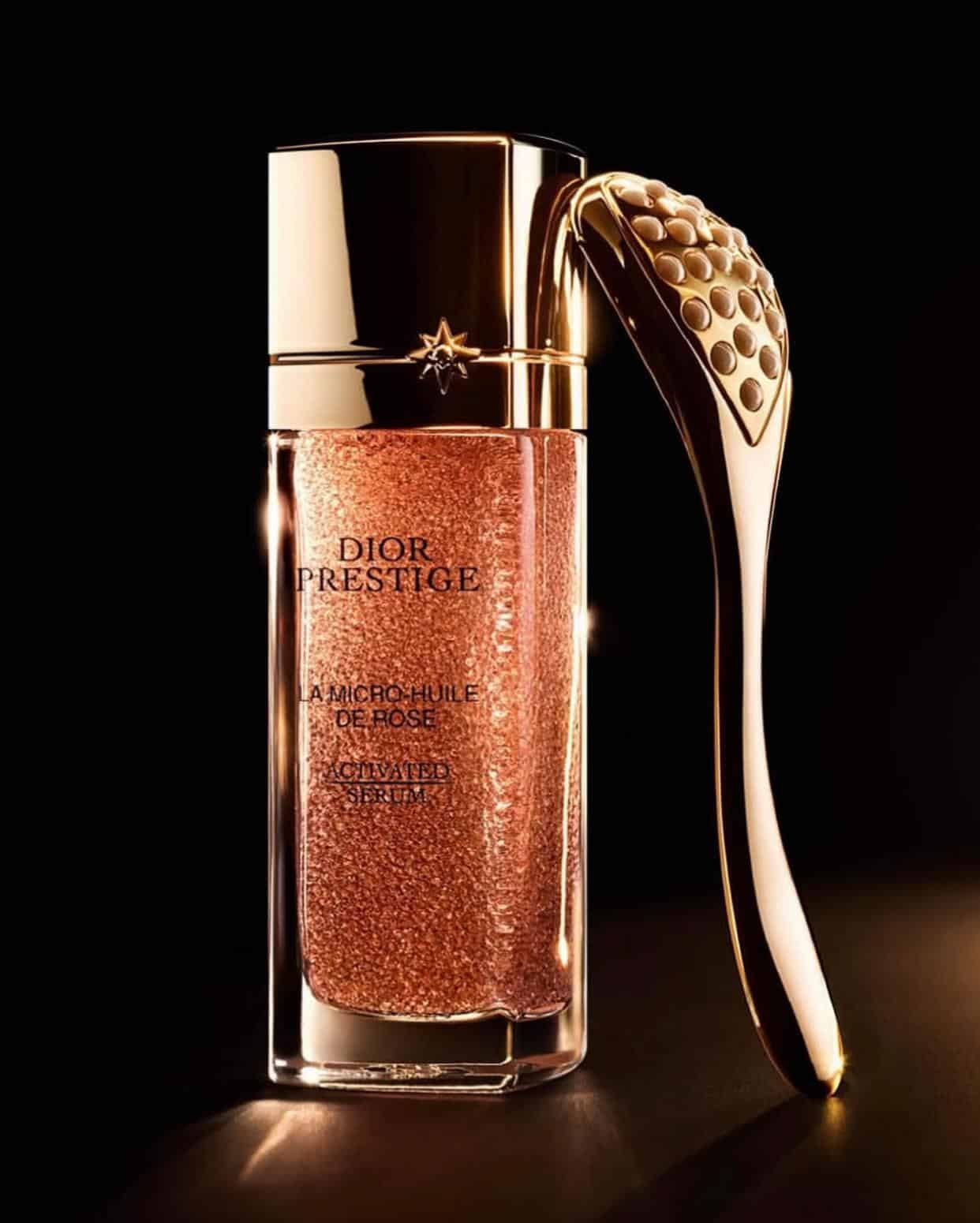
Dior Prestige La Crème is the central skincare product of the line — available in three textures adapted to most skin types, in a refillable format that reduces material footprint without diminishing the formula. The complete routine articulates across four steps: the Micro-Huile de Rose as a pre-treatment, delivering more than twenty essential micronutrients via encapsulated rose micro-pearls. The Nectar, the line's most active-concentrated formula, relaunching skin youth by targeting the visible and the invisible. The Cream, in a cocoon texture, locking the Nectar's actives into the skin and regenerating cellular architecture. Finally, the Eye Concentrate, combining the power of the Rose de Granville with massage to revitalise the gaze. In Tokyo, this routine is presented in Dior beauty boutiques with the same level of service as the fashion and jewellery collections — the Japanese omotenashi applies to skincare with a ritual precision that few Western markets achieve.
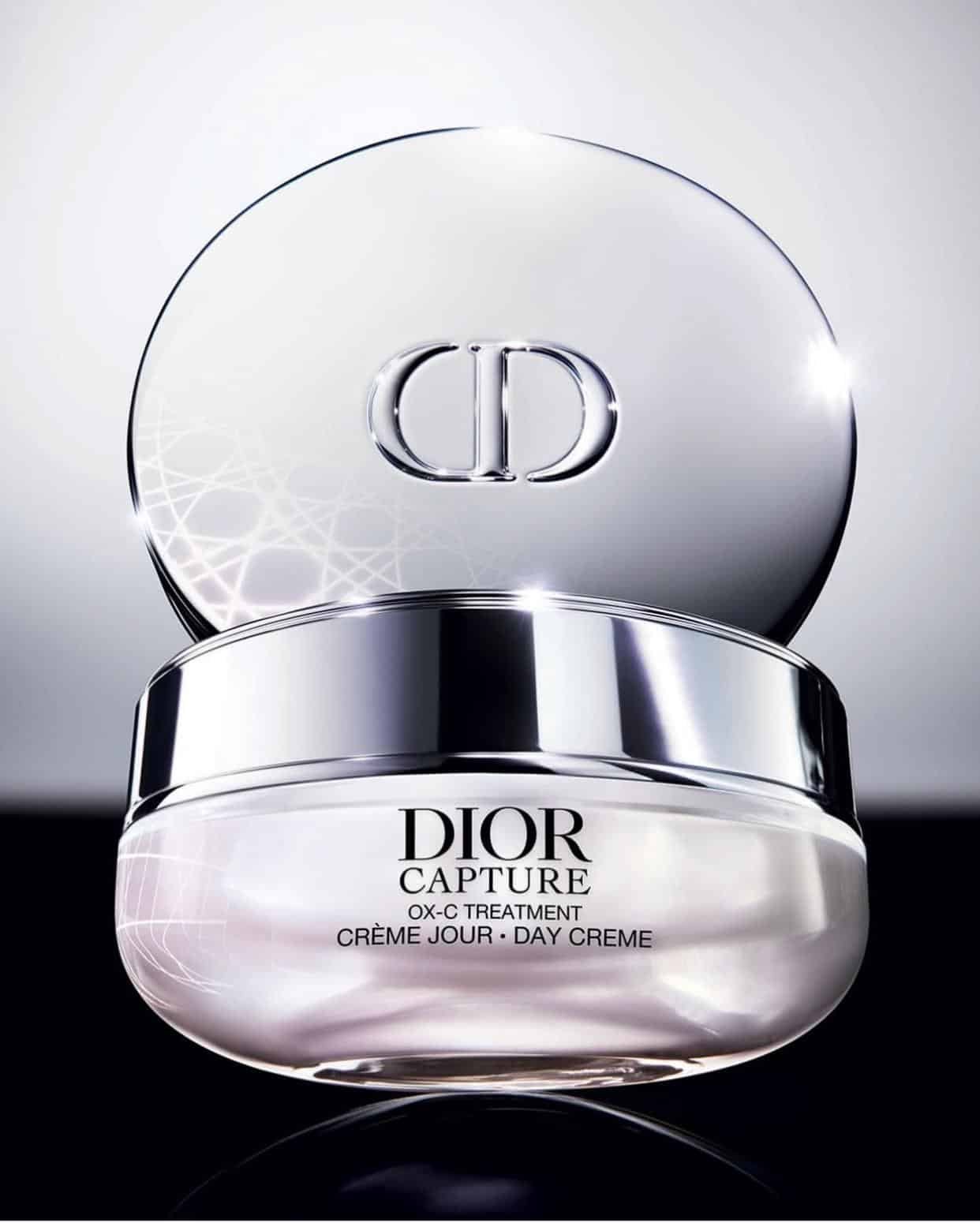
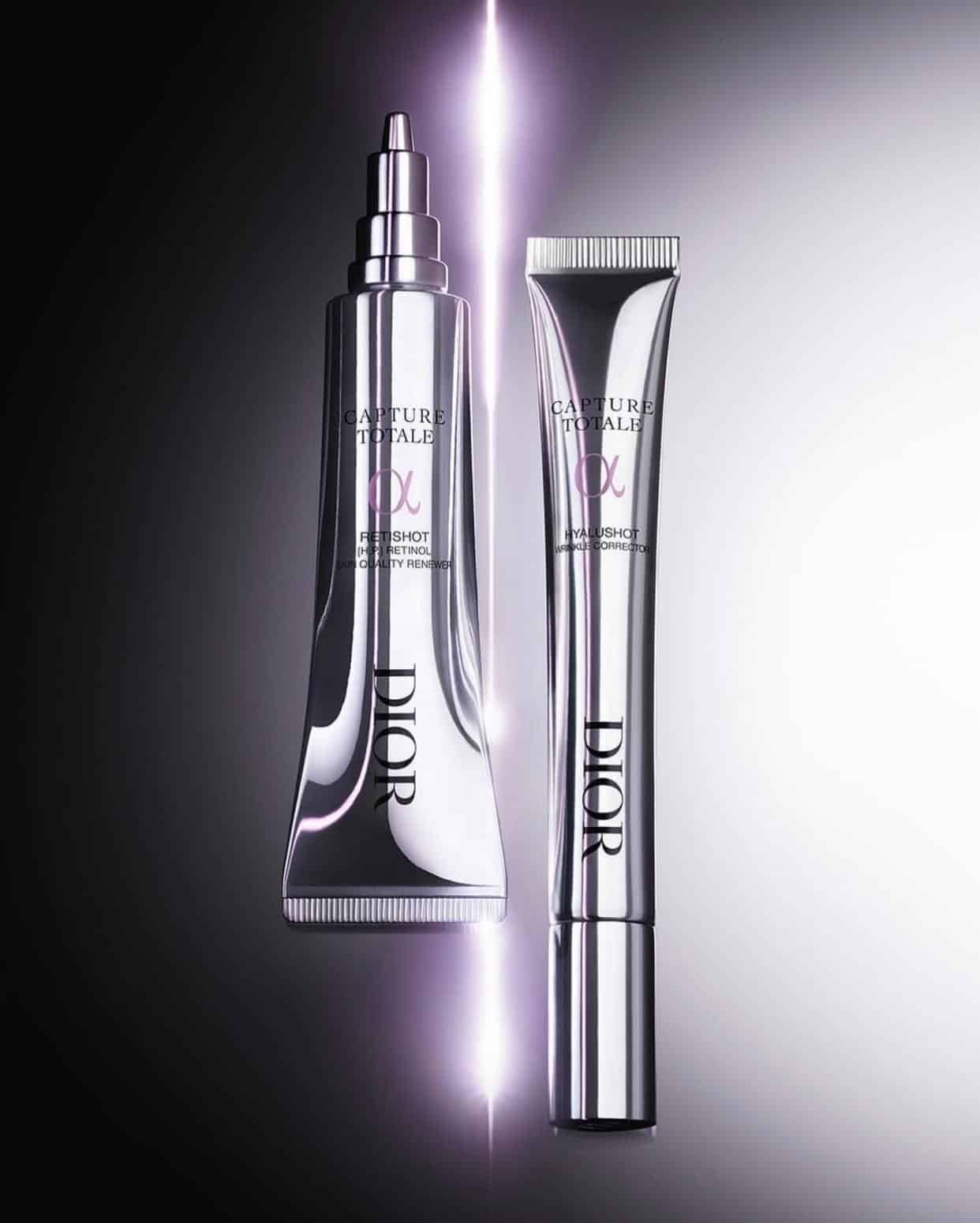
Capture Totale is Dior's other major skincare line — born in 1986, a pioneer of the anti-ageing approach through stem cell science, with nearly forty years of continuous research into the mechanisms of skin ageing. The current line concentrates an extract of longoza — a plant endemic to the Dior garden in Madagascar, cultivated under certified sustainable conditions — whose properties for firmness and skin bounce have been documented across several decades. The Dior Scientific Council — bringing together associate professors from Kyoto University, Harvard Medical School, the Buck Institute at Stanford and Brown University — validates the research directions and ensures that Dior Science is anchored in the standards of contemporary cellular biology.
The Dior Snow line — infused with the E.P.I. Reveal Technology derived from brightening edelweiss from the Dior gardens — is the skincare line that responds most directly to the specific expectations of the Japanese clientele regarding facial skincare. The skincare market in Japan is the most demanding in the world on the question of luminosity and skin transparency — the concept of hada (膚), the skin in its ideal state of light and softness, structures Japanese beauty expectations in a way that has no equivalent in Western markets. Dior Snow meets these expectations with the same scientific rigour as Prestige or Capture: a patented brightening technology, Dior gardens as a source of traceable ingredients, and a formulation that works on the evenness of the complexion rather than its modification.
Dior Science draws on a network of proprietary gardens distributed around the world — the rose in Granville, longoza in Madagascar, edelweiss at altitude, iris in Florence — each UEBT-certified and cultivated according to agroecological methods supervised by Biosphère. After thirty years of research, Dior identified six flowers with exceptional properties and qualities, then decoded their skincare potential for transfer to the skin. This model — tracing the ingredient from the plant in the soil to the product in the bottle — is the same model that the House applies in couture and jewellery: provenance as the condition of legitimacy. The Japanese luxury skincare clientele, which reads INCI lists with the same attention as it reads fine jewellery compositions, recognises in this traceability architecture a value that goes beyond the fragrance or the texture of the product.
Miss Dior was presented on 12 February 1947 — the same day as the first show on the avenue Montaigne, the same day as the New Look. Two hundred and eighty-three first bottles in Baccarat crystal. For Christian Dior, fragrance is "the indispensable complement of the feminine personality, the finishing touch of a dress." This parallel between the garment and the fragrance — two objects that clothe, that last, that leave a trace in space and in memory — structures the way Dior thinks of beauty from the very first day. Francis Kurkdjian, appointed creative director of fragrance in 2021, inherits this logic: his fragrances for Dior read the vocabulary of the House — the flowers, the gardens, the couture — in the olfactory register.
Dior skincare is distributed in Tokyo in dedicated boutiques — the House of Dior Ginza at Ginza Six in the first instance — and in the prestigious department stores where Dior beauty advisors are trained in the skincare rituals of each line. The Japanese luxury skincare clientele does not purchase a product. It purchases a ritual — a sequence of gestures, textures and sensations whose logic it knows before entering the boutique, and which it comes to validate through a sensory experience in personalised consultation. This expectation is structurally different from that of Western markets: in Japan, luxury cosmetics is a rigorous daily practice whose efficacy is measured, not an occasional pleasure. Dior meets this expectation with the same rigour that presides over the making of a haute couture dress or a piece of jewellery — the formula, like the fabric, like the metal, must not deceive.
A child in the catalogues of a seed merchant.
More than fifty dresses named after roses
between 1947 and 1957.
In 2010, Dior Science had a rose created
that did not exist —
selected from forty thousand varieties,
the product of seven hybridisations.
Cultivated twenty kilometres
from the childhood garden.
The sap of this rose
is four times more effective
than retinoic acid.
This is not an ingredient.
It is a biography.
The luxury skincare market in Tokyo is perhaps the only one in the world where efficacy structurally takes precedence over narrative. The Japanese luxury skincare clientele reads ingredient lists, compares clinical studies, knows the difference between a clinically documented active and a marketing active, and chooses according to this reading. This context makes the positioning of Dior Science — with its Scientific Council, its UEBT-certified gardens, its mobile extraction unit, its collaborations with Harvard, Kyoto and Stanford — particularly legible in Tokyo. The story of the Rose de Granville is not an advertising argument. It is a verifiable research architecture, whose stages — from the genomic selection of the plant to the isolation of the Rosapeptide — can be documented and compared. In a market that does not need to be told why a product is good, but knows how to read the evidence of why it is, Dior Prestige and Capture Totale find precisely the clientele that corresponds to them.
Dior Beauty · House of Dior Ginza
Ginza Six · 6-10-1 Ginza, Chūō-ku, Tokyo
Dior Prestige · Capture Totale · Dior Snow · Miss Dior
Dior Beauty · Tokyo Department Stores
Isetan Shinjuku · Takashimaya Shinjuku
Odakyu Shinjuku · Matsuya Ginza
A child in Granville
who knew the scientific name of every flower.
A rose that did not exist
and was made for him.
Cultivated twenty kilometres from his childhood garden.
Its sap more effective than retinoic acid.
In Tokyo, a clientele that reads the evidence
rather than the narratives.
Dior skincare did not need
to tell them the story of the rose.
It was enough to demonstrate the science.
© Dior
© Dior
© Dior
© Dior
© Dior

© Dior
© Dior
© Dior
© Dior
© Dior
DIOR
© Dior