
© Hommage
© Hommage
© Hommage
HOMMAGE
Noboru Arai was born in Asakusa in 1974 and has never left. He trained in Tokyo restaurants, went to France at twenty-four to work at Le Clos des Cimes in the Alps — two Michelin stars — and at Auberge La Fenière in Provence. He returned to Tokyo and spent a year working as a wholesaler at Tsukiji Fish Market to save money. In 2000, at twenty-six, he opened a restaurant on a quiet street behind Sensō-ji, in a bare concrete building, ten minutes from where he was born. He named it HOMMAGE — gratitude, in French — for the producers, the masters, the guests. In 2012 it received one Michelin star. In 2018, a second. The building has not changed. The street has not changed. The weeping willow outside still moves in the wind as it did when the restaurant opened.
The Philosophy · Simplicity As Discipline · The Ingredient Before The Technique
The four words Michelin's inspectors use to describe HOMMAGE's governing principle — simplicity, minimalism, precision, gratitude — are not independent qualities. They are a single orientation toward the ingredient, applied consistently across every decision the kitchen makes. Arai strips away everything that does not serve the flavour of what is in front of him. The cutlery is not pre-set on the table: it arrives with each course, because the only cutlery a dish needs is the cutlery it requires. The interior carries no decorative weight — bare walls, calm light, Mino ware plates on the tables as the only material statement. The menu changes entirely with the season, and within the season with the week, and within the week with the market. A guest who asks what will be served is told only that the chef will decide that morning. This is not evasion. It is the clearest description available of a kitchen whose organizing principle is the ingredient, not the concept.
The Hook · Kaminariokoshi And Ningyo-Yaki · The Dessert That Knows Where It Is
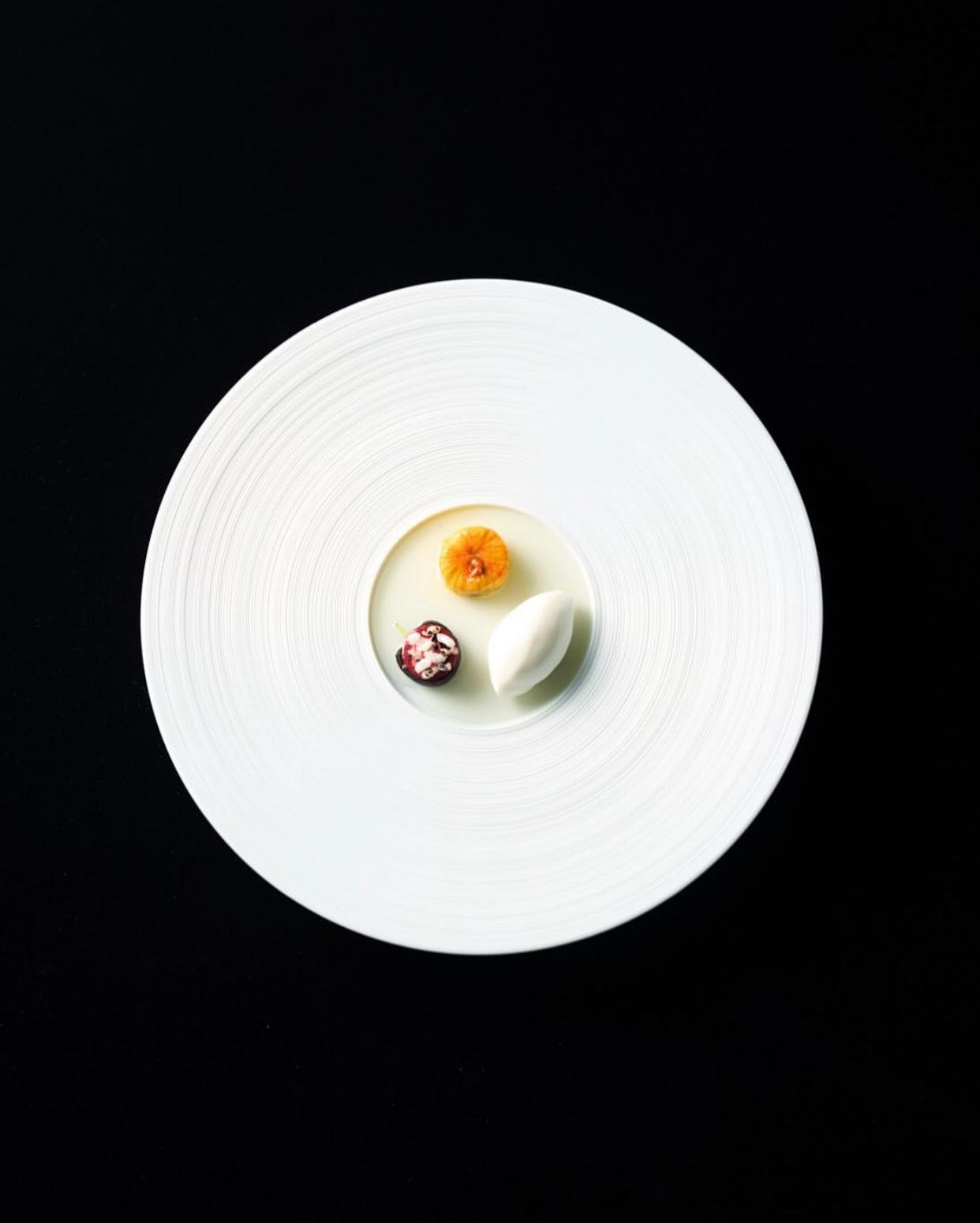
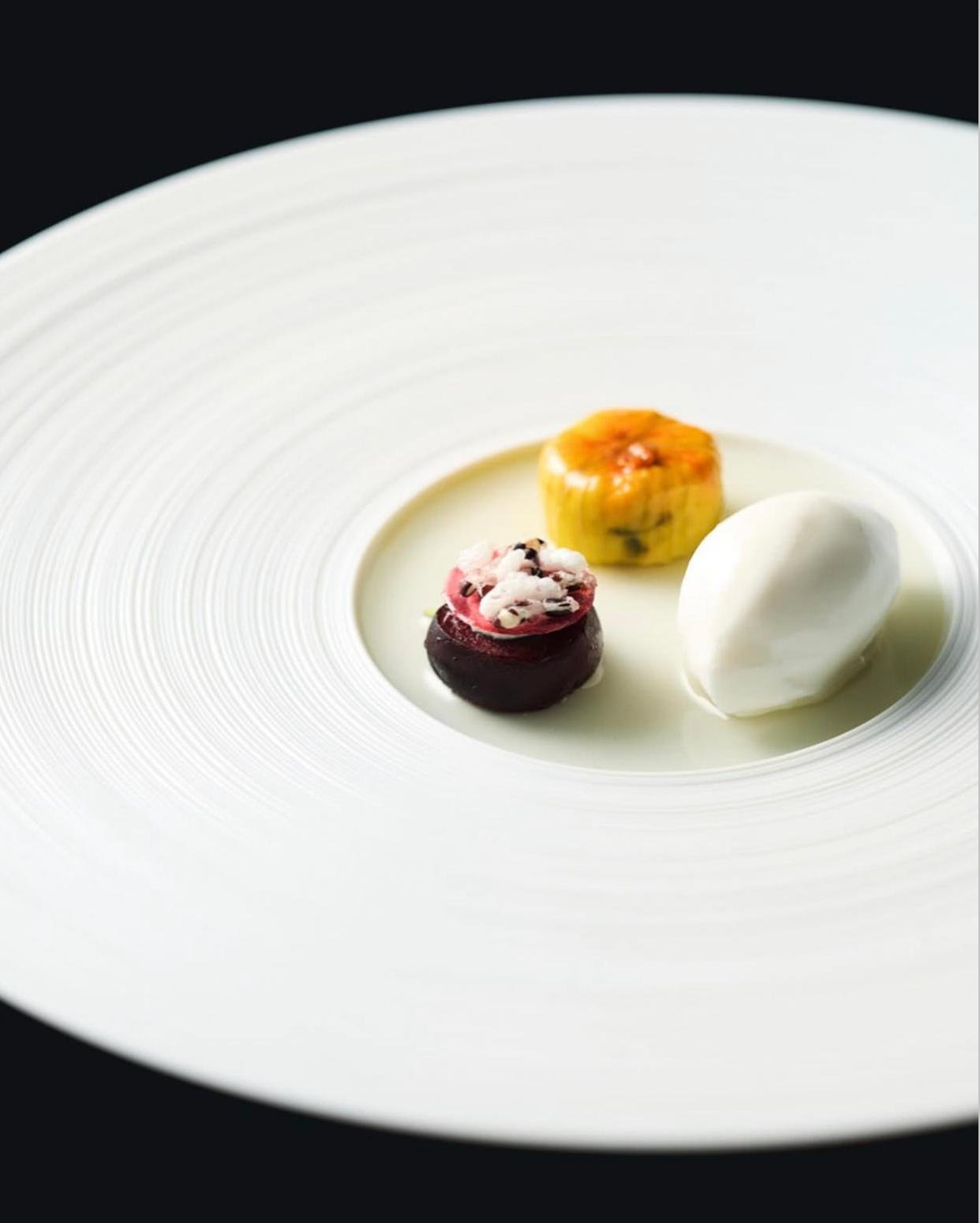
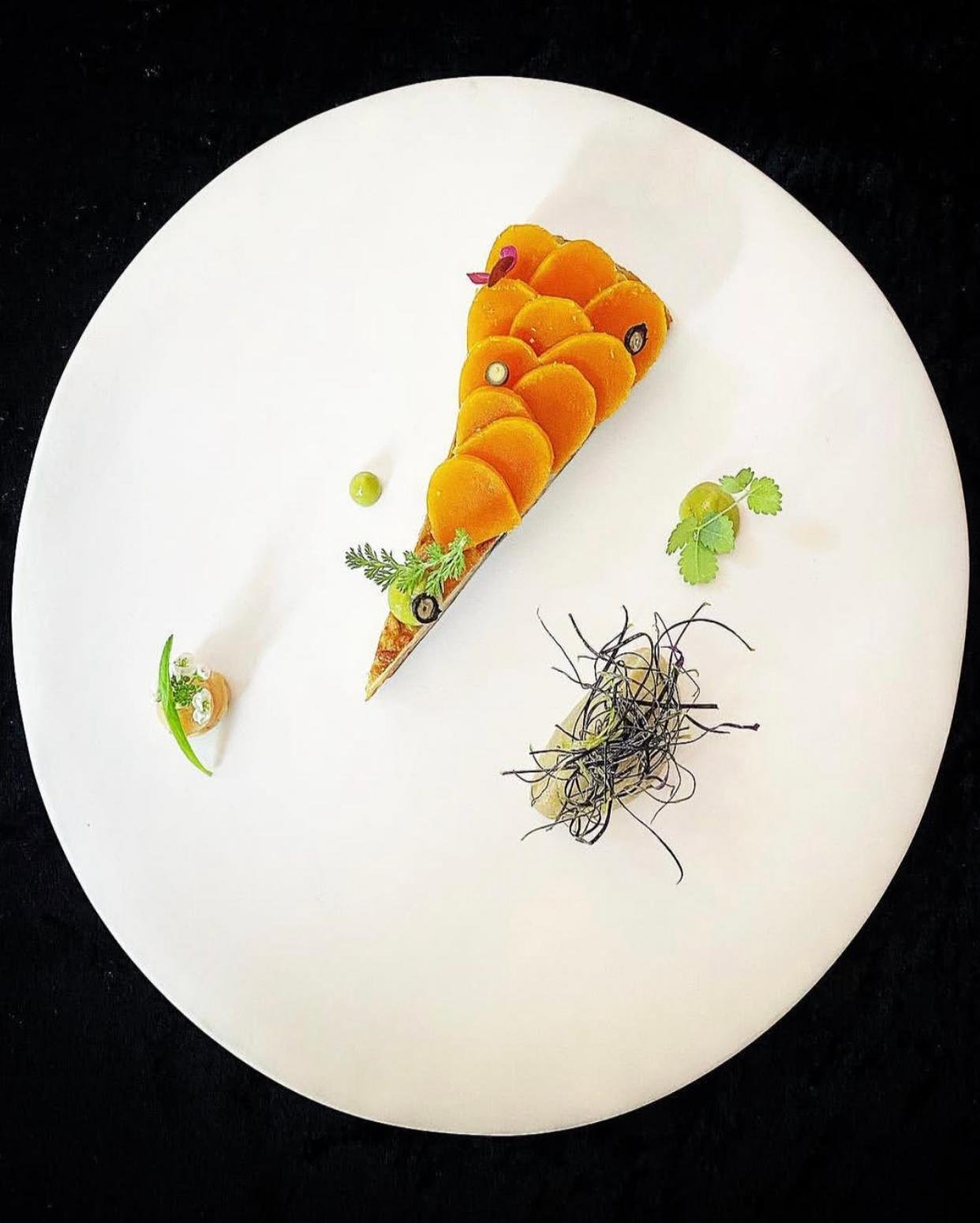
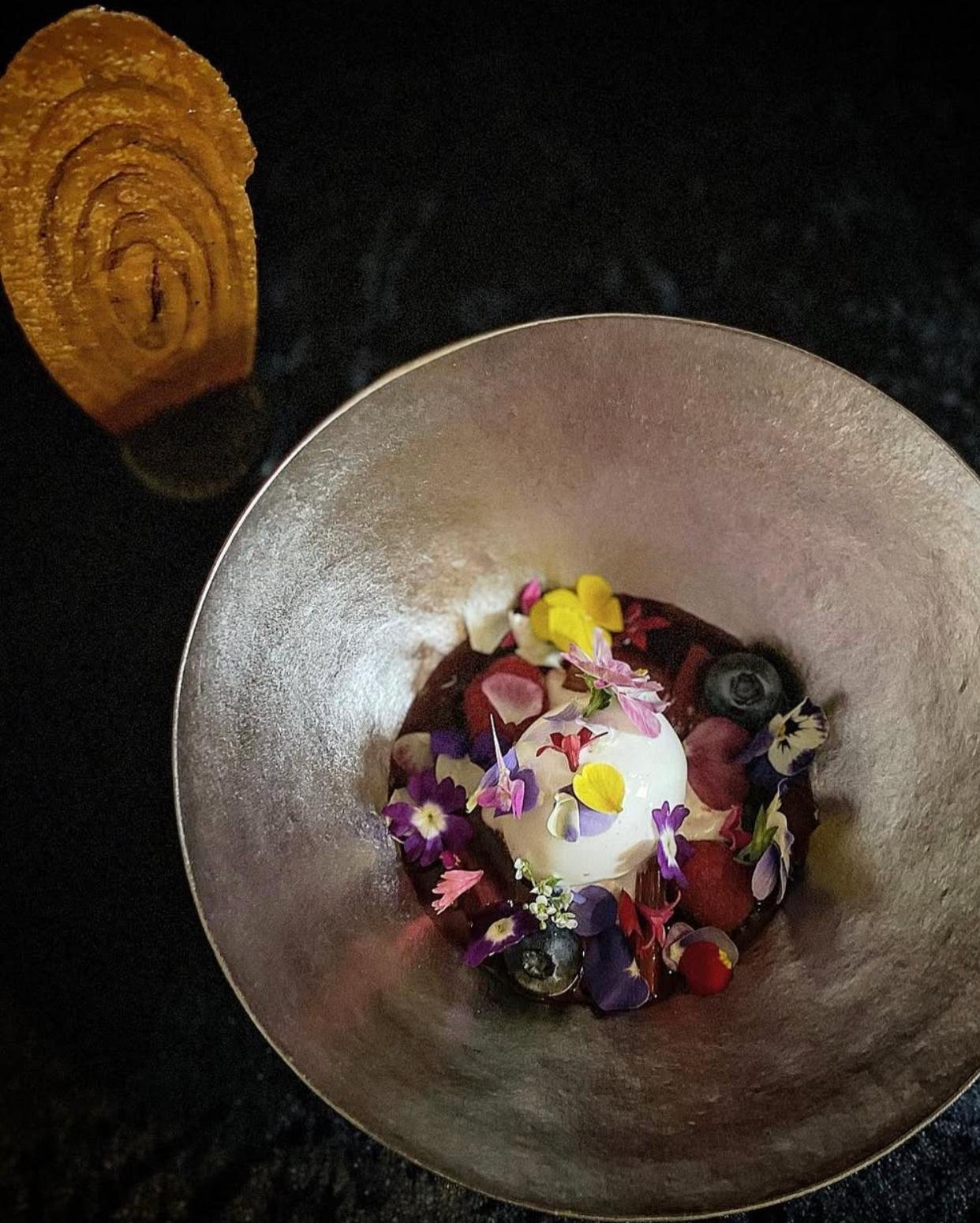
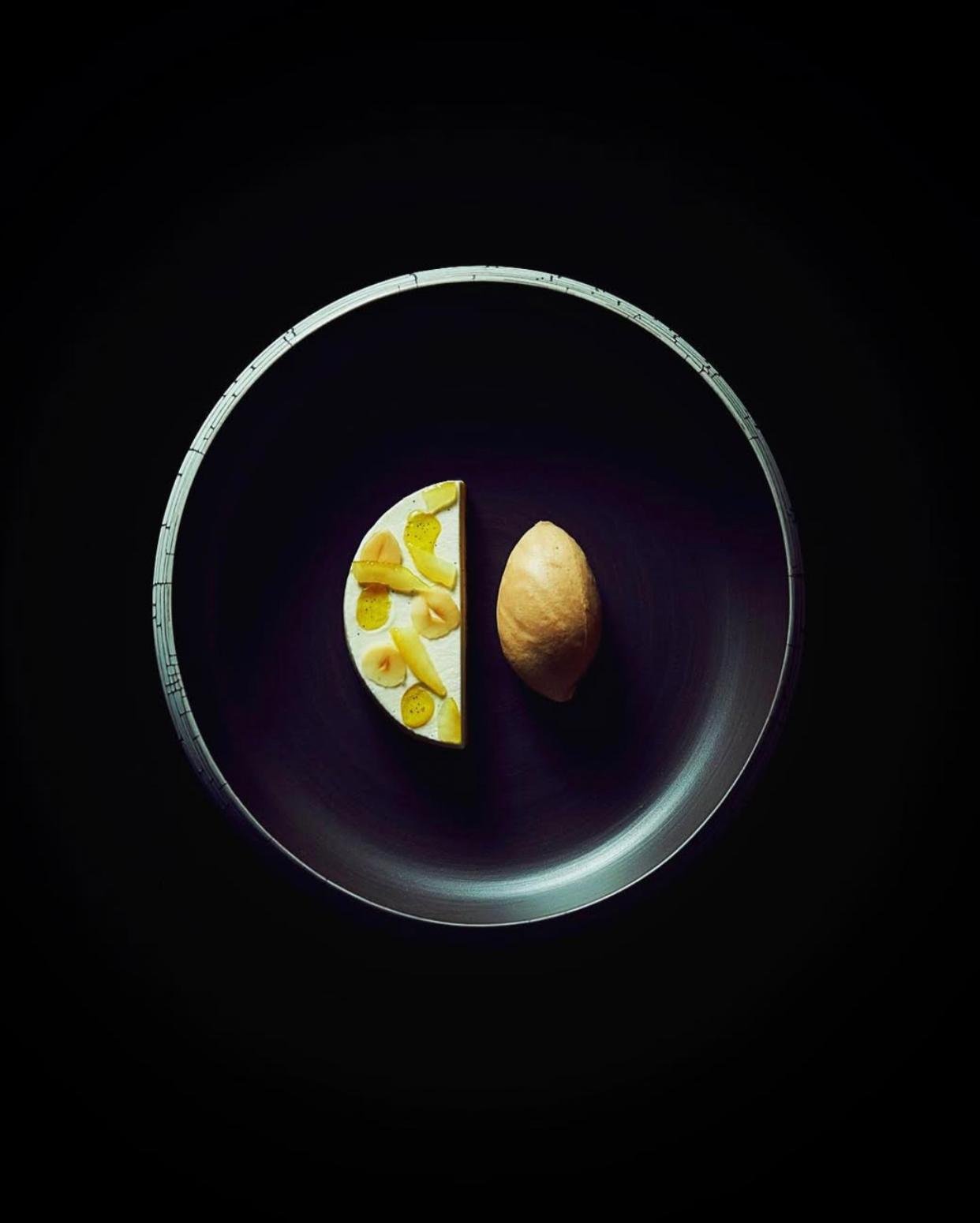
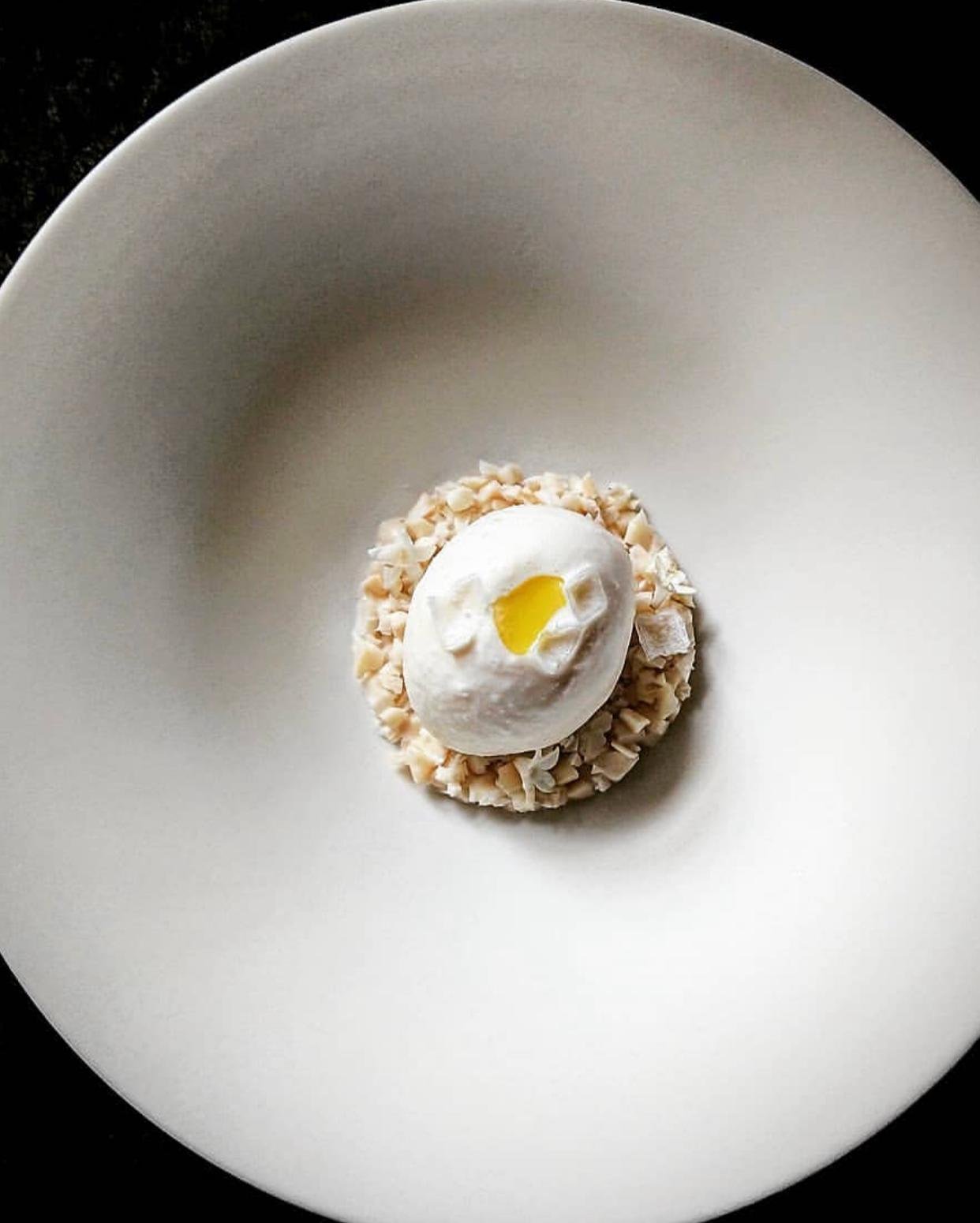
The most precise expression of Arai's philosophy is not in the savoury courses but in the desserts — specifically in two preparations that use the traditional sweets of Asakusa as their base material. The blancmange is made from kaminariokoshi — the puffed rice and sesame confectionery that has been produced in Asakusa since the Edo period, sold from the same shops on Nakamise-dōri for generations. The financier is moulded in the form of ningyo-yaki — the doll-shaped red bean paste cakes that are among the most recognisable street foods of the neighbourhood. Both preparations use French pastry technique applied to Asakusa ingredients that Arai has known since childhood. The result is not fusion — it is a chef cooking in the place where he was born, using the materials that place has always produced, in the register he learned in France. The dishes require no explanation for a guest from Asakusa. They require no explanation for a guest from Paris. The gap between those two readings is precisely the space that HOMMAGE occupies.
Noboru Arai left school after junior high school and enrolled directly in cooking school — not in one of the prestigious culinary academies, but in a straightforward vocational programme. He trained in Tokyo restaurants, then saved to go to France. At twenty-four he arrived in the French Alps, at Le Clos des Cimes, a two-starred house in Haute-Savoie where the terrain — mountain produce, lacustrine fish, the herbs of altitude — is as specific as any terroir in France. He then moved south to Auberge La Fenière in Provence, a one-starred property in Lourmarin whose kitchen is built around the olive oils, anchovies, chickpeas, and aromatics of the Mediterranean. He brought both registers back to Asakusa. The chickpea hummus he encountered in Provence has appeared on the HOMMAGE menu in various forms since the restaurant opened. After a year filling orders at the Tsukiji wholesale market at four in the morning to save enough to rent his first space, he opened HOMMAGE at twenty-six without a backer, without a group, without a reputation. The Michelin star arrived twelve years later.
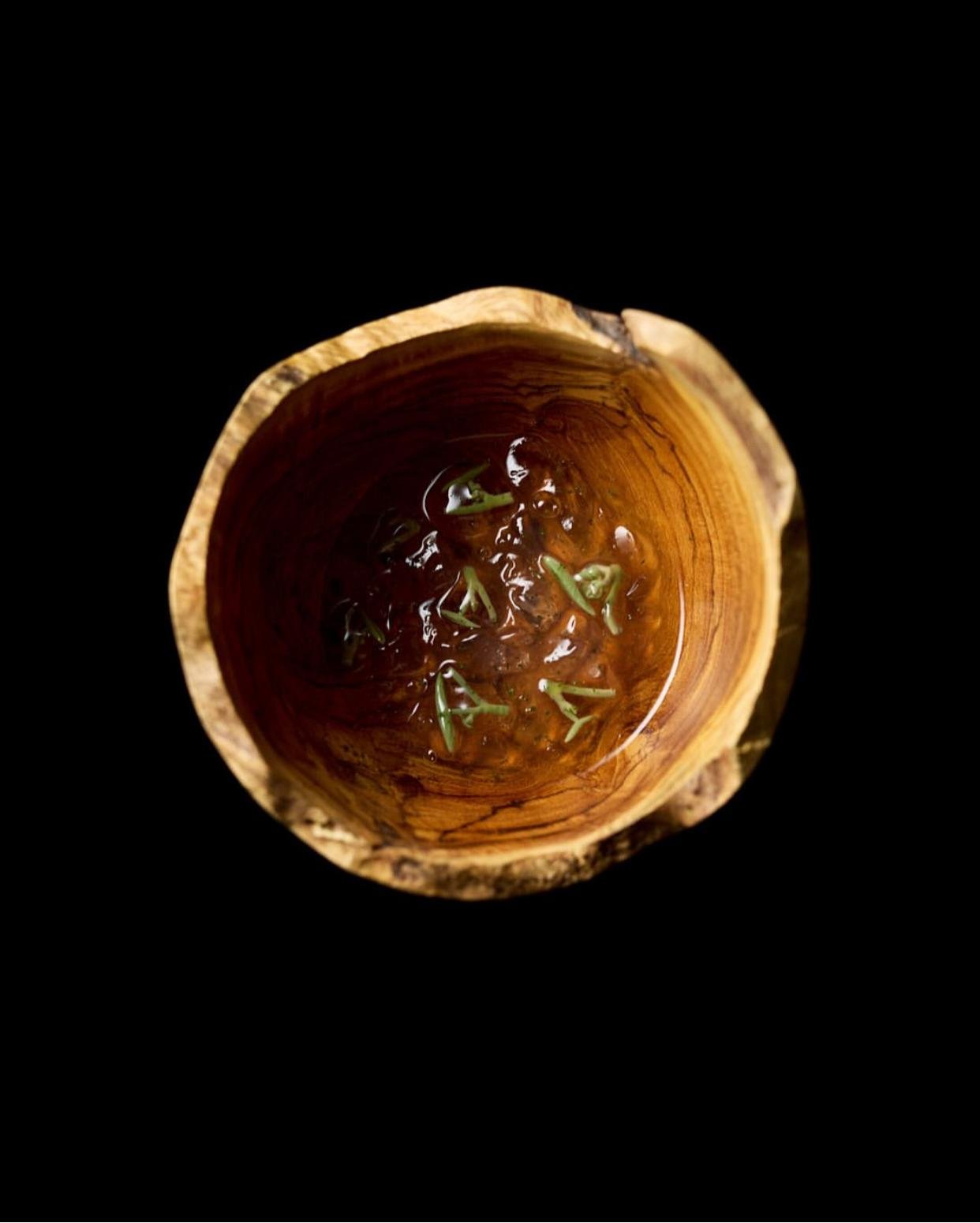
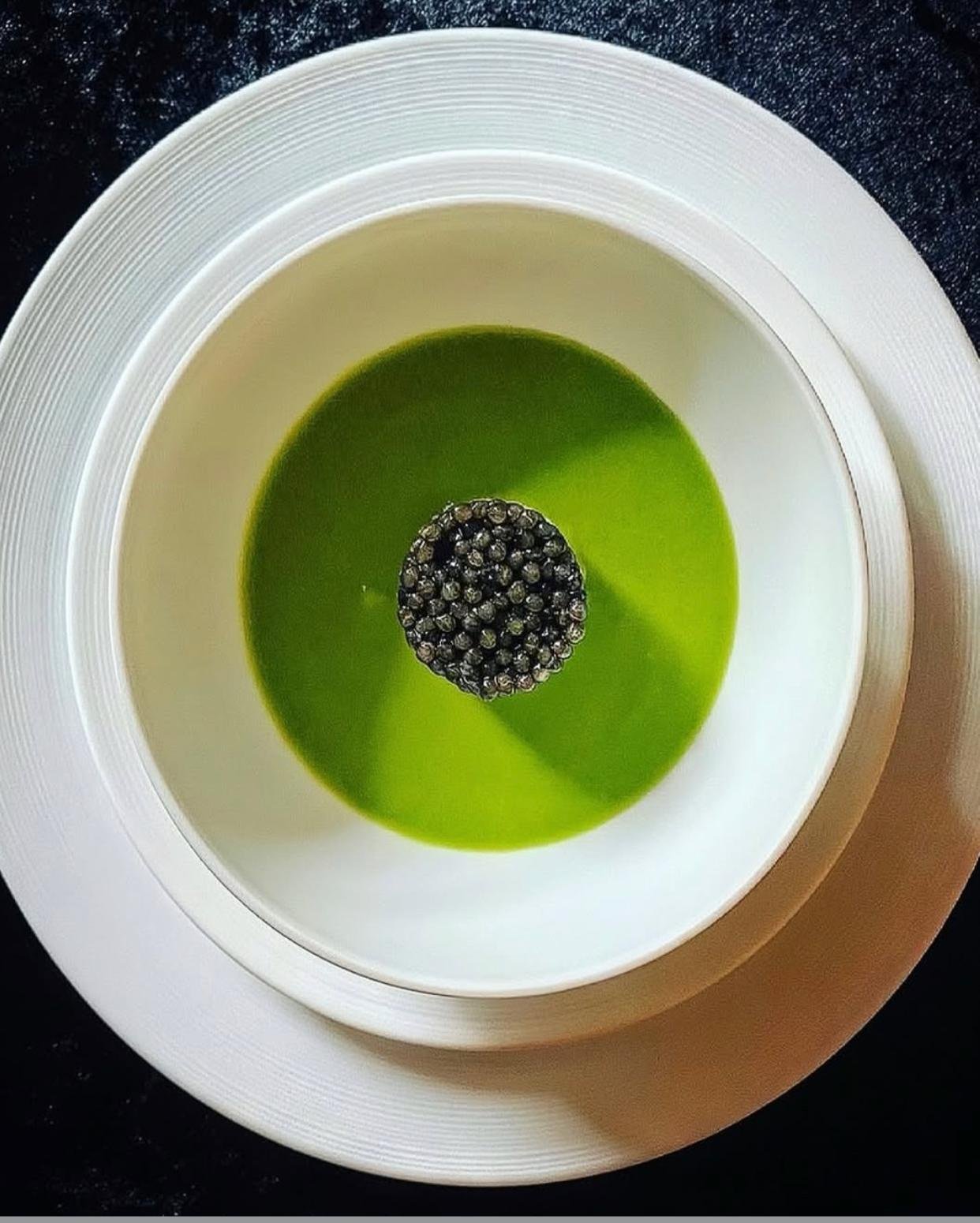
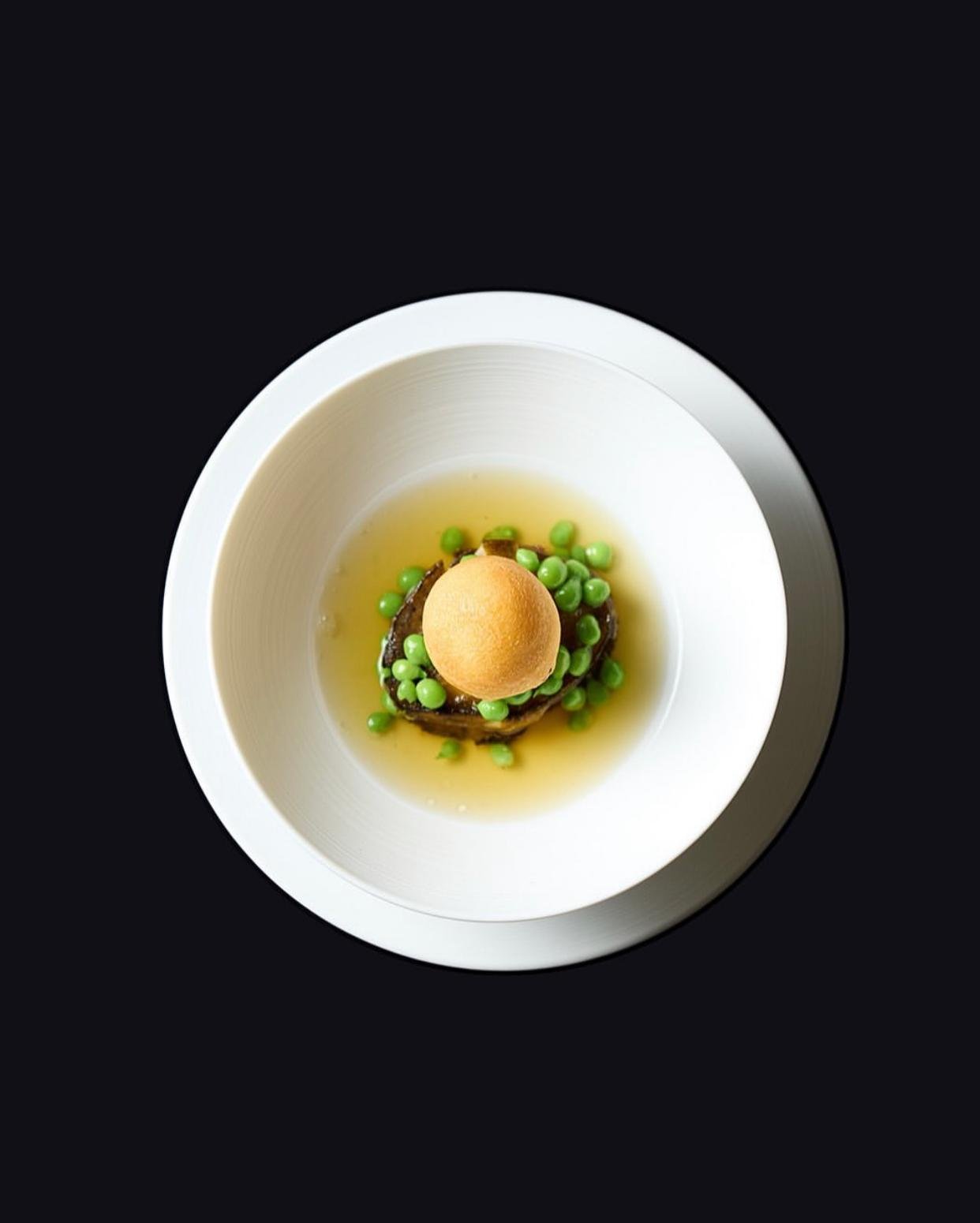
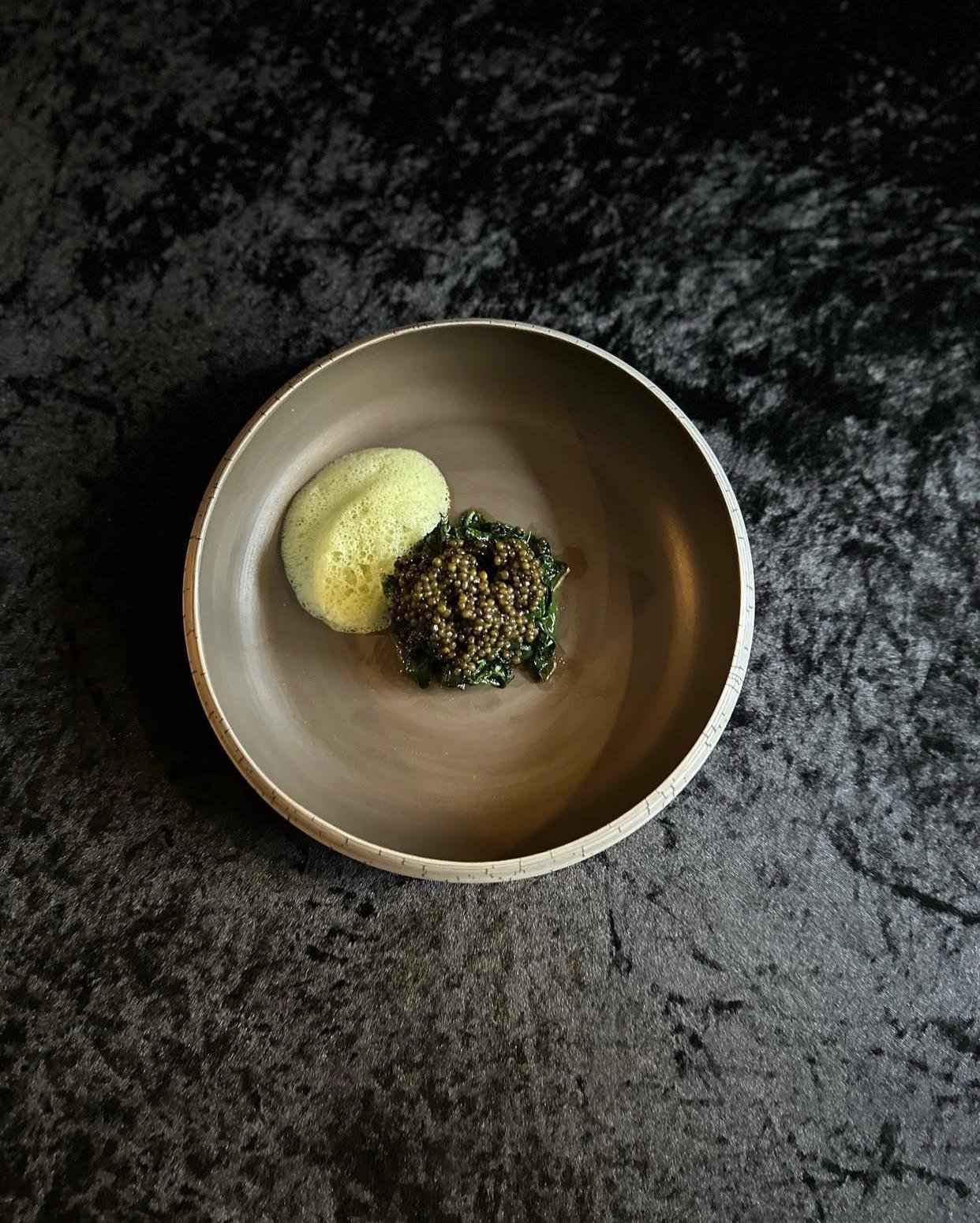
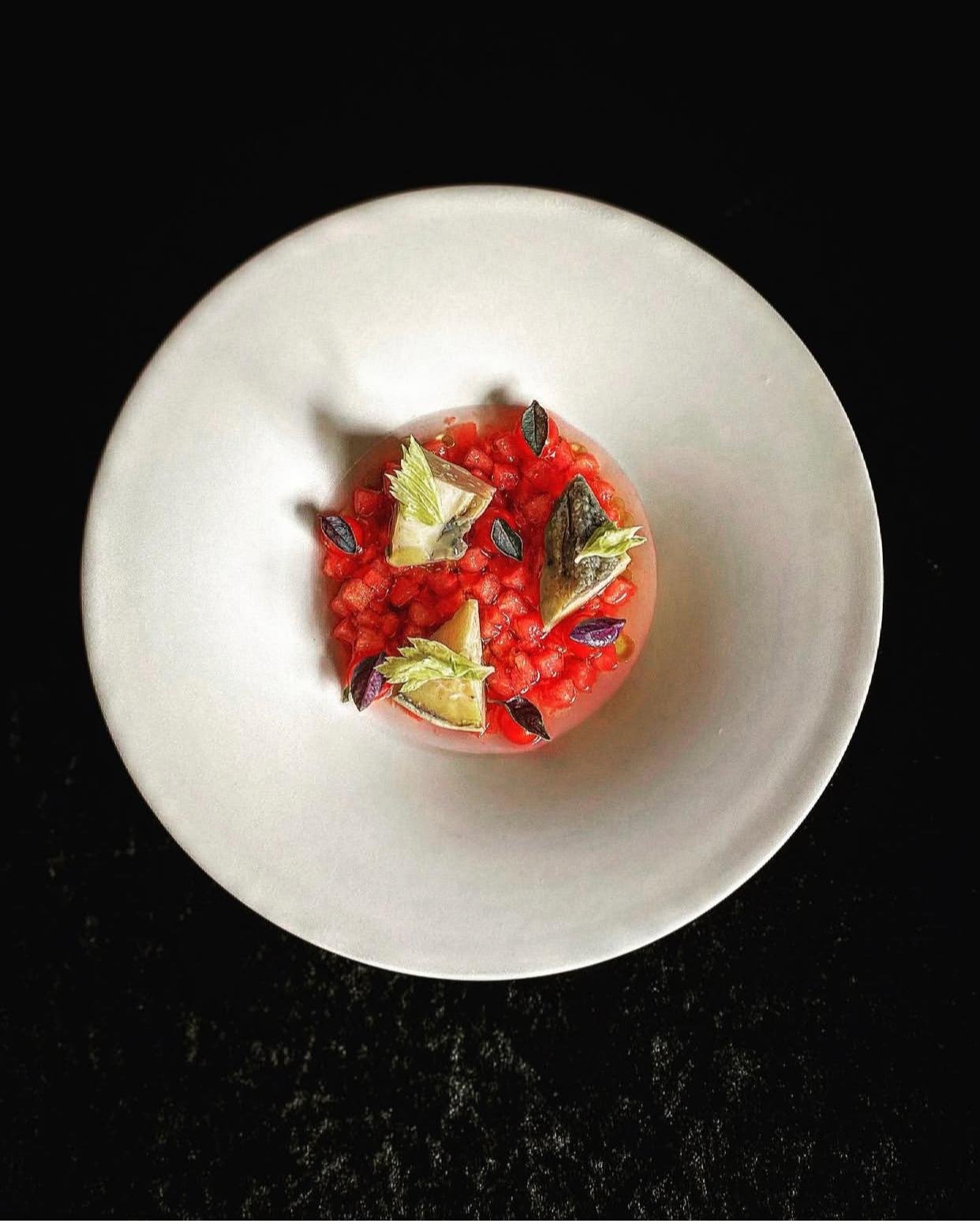
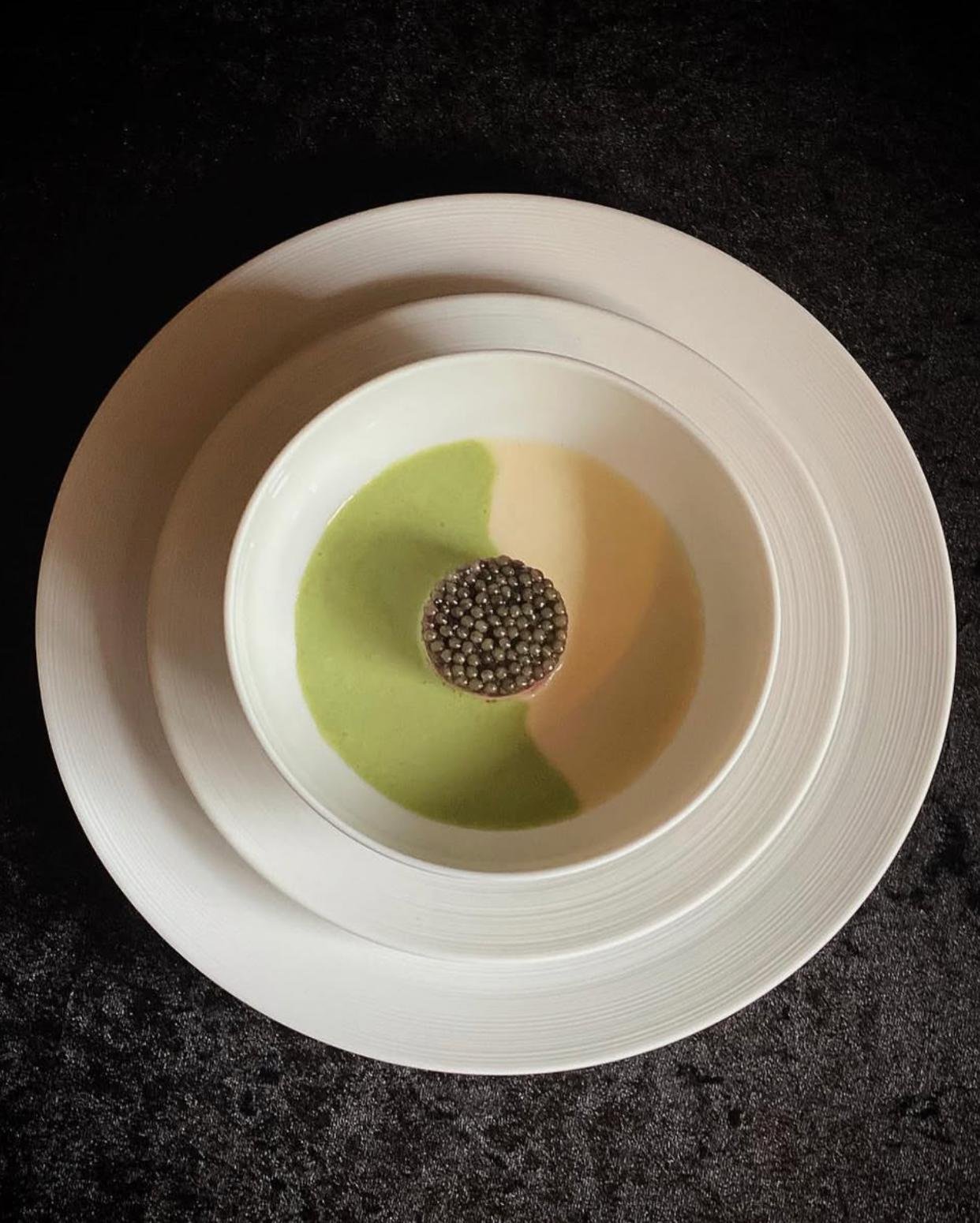
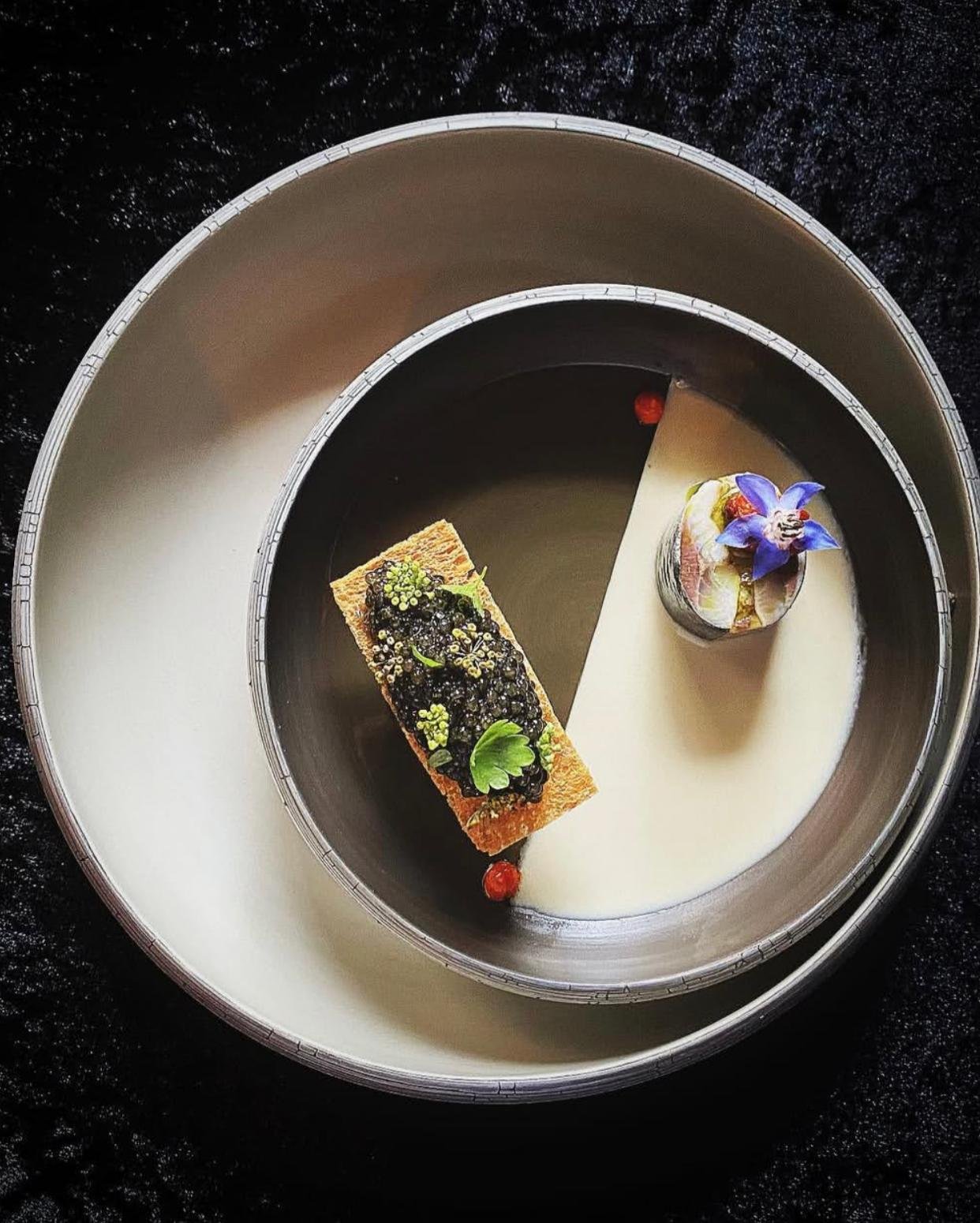
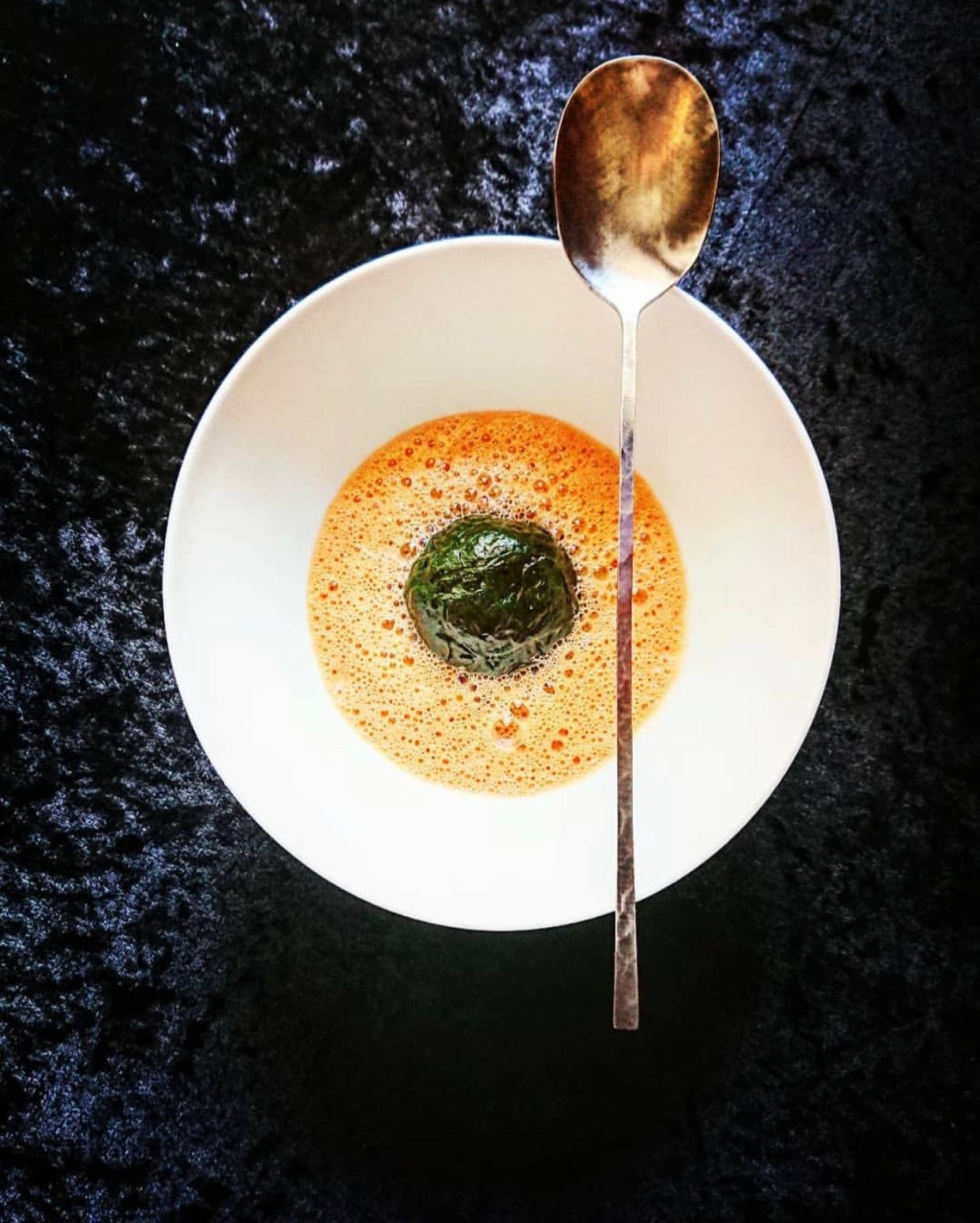
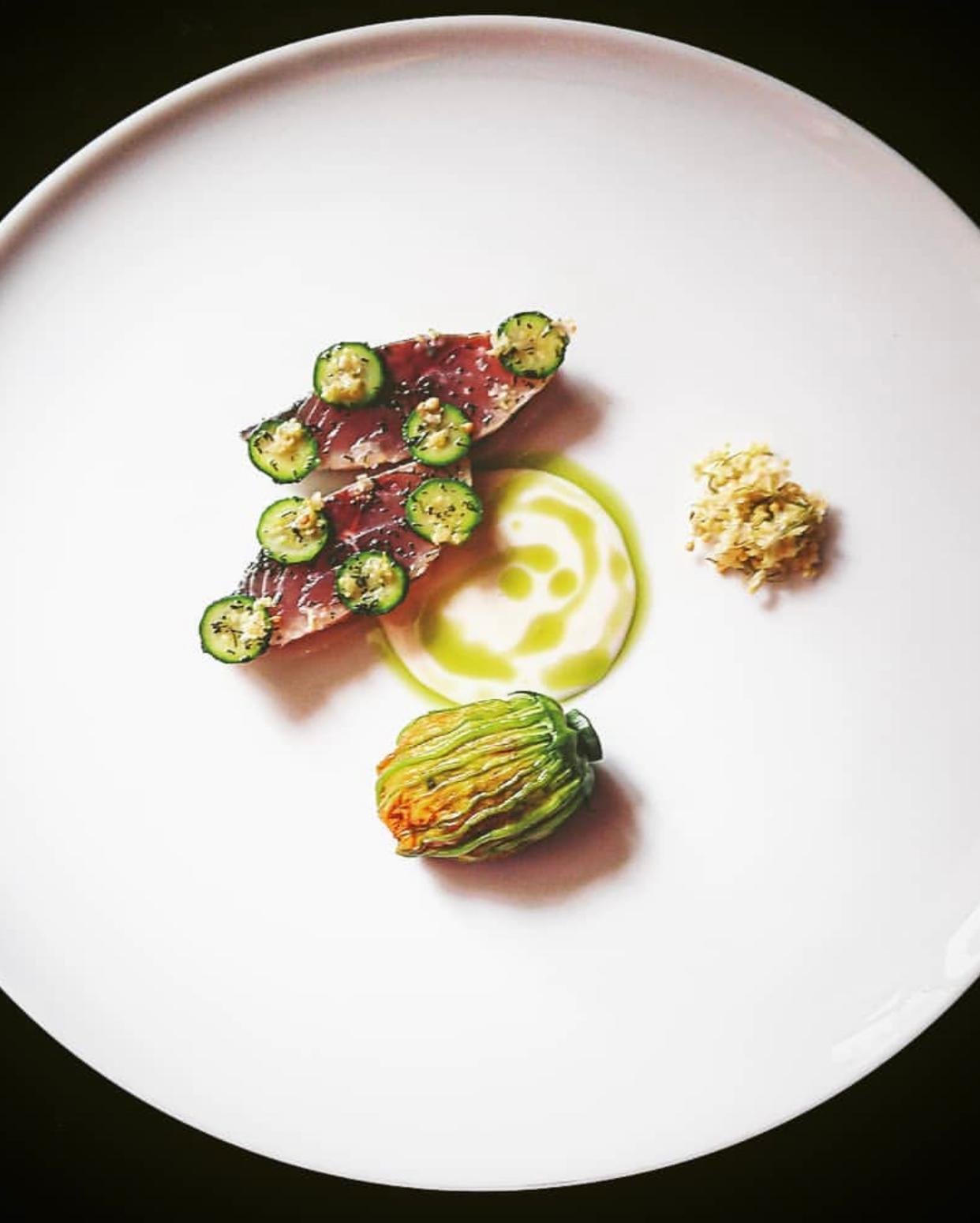
The menu at HOMMAGE is not communicated in advance and does not repeat itself reliably across visits — which is, by design, a reason to return. Arai determines the courses on the morning of service based on what the market has delivered and what the season demands. The chickpea hummus — inspired by the kitchens of Provence, where the pois chiche is a staple of the regional pantry — reappears across seasons as a constant, adapted to what surrounds it. The vichyssoise, crowned with caviar, is a signature of cooler months. On a summer evening, it gives way to a cold sardine soup with okra and tomato, served alongside a mackerel nigiri that places the meal briefly in the register of Japanese cuisine without abandoning the French vocabulary that structures it. Arai's sister restaurant NOURA operates immediately next door, holding a Michelin Bib Gourmand — a second address, lighter in format, that reflects the same philosophy at a different price point and pace.
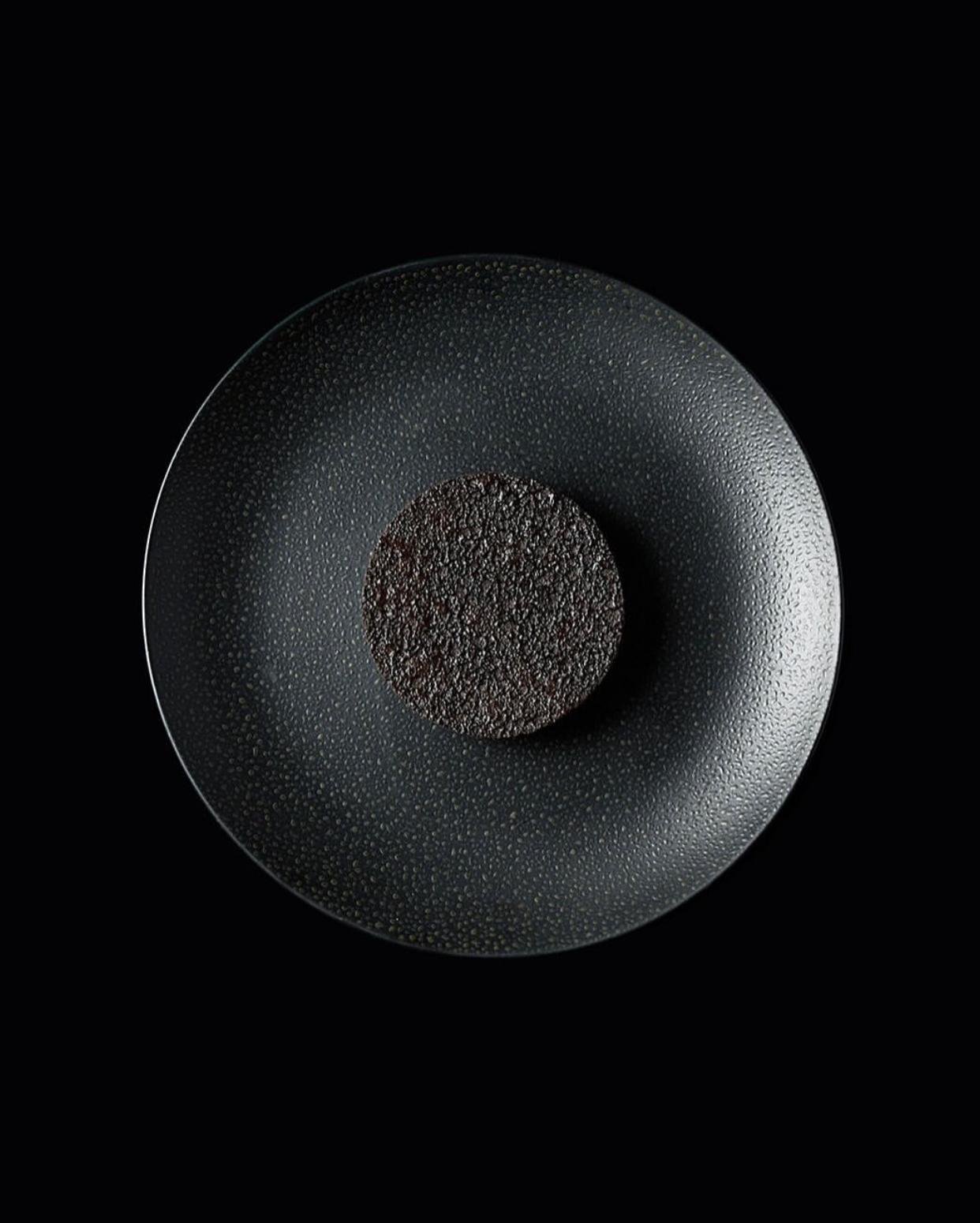
The building that houses HOMMAGE makes no attempt to announce itself. It is a concrete structure on a quiet residential street north of Sensō-ji, beyond the tourist circuit that fills Nakamise-dōri on any given afternoon. Arriving guests hear the weeping willow before they see the entrance. The restaurant is on the second floor, accessible only by staircase — the building offers no elevator, no concession to convenience. The dining room carries no decorative programme. Mino ware plates — the stoneware tradition of Gifu Prefecture, whose rough textures and irregular glazes have been used in Japanese tea ceremony since the Momoyama period — are arranged on the tables before service. The walls hold nothing. The light is calm. The effect is that of a room whose designer understood that the food is the content, and that any surface competing with it would be a failure of judgement. Arai has maintained this interior since 2000. He has not changed his mind about it.
Asakusa has been the popular cultural centre of Tokyo since the seventeenth century — the district of theatres, street food, craftspeople, and temples that defined the Edo city's public life before the western districts of Shinjuku and Shibuya existed as anything more than agricultural fields. Arai grew up inside this culture. The kaminariokoshi he uses in his blancmange is the same confectionery sold on Nakamise-dōri in shops that predate the Meiji era. The ningyo-yaki whose mould shapes his financier is the same doll-shaped cake that Asakusa street vendors have produced for well over a century. These are not local colour applied to a French restaurant. They are the terroir of the place where Arai was born, translated into the technical language he learned in France and brought home. Each departing guest receives a pair of chopsticks as a gift from the kitchen — a gesture whose logic is identical to the restaurant's name: the meal is over, the gratitude continues.
Arai uses the phrase himself: Asakusa French. Not Tokyo French, not Japanese French, not fusion — but a designation that places the restaurant inside a specific neighbourhood with a specific cultural history and says that the cooking that comes out of this kitchen can only come from this address. This is a more precise claim than most chefs are willing to make, and a more difficult one to sustain — because it means the restaurant must actually know the neighbourhood it names itself after, at a depth that cannot be faked across twenty-five years of service. HOMMAGE has sustained it. The kaminariokoshi blancmange, the ningyo-yaki financier, the chickpea hummus from Provence anchored to a Sensō-ji side street, the concrete building that makes no effort to look like a Michelin establishment — all of these are decisions that say the same thing: this restaurant knows exactly where it is, and has decided that where it is is enough.
Gloss Tokyo covers HOMMAGE through its address before its stars — because the address is the argument. A chef born in Asakusa who left to learn French cooking, came back to save money at a fish market, and opened a restaurant at twenty-six in the neighbourhood where he was born: this biography is not a marketing narrative. It is the exact account of how the cooking came to be what it is. The kaminariokoshi in the blancmange and the ningyo-yaki in the financier are not clever references. They are the evidence that the chef has understood something about his own position — that he is a French cook whose terroir is Asakusa, and that the most honest thing he can do is cook from that fact. The Michelin stars confirm the standard. The concrete building, the weeping willow, the pair of chopsticks at the end of the meal — these confirm something harder to evaluate and more important to know.
Born in Asakusa in 1974.
Trained in France. Worked a year at Tsukiji.
Opened HOMMAGE at twenty-six
in a bare concrete building
on a street where a weeping willow grows.
The blancmange is made from kaminariokoshi —
the puffed rice sweet sold on Nakamise-dōri
since before anyone living can remember.
The financier is shaped like a ningyo-yaki.
The menu is decided every morning.
At the end of the meal:
a pair of chopsticks.
A gift from the kitchen.
Gratitude, continued.
In the landscape of Tokyo's starred restaurants, HOMMAGE occupies a position that its location alone makes singular: two Michelin stars in a concrete building on a residential street in Asakusa, one kilometre from Sensō-ji, in the same neighbourhood the chef has never left. There are more technically spectacular kitchens in Tokyo. There are more glamorous addresses, more visible positions, more restaurants whose staging announces their ambition from the exterior. HOMMAGE announces nothing. It sits behind a weeping willow and waits. The guests who find it — twelve minutes on foot from the nearest station, up a staircase, into a room with nothing on the walls — are guests who came because they understood what the name means. Gratitude is not an emotion Arai performs for the table. It is the structure of the cooking: the ingredient chosen for what it is, the technique applied to reveal rather than to display, the Asakusa sweet in the French dessert because that is where the chef is from and that is what he is grateful for. Twenty-five years. Two stars. One concrete building. One weeping willow. No announcement necessary.
Asakusa, 2000.
A concrete building. A second floor.
Only a staircase.
The chef was twenty-six.
He had spent a year at Tsukiji
filling orders at four in the morning
to save enough to open here —
here, in the neighbourhood where he was born,
where the kaminariokoshi has been made
in the same shops since the Edo period,
where the weeping willow moves
the same way it moved
the year he opened.
HOMMAGE.
Gratitude, in French.
Continued.
© Hommage
© Hommage
© Hommage
© Hommage
© Hommage
© Hommage
© Hommage
© Hommage

© Hommage
© Hommage
© Hommage
© Hommage
© Hommage
© Hommage
© Hommage
© Hommage
© Hommage
© Hommage
© Hommage
© Hommage
© Hommage
© Hommage
© Hommage
© Hommage
© Hommage
© Hommage
HOMMAGE
© Hommage