
© Shiseido

© Shiseido
© Shiseido
Shiseido
In 1872, Arinobu Fukuhara, former chief pharmacist of the Japanese Imperial Navy, opened in the Ginza district the first Western-style pharmacy in Japan. He named it Shiseido — 資生堂 — three ideograms borrowed from the I Ching, the Chinese classic of divination from the first millennium BC: to praise the virtues of the earth that nourishes life and creates new values. In 1897, he launched Eudermine — a ruby-red lotion whose name comes from the ancient Greek "eu" (good) and "derma" (skin). A Japanese product with a Greek name, in an eight-faceted bottle, in the most Western pharmacy of the most Oriental Japan. It is still sold today. The formula has changed. The bottle, almost not at all.
The History · I Ching · Ancient Greek · Ginza · 1872
Arinobu Fukuhara was born in 1848 in Awa, the son of a physician specialising in oriental phytotherapy. He studied Western medicine, became chief pharmacist of the Japanese Imperial Navy, travelled the world in that capacity — Europe, America — and returned with a conviction: Western pharmaceutical sciences and Eastern aesthetic philosophy need not oppose each other. In 1872, at the dawn of the Meiji era, when Japan opened to the outside world after two centuries of sakoku, he opened on Ginza the first private Western-style pharmacy in the country. He chose its name from the I Ching — the oldest and most fundamental text of classical Chinese thought, a book of divination and wisdom whose hexagrams still structure part of Japanese philosophy today. In 1888, he commercialised Japan's first toothpaste — a scented bar rubbed with a wet brush, a revolution for a country where married women still blackened their teeth. In 1897, he launched Eudermine: a ruby-red softening lotion in an eight-faceted bottle, labelled with a flower, tied with a red ribbon — and whose name was constructed in ancient Greek. In Meiji-era Japan, this was an act of radical modernity as much as an act of beauty. In 1902, he installed Japan's first soda fountain in his pharmacy — imported from the United States. The fountain was so popular that it became famous in the novels of the era. One author wrote: "Once you have discovered Shiseido ice cream, it is impossible to taste any other."
Hyaluronic Acid · 1983 · The First Time In The World
In 1983, Shiseido became the first company in the world to produce hyaluronic acid at industrial scale through a bacterial fermentation process — drawing on the micro-organism streptococcus zooepidemicus. Until then, hyaluronic acid was primarily extracted from rooster combs — a costly method, limited in volume, poorly suited to industrial production. Bacterial fermentation made it possible to produce the active in large quantities, with controlled purity and a reasonable cost. This decision of 1983 is the reason why hyaluronic acid became the most widely used cosmetic active in the world in the following decades — and the reason why Shiseido understands the mechanisms of its action with a depth that few cosmetic brands can claim. When a brand today says it puts hyaluronic acid in its formulas, it is benefiting from an active whose industrial production was financed and developed by Shiseido. This is not a sales argument. It is a historical fact.
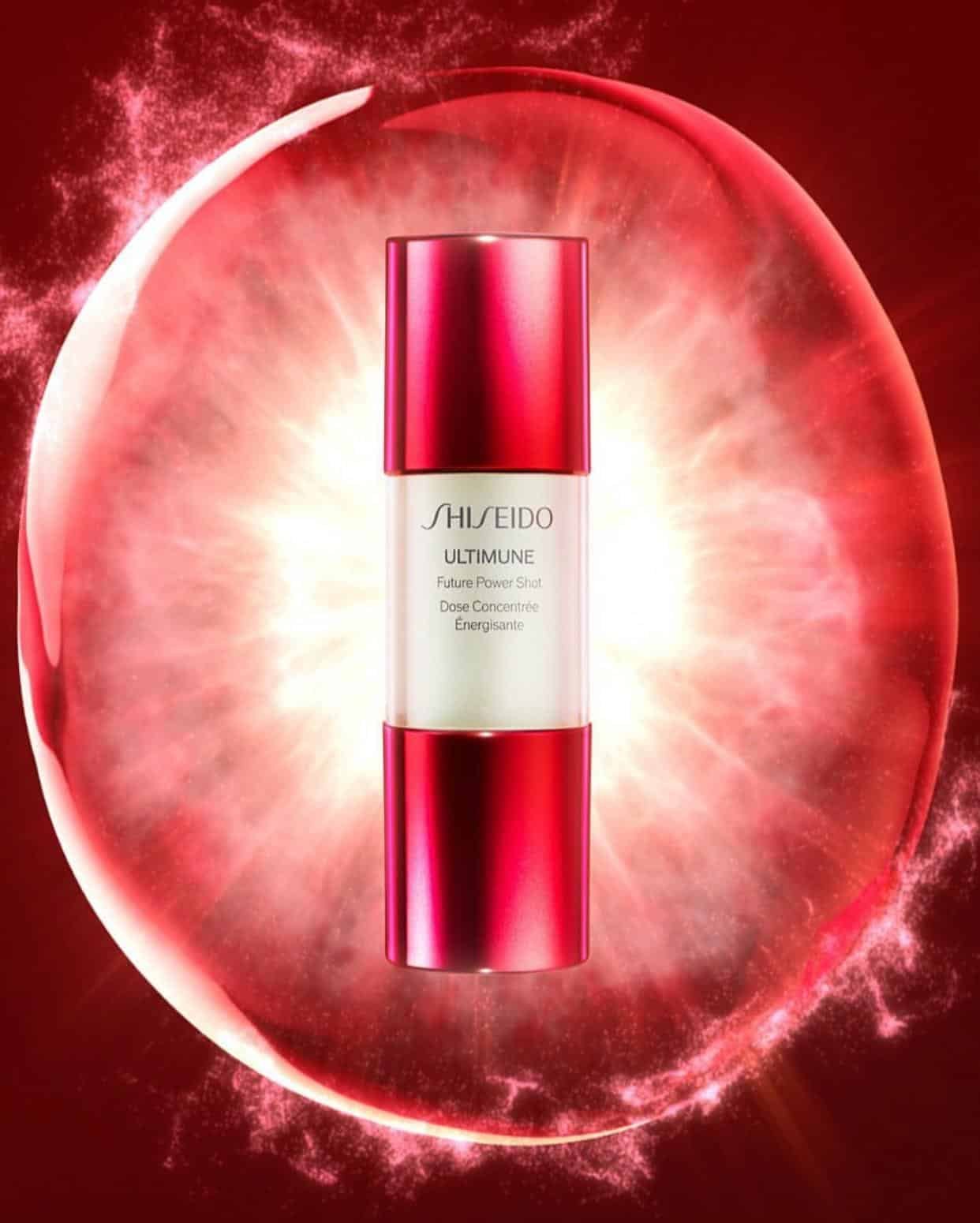
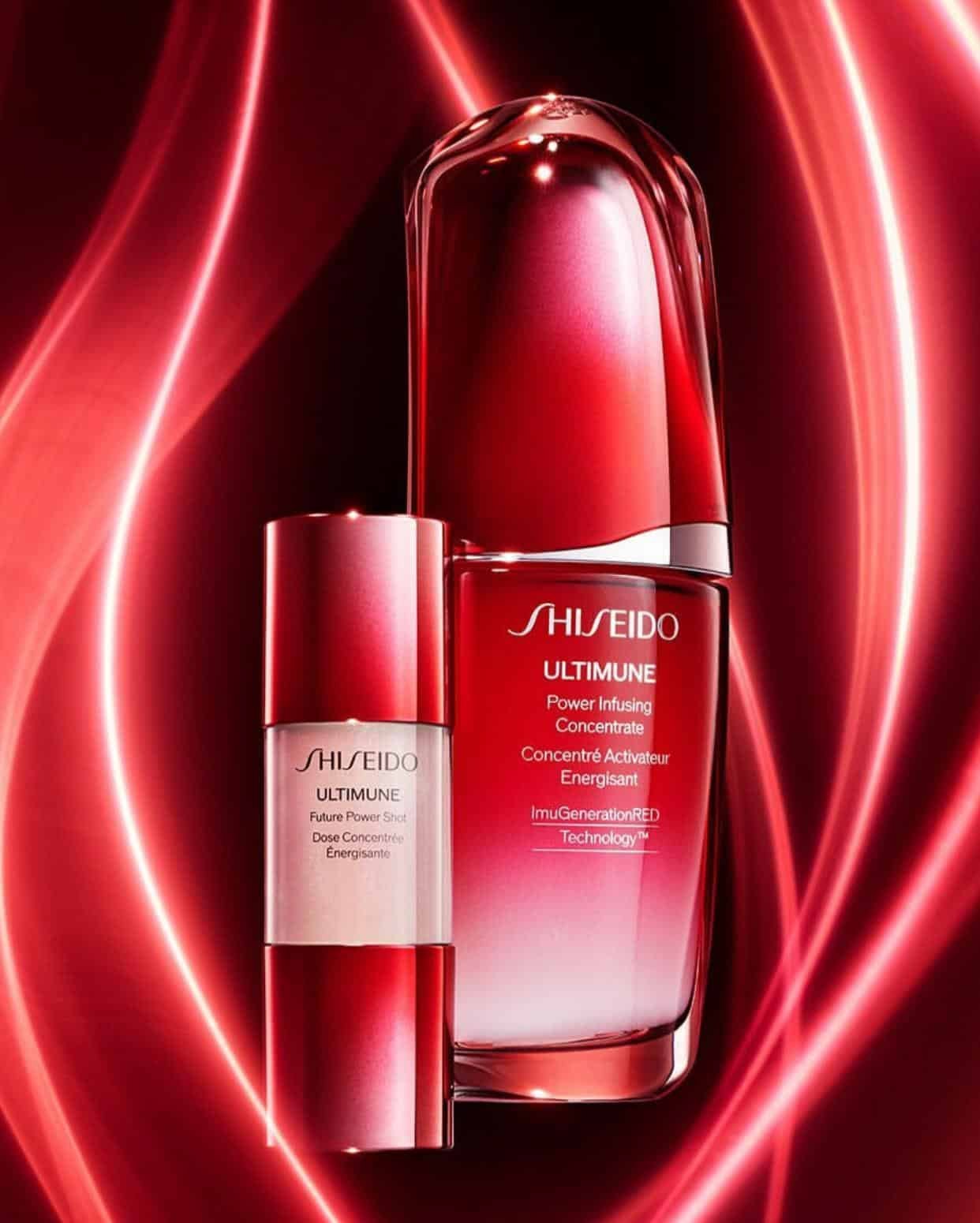
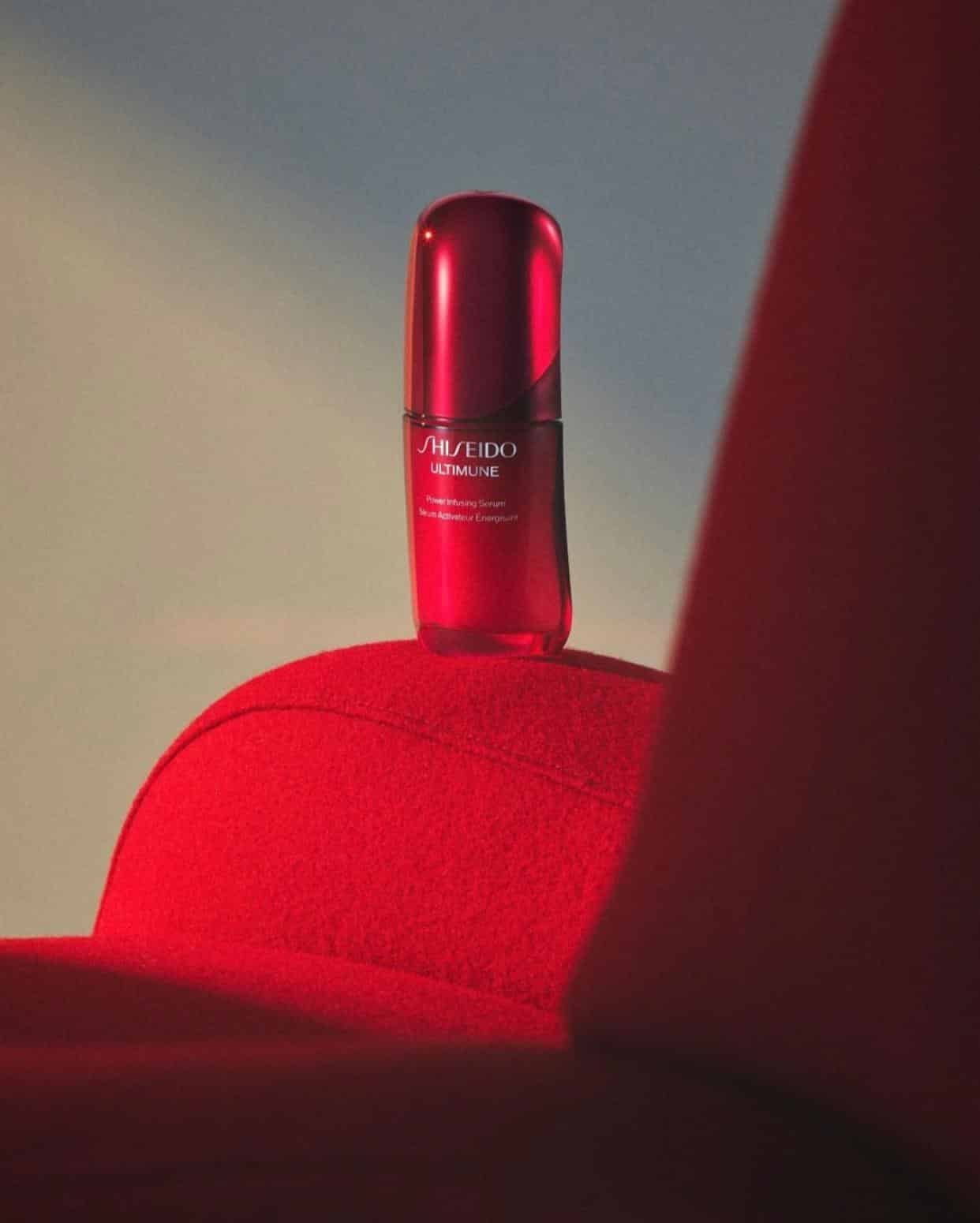
Ultimune is Shiseido's best-selling serum since its launch in 2014 — one bottle sold every seven seconds in the world, two hundred and sixty-nine awards accumulated over ten years. In March 2025, it evolved with a new formula built on a major scientific discovery: Shiseido identified the role of memory T-cells in skin ageing. These specialised immune cells detect and eliminate senescent cells — the ageing cells that contaminate those around them and accelerate the signs of age — before they become established. The new formula integrates the Power Fermented Camellia+, a patented complex derived from the camellia of the Goto Islands — cultivated in a particularly harsh environment that develops exceptional resilience in the plant. Almost the entirety of the plant is used: petals, leaves, seeds, sap — a principle of sobriety and respect for the ecosystem of the source. Ninety-one per cent of ingredients are of natural origin. The red bottle, whose curved form was inherited from the first generation and whose camellia engraved on the surface expresses "the reinterpretation of time through the prism of science", is refillable.
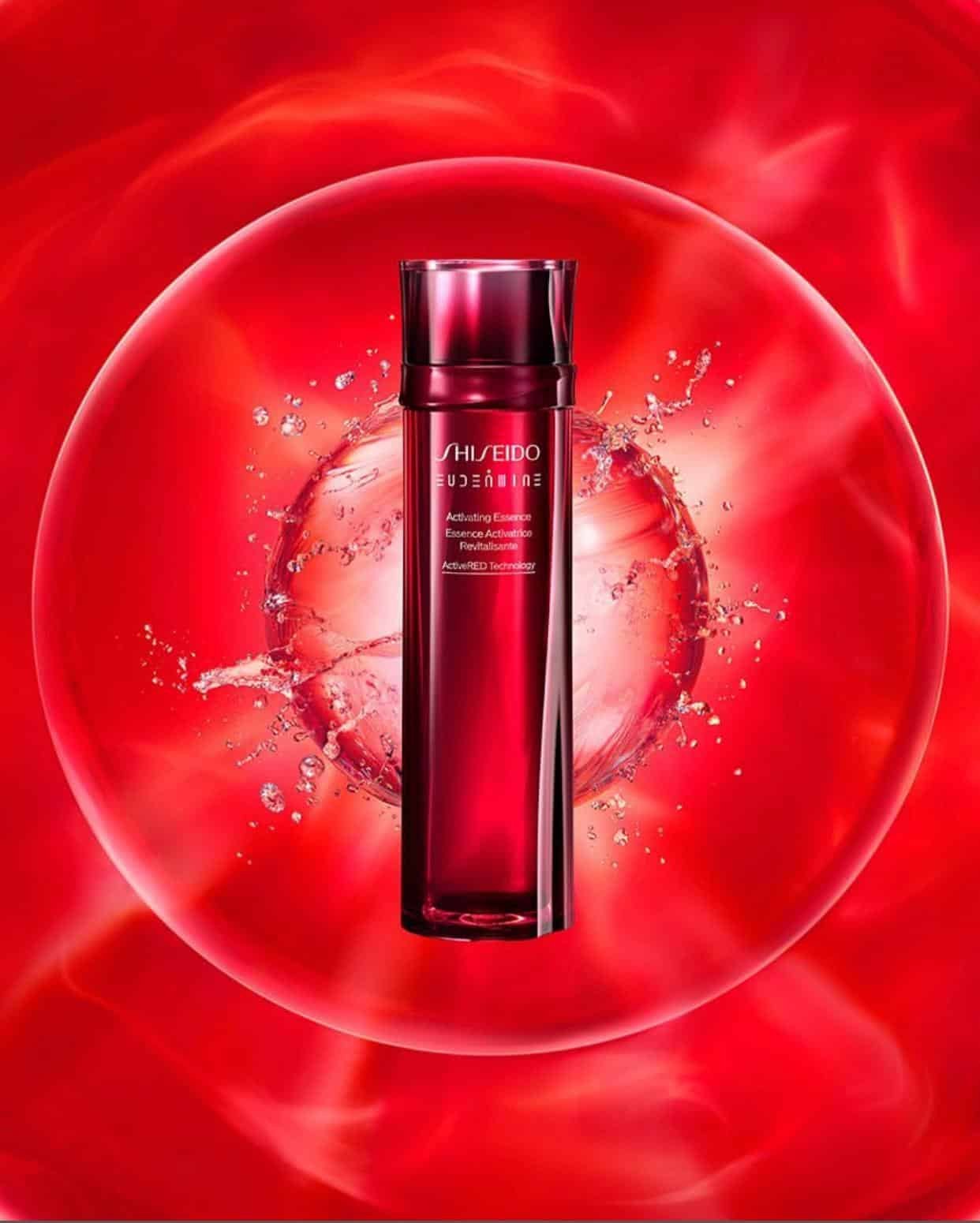
Eudermine is the oldest cosmetic lotion still sold in the world under its original name. Launched in 1897 at the Ginza pharmacy, it was used by geishas to protect their skin beneath the heavy makeup of performances. Its ruby-red colour, its light texture and its delicate peony fragrance — which evaporated leaving the skin supple — made it a skincare product immediately adopted by women of all ages in a Japan still largely unfamiliar with Western-style cosmetics. The current formula integrates a double hyaluronic acid for twenty-four hours of hydration, stable-form vitamin C for luminosity, and a fermented kefir extract as a probiotic for the skin microbiome. The glass bottle is refillable — a ninety-two per cent reduction in plastic compared to conventional methods. In 1997, for the lotion's centenary, Serge Lutens redesigned the bottle: an almost architectural red glass, with a perfect round cap — a nod to the Japanese flag. Shiseido's red lotion already carried the flag in its bottle, a century before Lutens named it.
In 1980, Shiseido engaged Serge Lutens — French artistic director, former collaborator of Vogue and Elle — to create a graphic representation of the point of convergence between East and West. It was he who contacted Shiseido first, convinced he could create this image. What he produced became one of the most recognised icons in the international cosmetics industry: a woman with Japanese features, a large red disc on a black background — the sun, the flag, the lacquer — in a photograph that says simultaneously tradition and modernity, East and West, without hierarchy between the two. This image remains a reference in beauty art direction. In 1992, Shiseido entrusted Lutens with the creation of the Salons du Palais Royal in Paris — a spectacular perfumery in the galleries of the Palais Royal, entirely conceived by him, which became a Parisian cult destination. In 1997, he redesigned the Eudermine bottle for its centenary. The relationship between Shiseido and Lutens is the longest and most coherent collaboration between a Japanese House and a French artistic director in the history of beauty.
The Shiseido Gallery was founded in 1919 by Shinzo Fukuhara — the founder's son, second president of the company, a recognised photographer and Shiseido's first artistic director. It is today the oldest art gallery still open to the public in Japan. Its current building on Ginza, designed by Yoshio Taniguchi — the architect also responsible for MoMA in New York and the House of Dior Ginza — received the Architectural Institute of Japan Prize in 1980. This is not a corporate gallery in the conventional sense — it is an exhibition space whose programme covers contemporary art, design and photography, independently of any direct link to the brand's products. Shinzo Fukuhara, a photographer whose work is recognised in the history of Japanese photography, understood in 1919 what some luxury brands only understood in the two thousands: that art is not an accessory of beauty, but its condition. Shiseido is a beauty House because it has always been, since 1919, a House of art.
In 1902, Arinobu Fukuhara imported from the United States Japan's first soda fountain and installed it behind the counter of his Ginza pharmacy. He also imported American ice cream cups, glasses and straws — objects still extremely rare in the Japan of the era. The fountain and the ice creams were so popular that they appeared in Japanese literature. The author Kafū Nagai wrote: "Once you have discovered Shiseido ice cream, it is impossible to taste any other." In 1928, the fountain obtained its own building — the Shiseido ice cream parlour, an institution of Ginza. It was demolished in 2001 and rebuilt by Ricardo Bofill, a Catalan architect whose poetic rationalism enters into dialogue with the historic elegance of the district. The current building houses the Shiseido Parlour — a café salon and restaurant that perpetuates this founding link between Shiseido and the sociability of Ginza. Skincare and pleasure have always cohabited at the same address. This is not commercial diversification. It is the continuity of a philosophy dating to 1902: what is good for the skin and what is simply good are not separable.
The Shiseido skincare portfolio covers the full spectrum of Japanese beauty — from sun protection to high skin nutrition, through firmness, luminosity and botanical beauty. Vital Perfection targets the firmness and vitality of mature skin with iris and peony extracts developed in the Yokohama laboratories. Future Solution LX is the House's exceptional line — formulas concentrated in longevity extracts derived from research into the biological mechanisms of cellular ageing. WASO translates into a daily routine the plant-based ingredients of the Japanese tradition — buckwheat, yuzu, seaweed — in light textures adapted to younger skin and to markets seeking natural beauty without sacrificing clinical efficacy. The WetForce sun protection — whose formula reinforces its efficacy on contact with water — is an innovation from the Shiseido manufacture that redefined the standards of the international sun protection market. These collections are distributed in Tokyo in Shiseido boutiques on Ginza and in the department stores — Isetan, Mitsukoshi, Takashimaya — with a level of beauty consultation that the Shiseido Academy of Beauty & Fashion teams have trained to their own schools' level of exigence.
In 1872, a pharmacist named his boutique
after a Chinese classic from the first millennium.
In 1897, he launched a red lotion
whose name came from ancient Greek.
In 1902, he installed Japan's first soda fountain.
In 1919, his son founded
the oldest art gallery in Japan.
In 1983, Shiseido produced
hyaluronic acid at industrial scale
before anyone else.
In 2025, the Goto Islands camellia
fermented through a patented technology
enters the world's best-selling serum.
Shiseido is not a Japanese beauty brand.
It is the beauty brand
that defined what Japanese beauty means.
Every other House in this corpus comes to Tokyo. Shiseido is from it. The Ginza pharmacy of 1872 is a few hundred metres from the flagships of Cartier, Chanel, Dior and Louis Vuitton. These Houses built their buildings in the district that Arinobu Fukuhara had chosen because it was "a crossroads between Eastern and Western cultures." Shiseido chose Ginza in 1872 because it was the right place for a pharmacist who wanted to bring the two cultures together. The others came afterwards, drawn by exactly the same thing. The Shiseido Gallery opened in 1919 — thirty years before Cartier installed its first boutique in Japan. Shiseido's hyaluronic acid was in formulas in 1983 — when most major luxury beauty brands did not yet have their own research laboratory. And the 2025 Ultimune, with its patented fermented camellia and thirty years of research into skin immunity, is produced in Yokohama — not in a garden in Normandy or on the cliffs of Granville, but in the laboratories of the city where Shiseido built its global research centre. For Shiseido, Tokyo is not a market. It is the origin.
Shiseido The Store · Ginza
7-8-10 Ginza, Chūō-ku, Tokyo
Full collections · Beauty consultation · The founding address
Shiseido Parlour · Café Salon
8-8-3 Ginza, Chūō-ku, Tokyo
On the site of the original pharmacy · 1872
Shiseido Gallery
8-8-3 Ginza, Chūō-ku, Tokyo
The oldest art gallery in Japan · Founded 1919
A naval pharmacist on Ginza in 1872.
A name borrowed from the I Ching.
A red lotion with a Greek name.
Japan's first soda fountain.
The oldest art gallery still open.
Industrial hyaluronic acid.
The patented fermented camellia.
The other Houses came to Ginza
because it was the right place.
Shiseido was there from the beginning.
This is not a historical advantage.
It is a definition.
© Shiseido
© Shiseido
© Shiseido
© Shiseido

© Shiseido
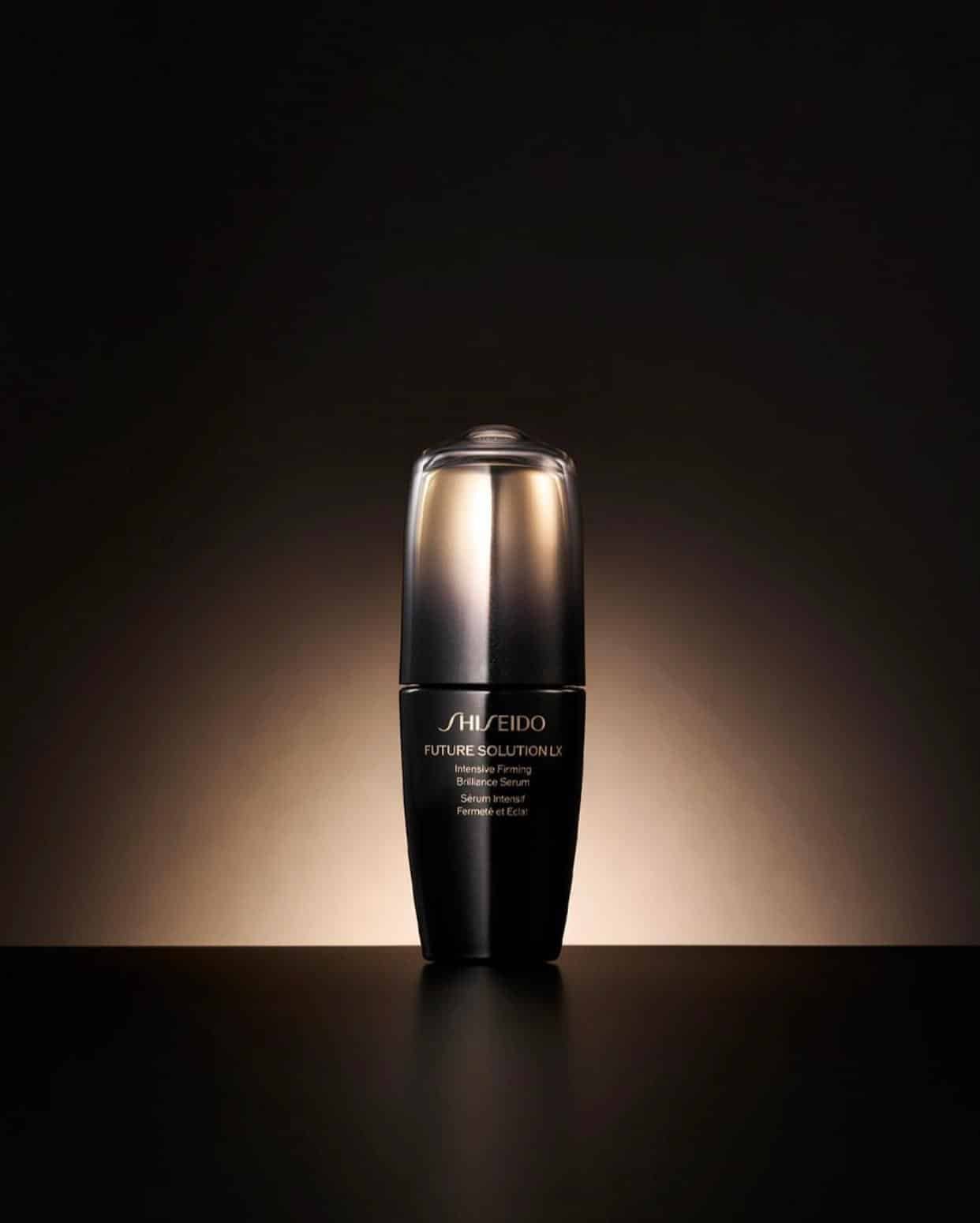
© Shiseido
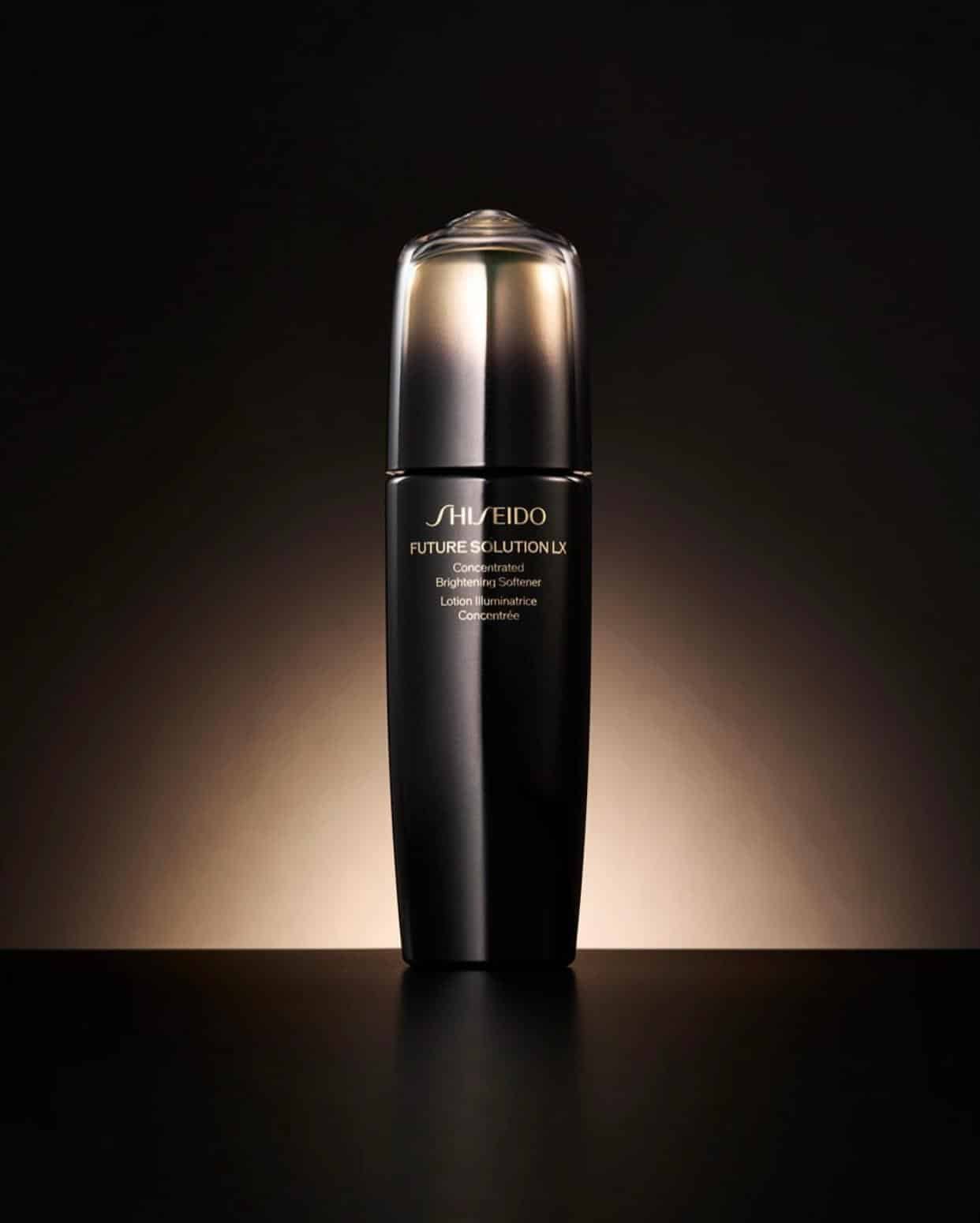
© Shiseido
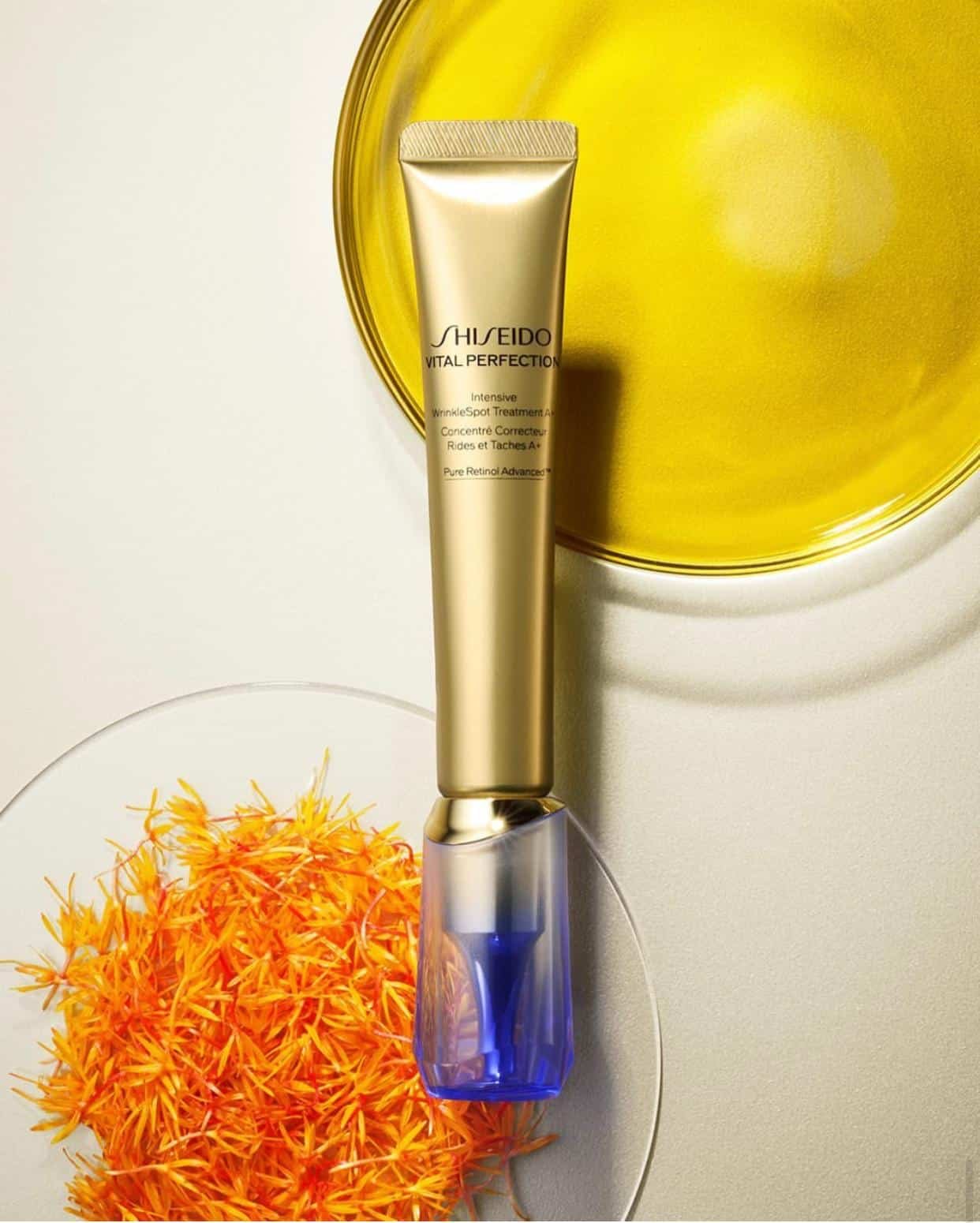
© Shiseido

© Shiseido
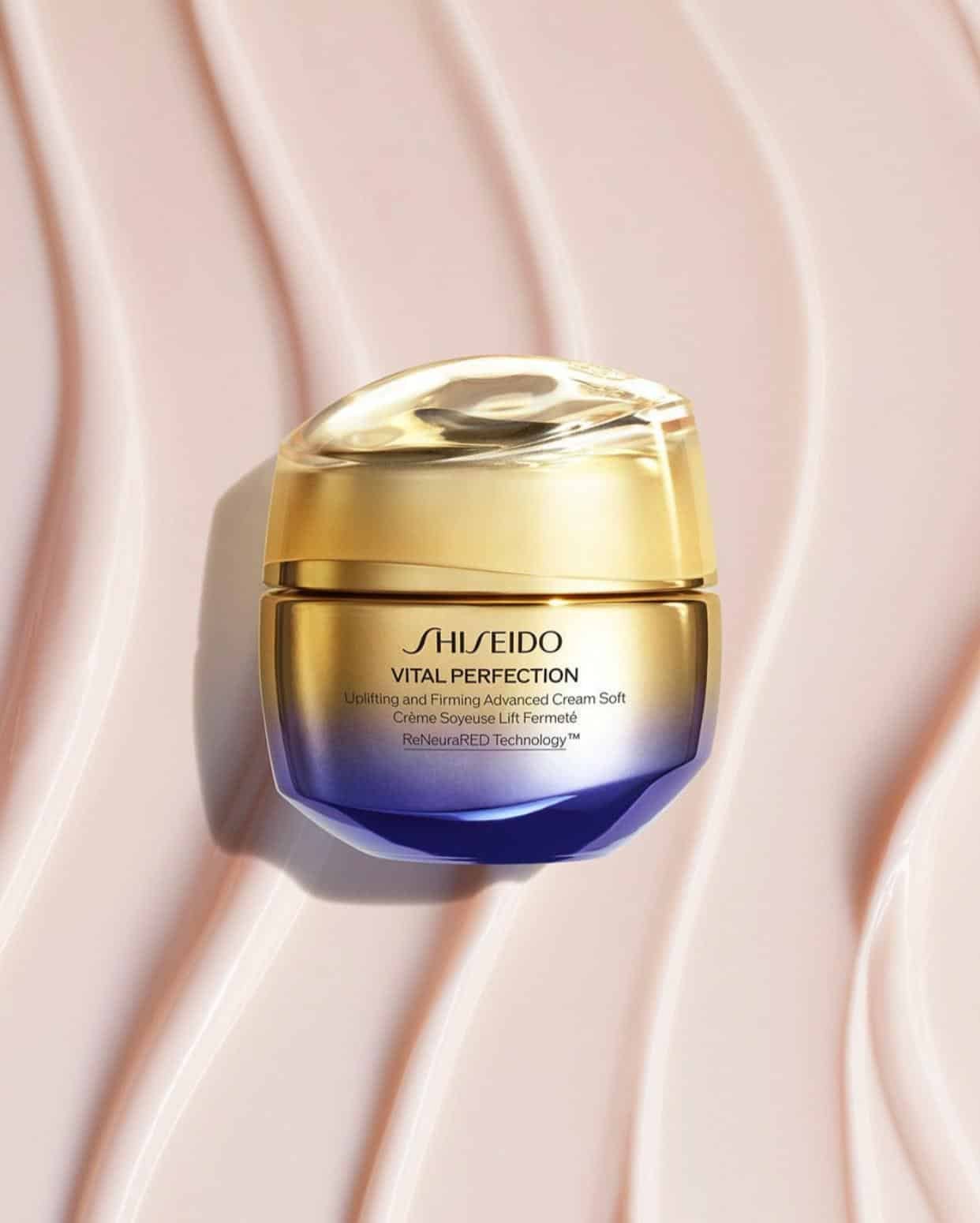
© Shiseido
SHISEIDO
© Shiseido