
© Cartier
© Cartier
© Cartier
Cartier
In 1904, Alberto Santos-Dumont could not read his pocket watch in mid-flight. He asked his friend Louis Cartier to create something different. Louis Cartier invented for him the first modern men's wristwatch — an object that did not exist, for a use that did not yet exist. In 1917, Louis Cartier sketched the Tank, inspired by an aerial view of Allied tanks advancing on the Western Front — the lateral brancards are the tracks, the dial is the body of the machine. One watch born of a friendship. One watch born of a war. All of Cartier's watchmaking begins there.
The History · Two Watches · Two Centuries · One Thread
Alberto Santos-Dumont was Brazilian, a pioneer of aviation, and he lived in Paris during the Belle Époque. He built balloons and aeroplanes, made his first flights in the Bois de Boulogne, and on 23 October 1906 he covered sixty metres above the grass at Bagatelle in his 14-bis — the first powered flight officially ratified in Europe. Louis Cartier and he were friends. In 1904, Santos-Dumont explained to Cartier that pocket watches were unusable in flight — confined space, hands on the controls, constant attention to altitude and direction. Louis Cartier conceived a watch fixed to the wrist with a leather strap. The Santos was born. It entered serial production in 1911, at eight hundred examples. It was the first men's wristwatch produced in series in history. Thirteen years later, in 1917, Louis Cartier looked at aerial photographs of the front and saw Allied tanks advancing through the mud. He noted the form — the lateral brancards flanking the case like tracks flanking a tank. He sketched the Tank. Jackie Kennedy would wear it. Andy Warhol would say he owned only one watch. Yves Saint Laurent would name it the only watch he wore. Princess Diana would never be without it. Two watches born of precise circumstances — not design decisions, not market trends, but a friend's request and an image of war. These are the foundations of Cartier watchmaking.
The La Chaux-de-Fonds Manufacture · The Swiss Heart Of A French House
Cartier is a French House — founded in Paris in 1847, headquartered on the rue de la Paix — whose watchmaking department is entirely Swiss, in La Chaux-de-Fonds, a city inscribed on the UNESCO World Heritage List for its watchmaking urbanism. This duality is not an anomaly — it is the very structure of what Cartier has been since the early twentieth century: the design, aesthetic and vision come from Paris; the precision, calibres and technique come from Switzerland. The La Chaux-de-Fonds Manufacture, inaugurated in 2001, brings together thirty thousand square metres across five sites in three cantons, with twelve hundred collaborators of more than thirty nationalities. It produces all in-house calibres — the 1847 MC, the 1904 MC — and houses the Maison des Métiers d'Art, a renovated farmhouse dedicated to the savoir-faire of high watchmaking: enamelling, guilloché, stone-setting, engraving, marquetry. Every Cartier watch is serviceable for life — the earliest Santos are already more than a century old and the La Chaux-de-Fonds ateliers can still remake their components without documentation, from the piece itself.
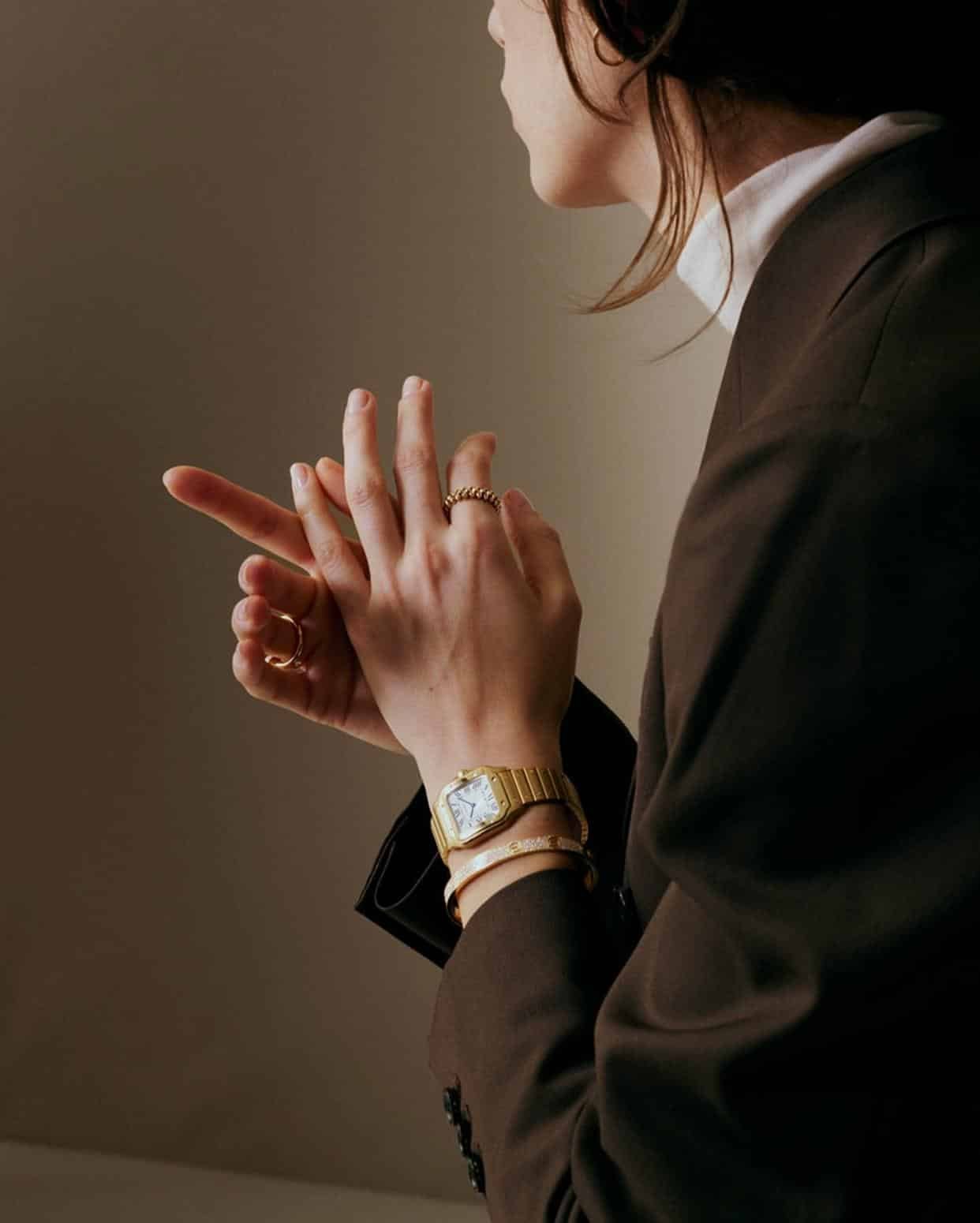
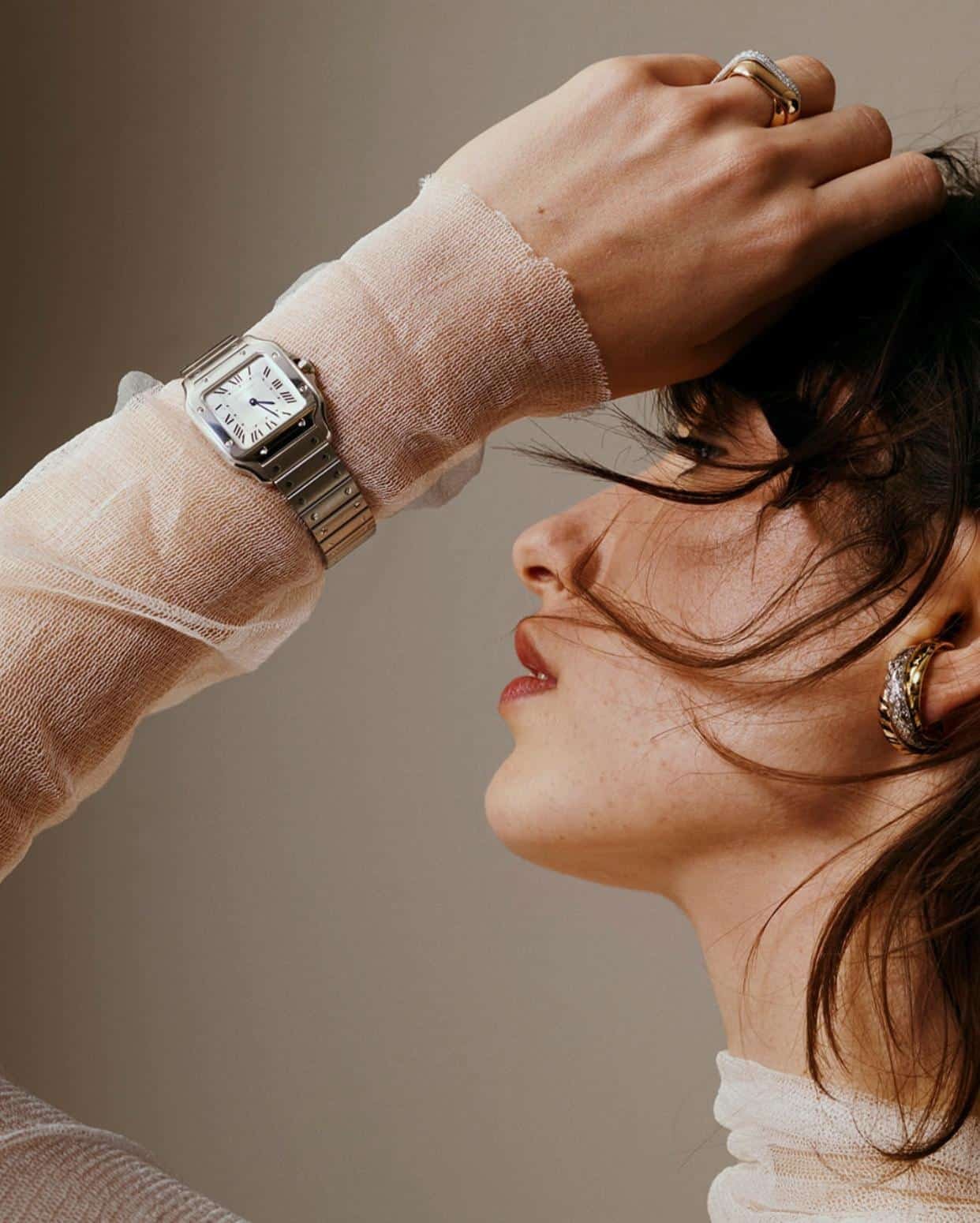
The Santos is the founding watch — the one that proves Cartier is not only a jeweller but a watchmaker, and that the two can coexist in a single object. Its square case with rounded corners, elongated Roman numerals, exposed screws on the bezel — which recall the rivets of the metallic structures of the era, the frames of aeroplanes and the pillars of the Eiffel Tower — form an immediately identifiable formal vocabulary that has not changed in a hundred and twenty years. Current versions — the Santos de Cartier with the QuickSwitch system for changing the strap without tools, and the SmartLink for adjusting the length without a watchmaker — carry the same screws, the same dial, the same relationship between the frame and the reading surface. The form does not need to be reinvented because it was right from the beginning. In Tokyo, the Santos is the Cartier watch that the male clientele wears most readily — its square case, precise proportions and aviation history resonate in a market where watches are purchased with an awareness of their narrative as acute as the awareness of their mechanics.
The Tank is the favourite watch of people who do not like watches that show off. Its rectangular form, flat lateral brancards, blue cabochon sapphire on the crown — the only concession to ornamental detail in a piece of absolute sobriety — make it the watch that has been worn for a hundred years by those who choose by conviction rather than convention. Jackie Kennedy Onassis wore it permanently. Andy Warhol said he wore only one watch — a Tank. Yves Saint Laurent had chosen it for his entire life. Princess Diana wore it on private outings. This loyalty is not a coincidence — the Tank is the only watch whose design is sufficiently affirmed to be recognisable and sufficiently restrained never to dominate an outfit or a conversation. Cartier currently offers the Tank in several formats — Tank Normale, Tank Cintrée, Tank Américaine, Tank Française, Tank Solarbeat — some with the in-house 1917 MC calibre, named in reference to the year of creation. For Watches & Wonders 2026, Cartier Privé offers the Tank Normale in platinum with an integrated bracelet — the purest expression of the House's style.
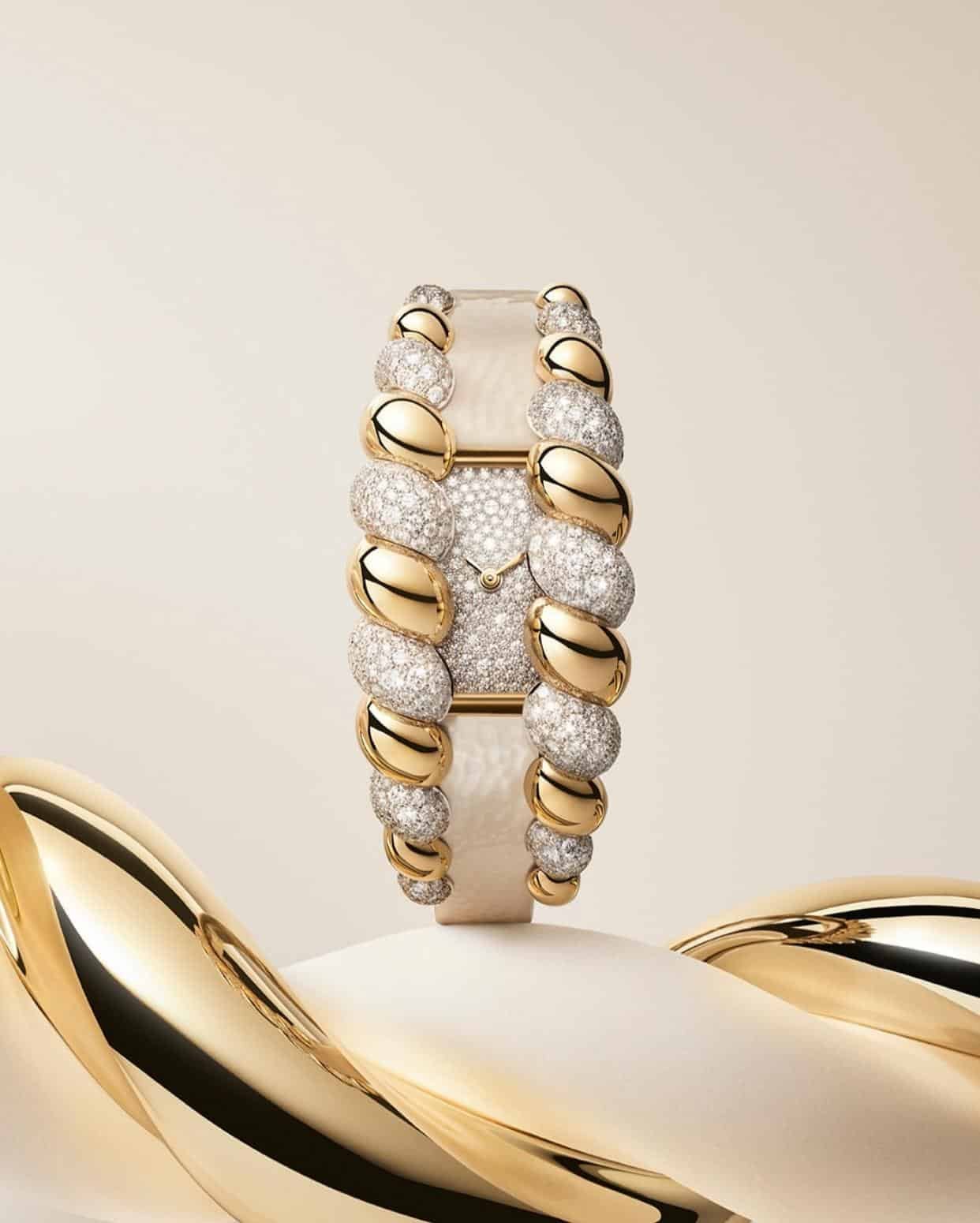
Cartier high watchmaking articulates around a principle present since the first mystery clocks of the early twentieth century — the hands appear to float within crystal discs with no apparent mechanism, in direct continuity with the House's jewellery vocabulary. The Poetic Complications — complications depicting a ballerina dancing, a bird in flight, the revolution of the planets — are watchmaking mechanisms that produce not information but contemplation. The Cartier Privé programme, launched in 2015, offers each year a contemporary interpretation of a historical House form — Crash, Tank Cintrée, Tonneau, Tortue, Asymmetric Tank — in very limited series with the most accomplished in-house calibres. The Métiers d'Art pieces — dials in grand feu enamel, straw marquetry, feathers — are produced in the Maison des Métiers d'Art in La Chaux-de-Fonds, by craftspeople specialising in techniques that the watchmaking industry has almost entirely abandoned. In Tokyo, these pieces are presented in the dedicated salons of the Ginza flagships — in the same register of precision as the fine jewellery collections that accompany them.
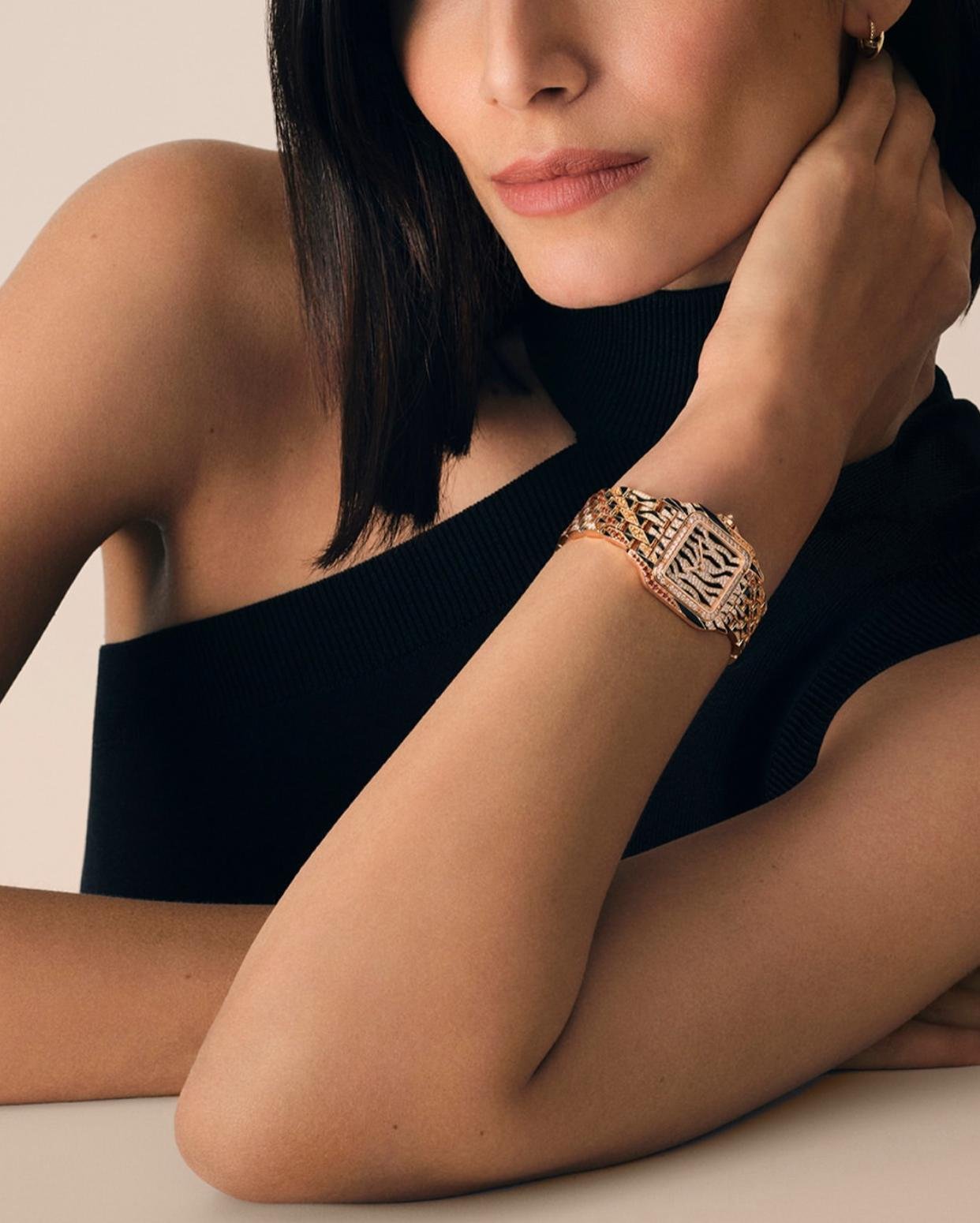
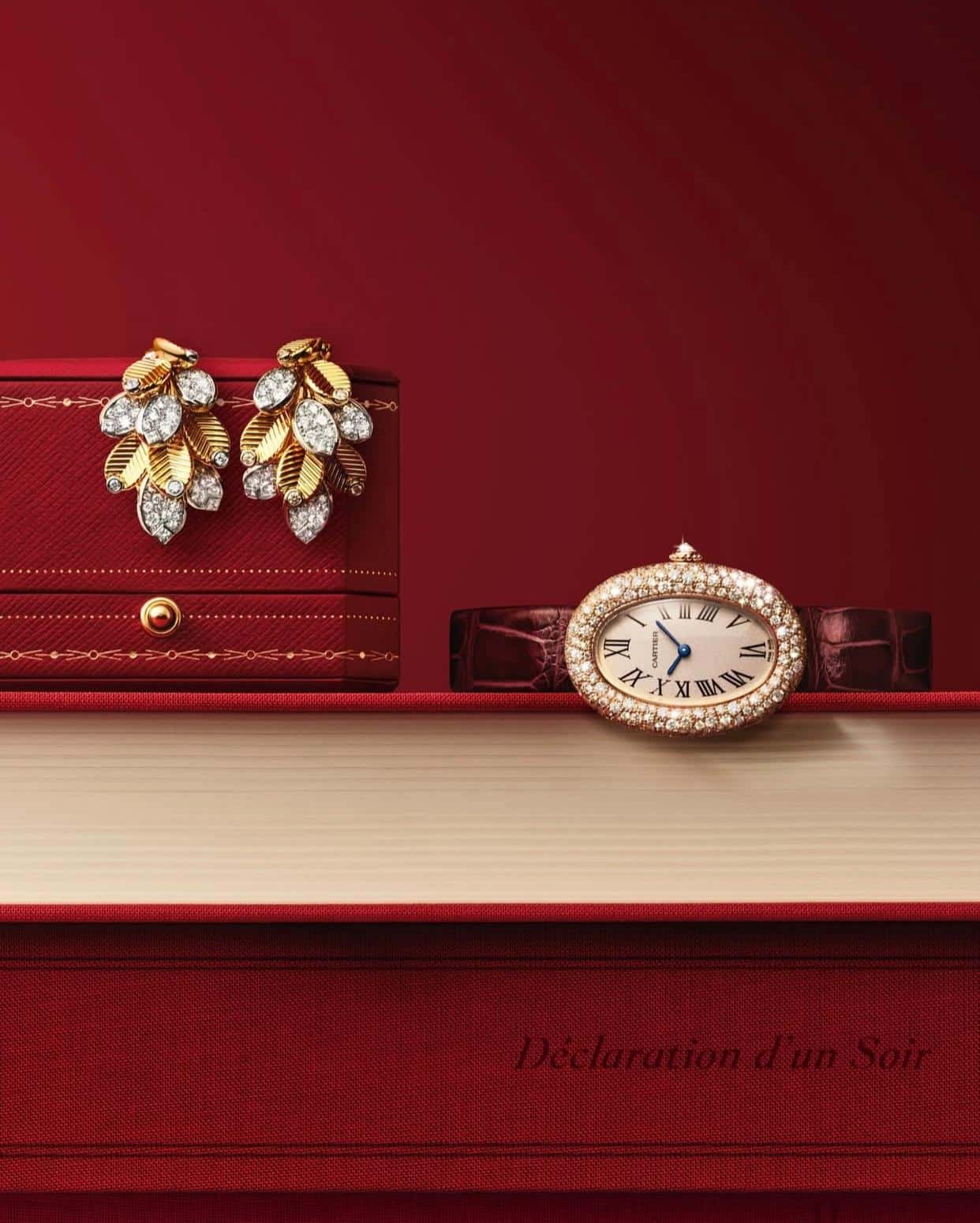
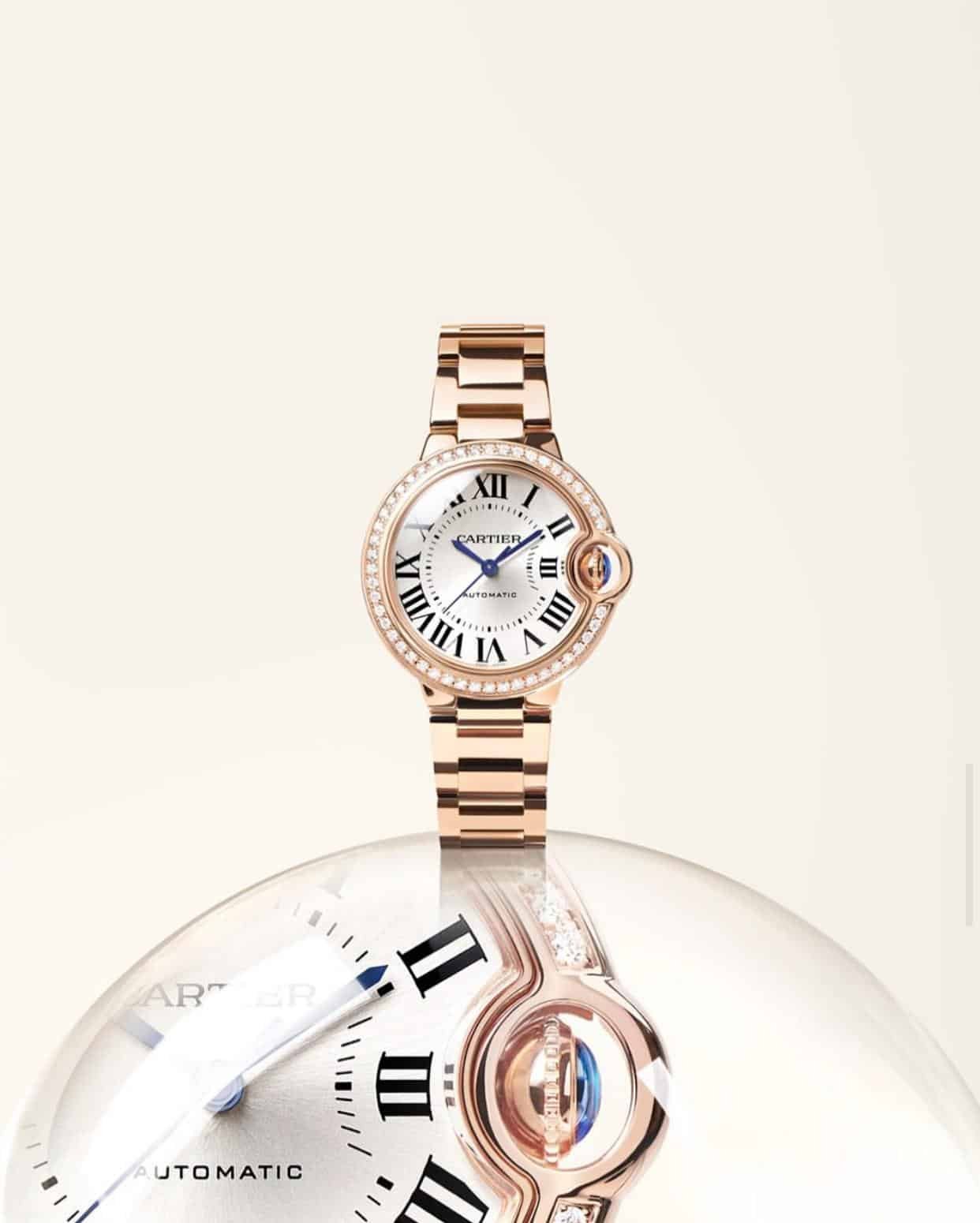
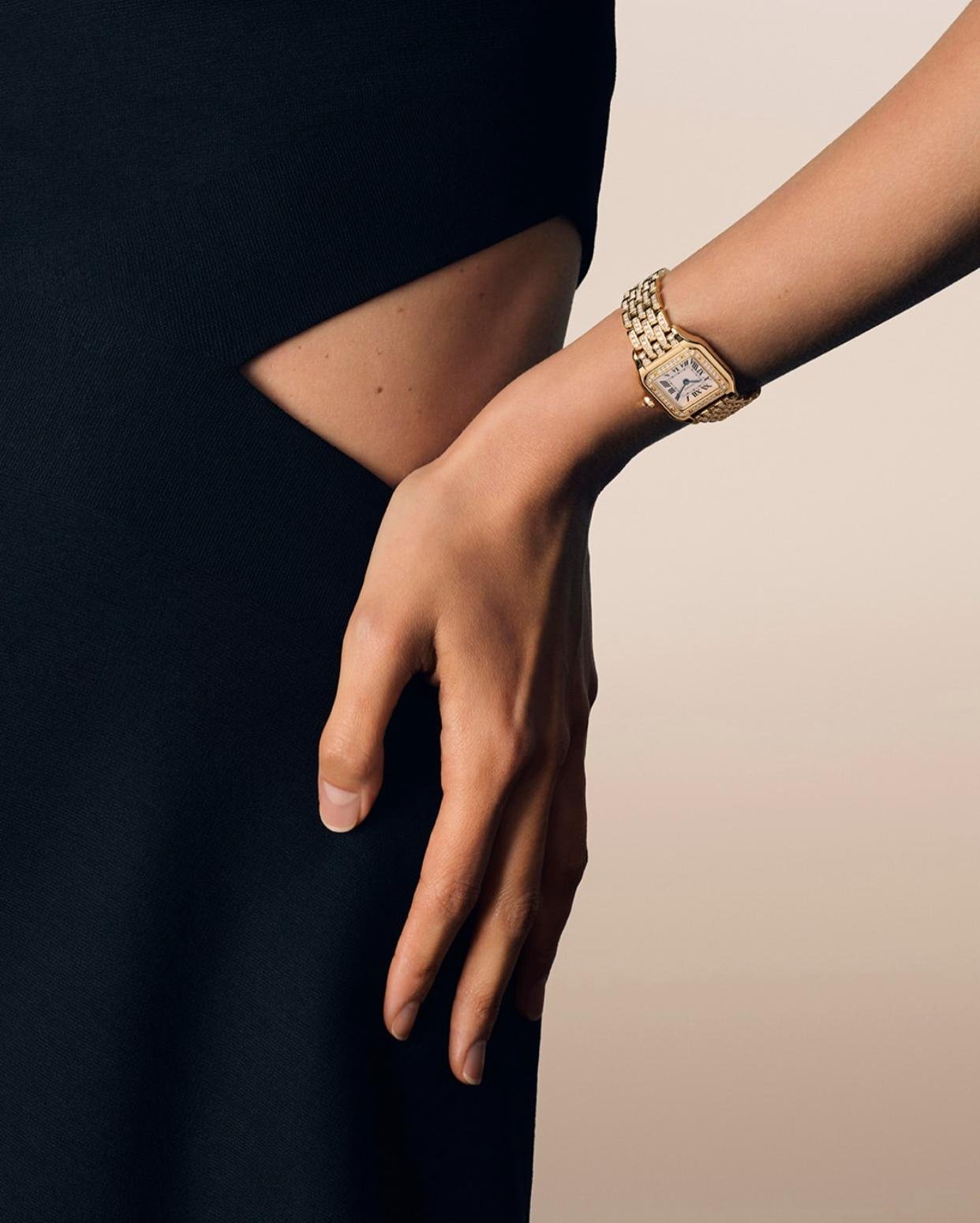
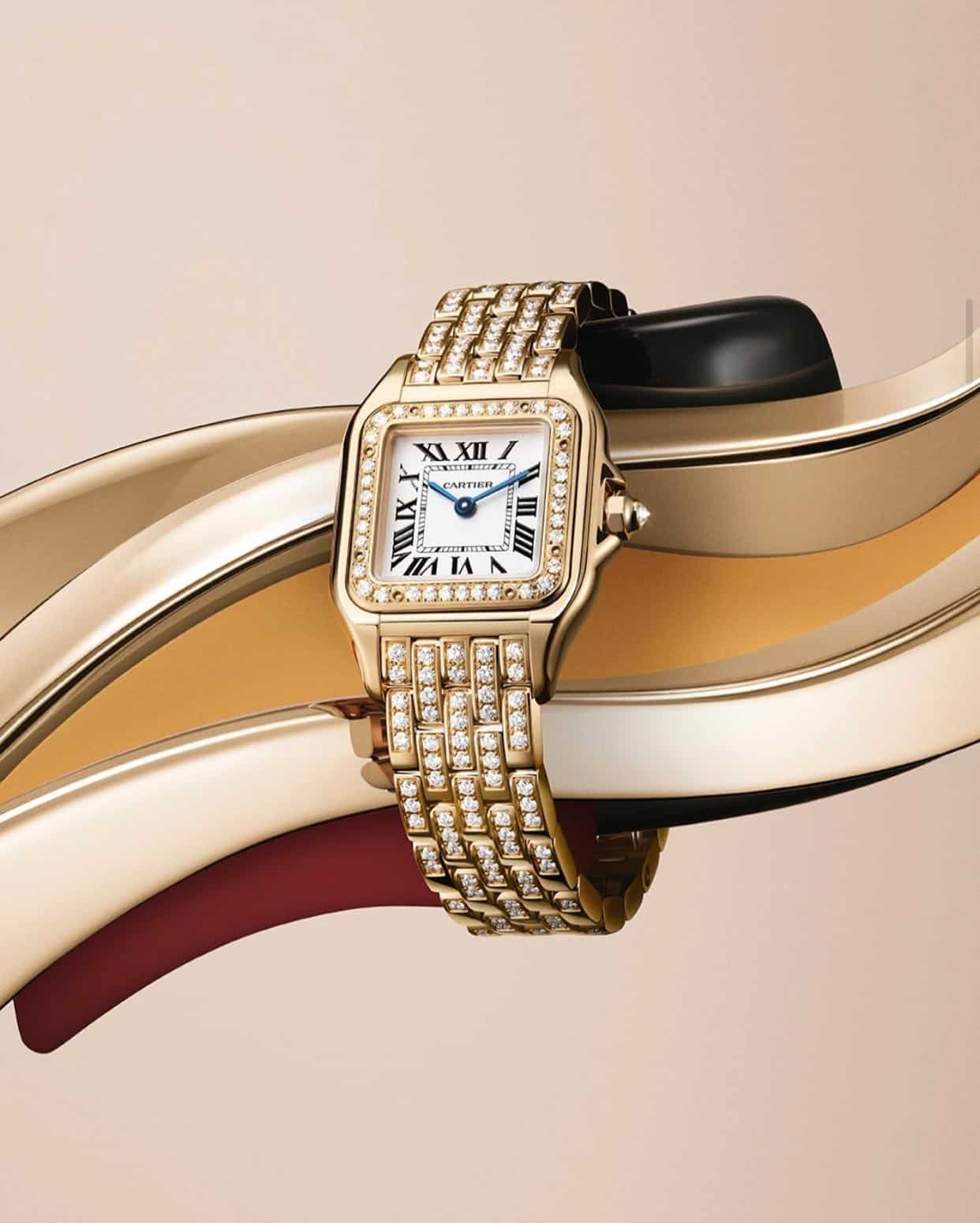
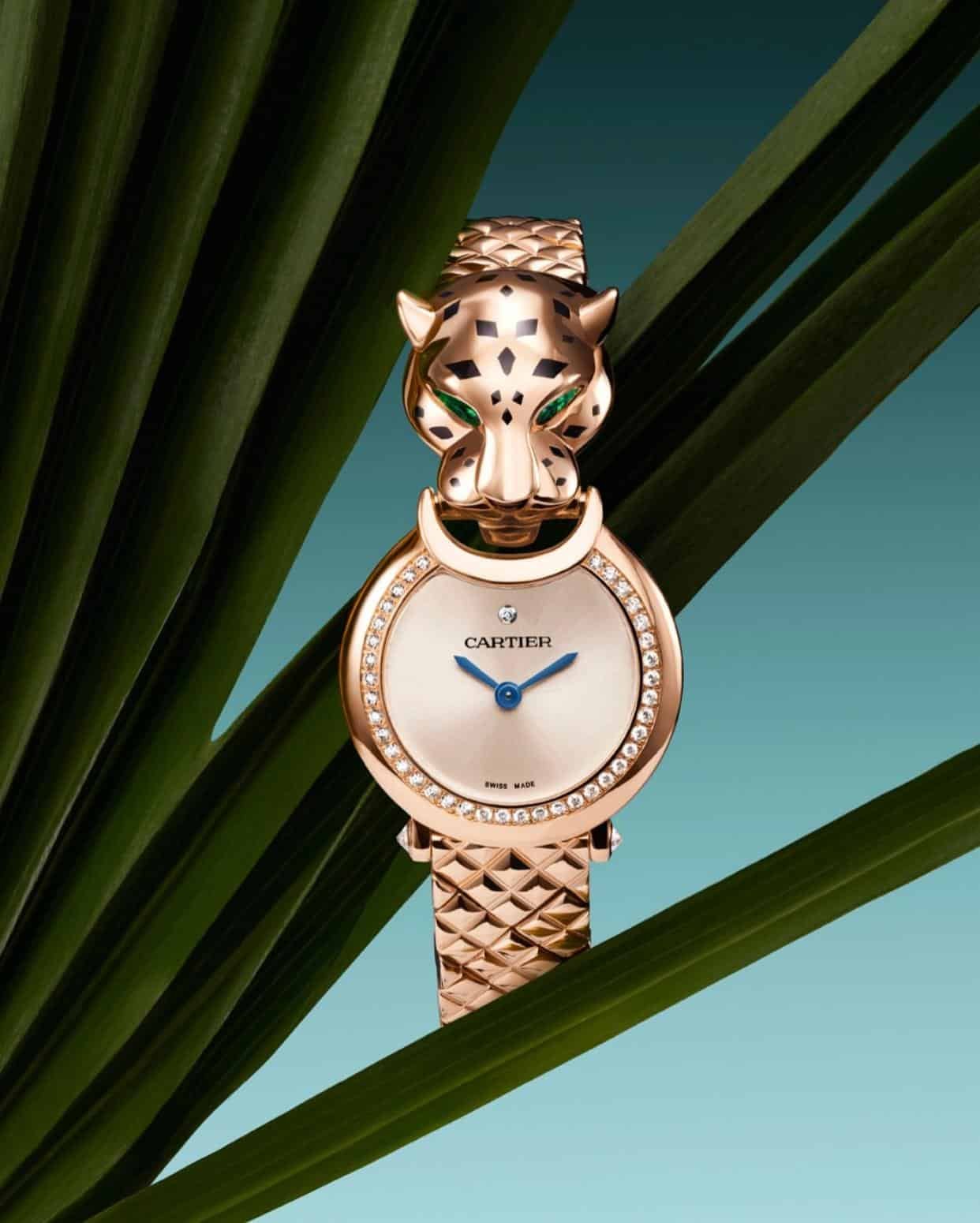
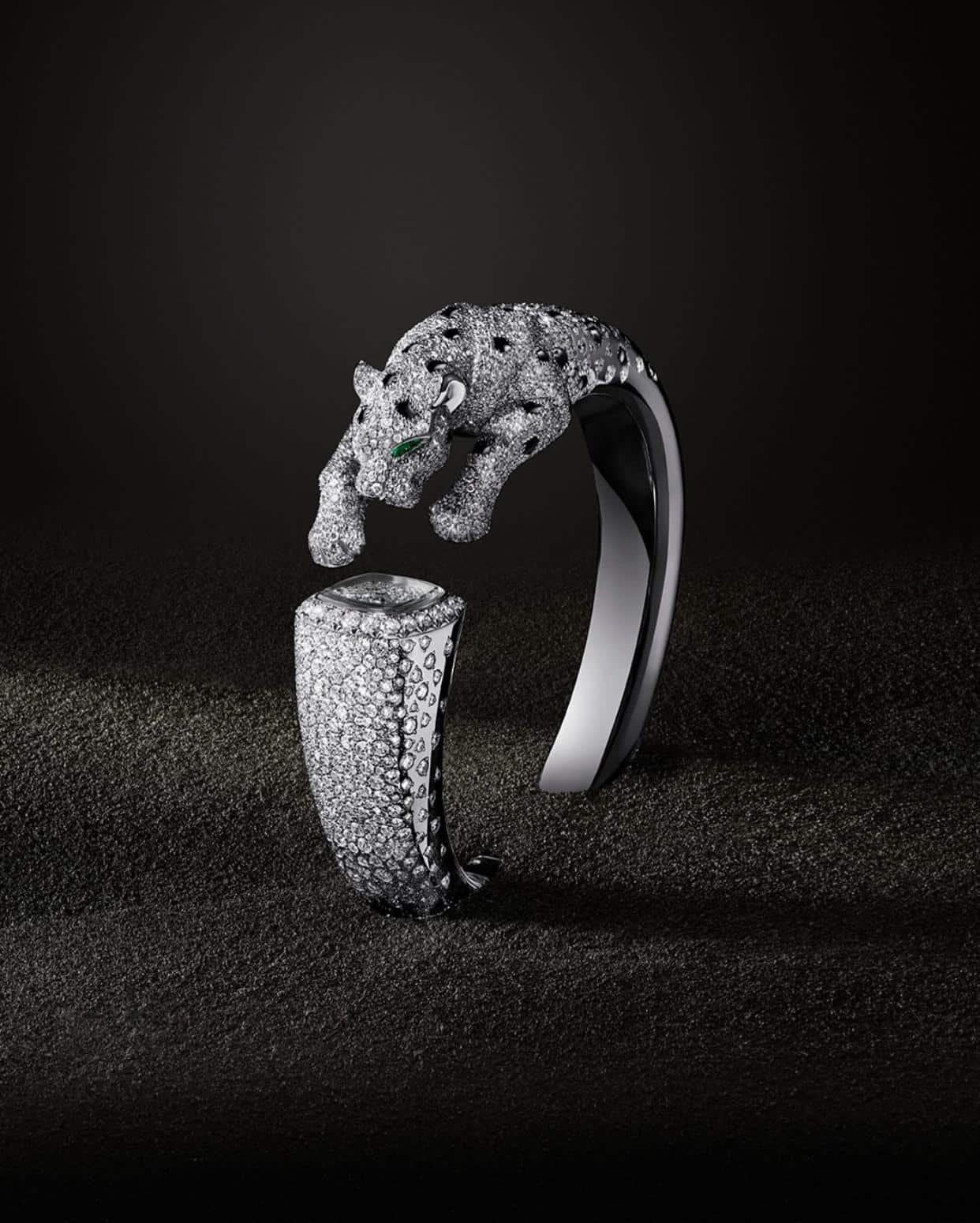
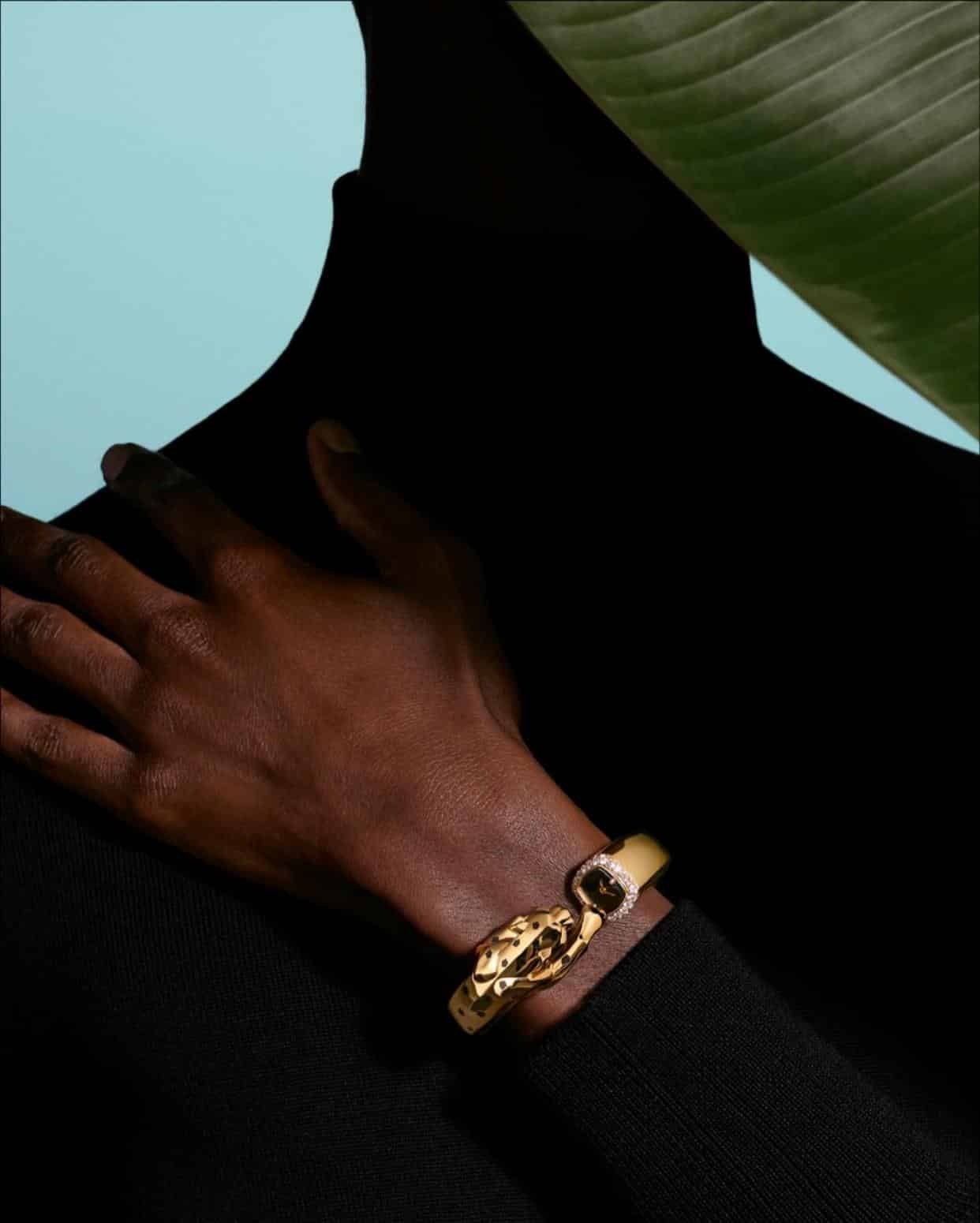
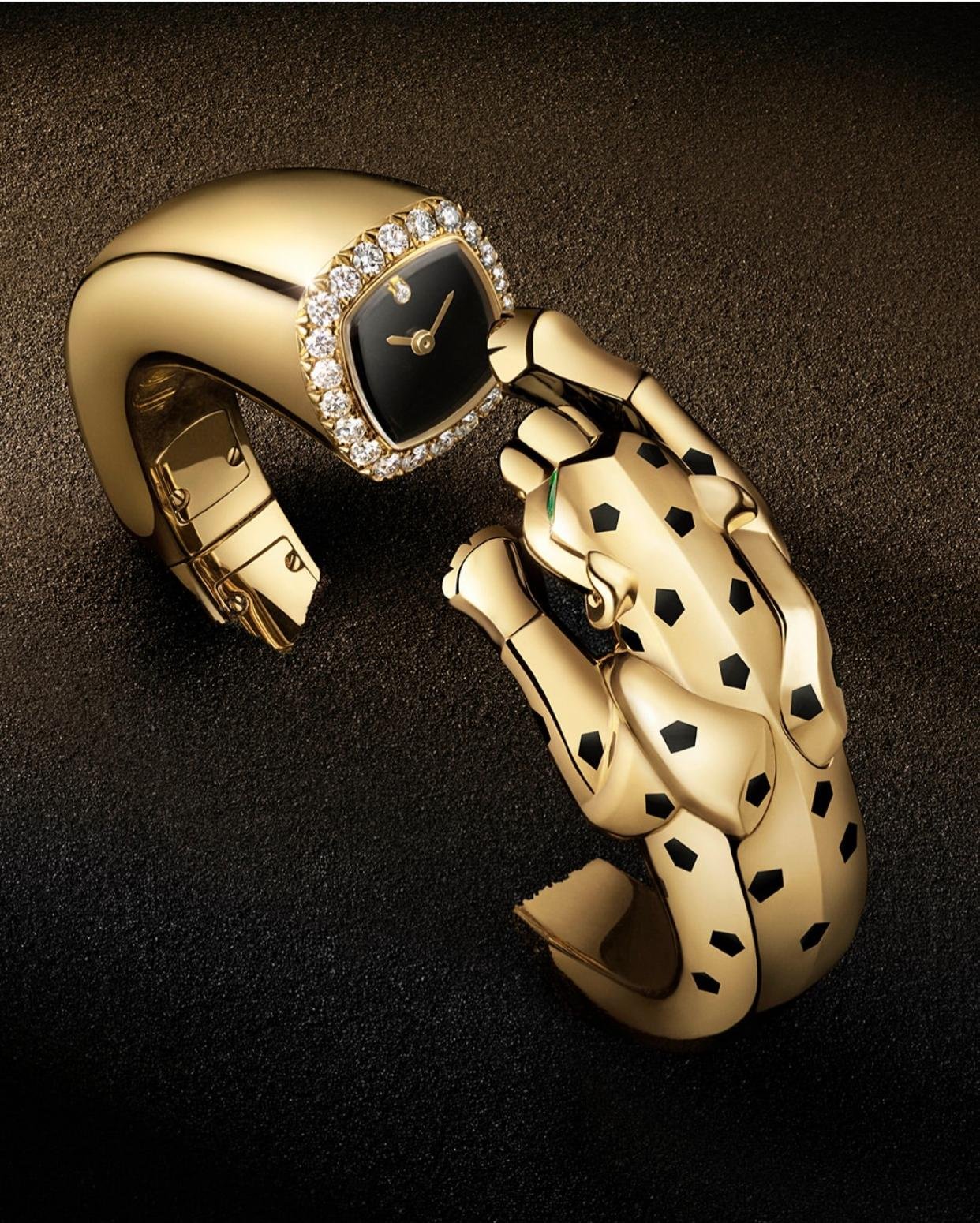
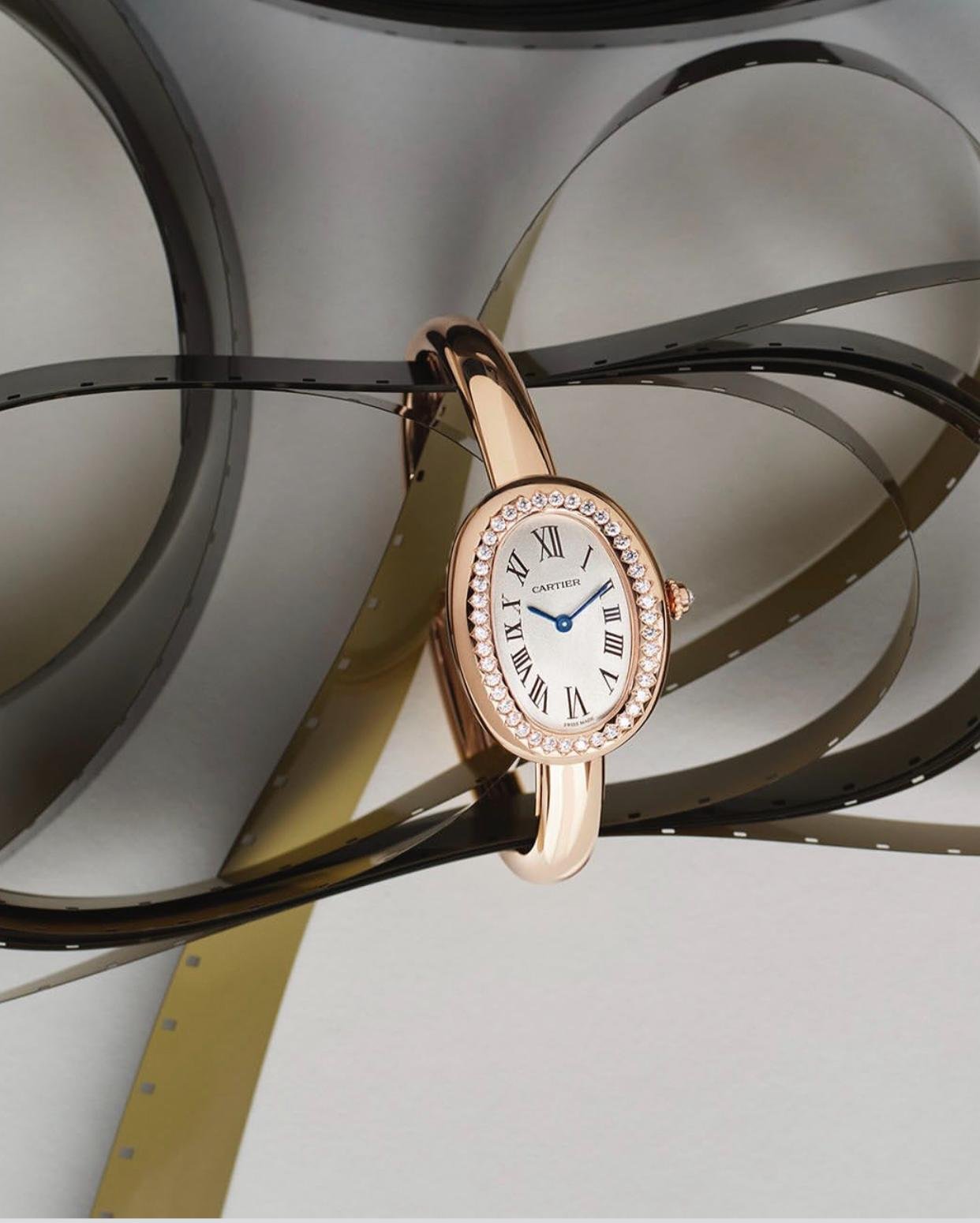
The Ballon Bleu, introduced in 2007, is the watch that confirmed Cartier could create a new icon after a century of Santos and Tank. Its round case with domed curves, its blue cabochon sapphire set within an arc of metal that protects the crown — a gesture that transforms a functional element into a visual signature — and its silhouette as smooth as a pebble immediately produced a desirable watch with no required historical reference. It makes sense on its own, without the narrative of aviation or war. The Panthère — whose motif dates to 1914 at Cartier — is the quintessential women's jewellery watch: a flexible bracelet set with diamonds or coloured stones, a miniaturised movement within a case that is above all a jewel. The Trinity, three interlocking gold rings — white, yellow, rose — created in 1924, is the most worn Cartier jewel in the world for a century. These objects are available in Tokyo across both Ginza addresses, including the 2025 flagship with its Salon Japonesque and Ryo Hikosaka's works in dialogue with the 1907 Japanese brooch.
The Ginza 4-Chome flagship inaugurated in 2025 — seigaiha façade, Moinard Bétaille interiors, Eriko Horiki's washi Panthère on the ground floor, Salon Japonesque on the second floor — is the space where Cartier presents the full range of its watchmaking offer in Tokyo, from the permanent collections to the very limited Cartier Privé pieces. High watchmaking — Santos Skeleton, Tortue Monopusher Chronograph, Rotonde Astrotourbillon, Métiers d'Art — is presented in the salons of the first and second floors by specialist teams whose technical training is identical to that of the boutiques on the rue de la Paix in Paris. The Japanese fine watchmaking clientele is one of the most demanding in the world for knowledge of calibres, complications and model history — an exigence to which Cartier has been responding since 1974, the date of its establishment in Japan, and which has structured the way the House thinks its technical communication for this market for half a century.
Watches & Wonders 2026 confirms that Cartier does not capitalise on its heritage without working it. The return of the Roadster — absent from the catalogue for several years — signals that the House is capable of relaunching dormant families with the same credibility as its permanent icons. The tenth and final opus of the Cartier Privé programme, in platinum, closes a ten-year cycle of annual explorations of the House's historical forms. The Santos-Dumont on a metal bracelet — a first — extends the legibility of the oldest modern wristwatch beyond its traditional leather strap. These pieces arrive in Tokyo boutiques a few weeks after their presentation in Geneva — the Tokyo clientele had been awaiting them, in some cases for several months, with the precise knowledge of technical specifications acquired from reading the reports of Japanese watch journalists present in Geneva. Tokyo is not a market that receives luxury watchmaking. It is a market that reads it.
In 1904, an aviator could not read the time
in mid-flight.
His jeweller friend invented the wristwatch.
In 1917, a jeweller looked
at aerial photographs of the front.
He saw the tanks.
He sketched the Tank.
One watch born of a friendship.
One watch born of a war.
Jackie Kennedy wore the Tank.
Andy Warhol wore only it.
Yves Saint Laurent had chosen it for his entire life.
In Tokyo since 1974 —
Cartier's first address in Asia —
these two watches
are still the most requested.
Some forms
do not need to be reinvented.
The Japanese fine watchmaking market is the only one in the world where the clientele reads calibres with the same attention as it reads carats in jewellery. A Japanese Cartier enthusiast knows the difference between the 1847 MC calibre and the 1904 MC, between manual and automatic winding, between the Tank Normale and the Tank Cintrée — and chooses according to these distinctions, not according to price or supposed prestige. This precise reading obliges the Houses not to simplify their technical communication. Cartier understood this from its establishment in Japan in 1974 — before Rolex's current status, before most Swiss brands in this market. The Santos and the Tank are sold there with their complete history, from the Brazilian aviator and the tanks of 1917. Because the Tokyo clientele does not only ask for a beautiful watch. It asks for a watch that has a reason to exist.
Cartier Ginza 4-Chome · The 2025 Flagship
Hulic Ginza Sukiyabashi Building · Ginza, Chūō-ku, Tokyo
Klein Dytham Architecture · Seigaiha façade
Bruno Moinard Bétaille · High Watchmaking · Cartier Privé
Cartier Ginza Namiki-dori
5-5-15 Ginza, Chūō-ku, Tokyo
Permanent collections · Santos · Tank · Ballon Bleu
A Brazilian aviator in the Bois de Boulogne in 1904.
A Parisian jeweller who made
what did not yet exist.
Tanks on the front in 1917.
A rectangular dial that remembers them.
Jackie Kennedy.
Andy Warhol.
Yves Saint Laurent.
Princess Diana.
In Tokyo since 1974,
the Santos and the Tank
are still the most requested.
Some watches
do not need
to be told why they last.
© Cartier
© Cartier
© Cartier
© Cartier
© Cartier
© Cartier
© Cartier

© Cartier
© Cartier
© Cartier
© Cartier
© Cartier
© Cartier
© Cartier
CARTIER
© Cartier