
© Chanel

© Chanel

© Chanel
Chanel
In 1932, in the depths of the Great Depression, the International Diamond Guild asked Gabrielle Chanel to create a collection to revive diamond sales. She accepted — and produced the first modern fine jewellery collection structured around a unity of theme, time and place. She presented it not at a Place Vendôme jeweller, but in her own apartment at 29 Faubourg Saint-Honoré. The Place Vendôme jewellers, who considered a couturière outside their territory, were stunned. She then had a large part of the pieces dismantled. Ninety years later, the 1932 collection is the central axis of the House's fine jewellery. In Tokyo, two glass towers have carried that history on Ginza since 2004.
The History · A Couturière In The Jewellers' Territory
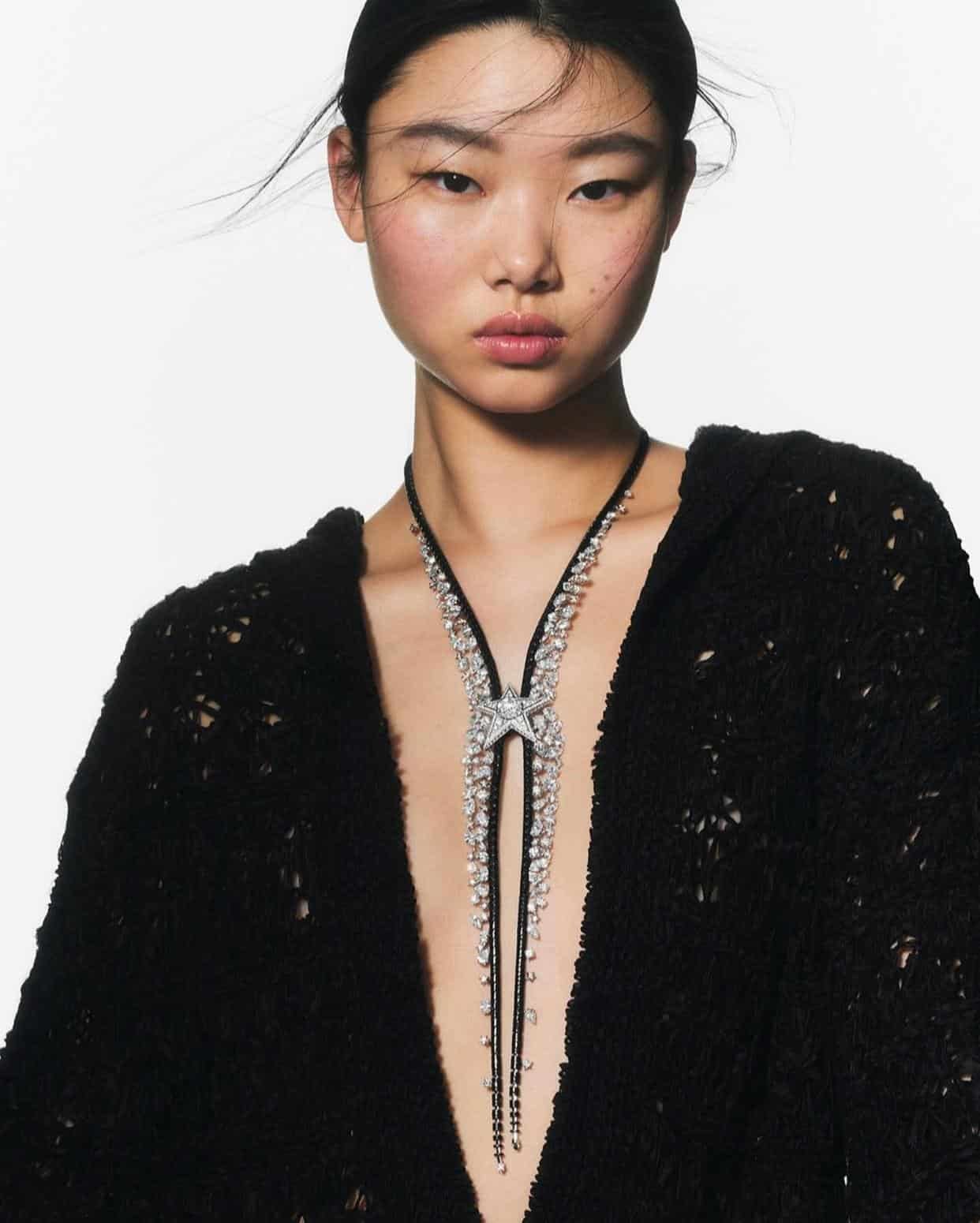
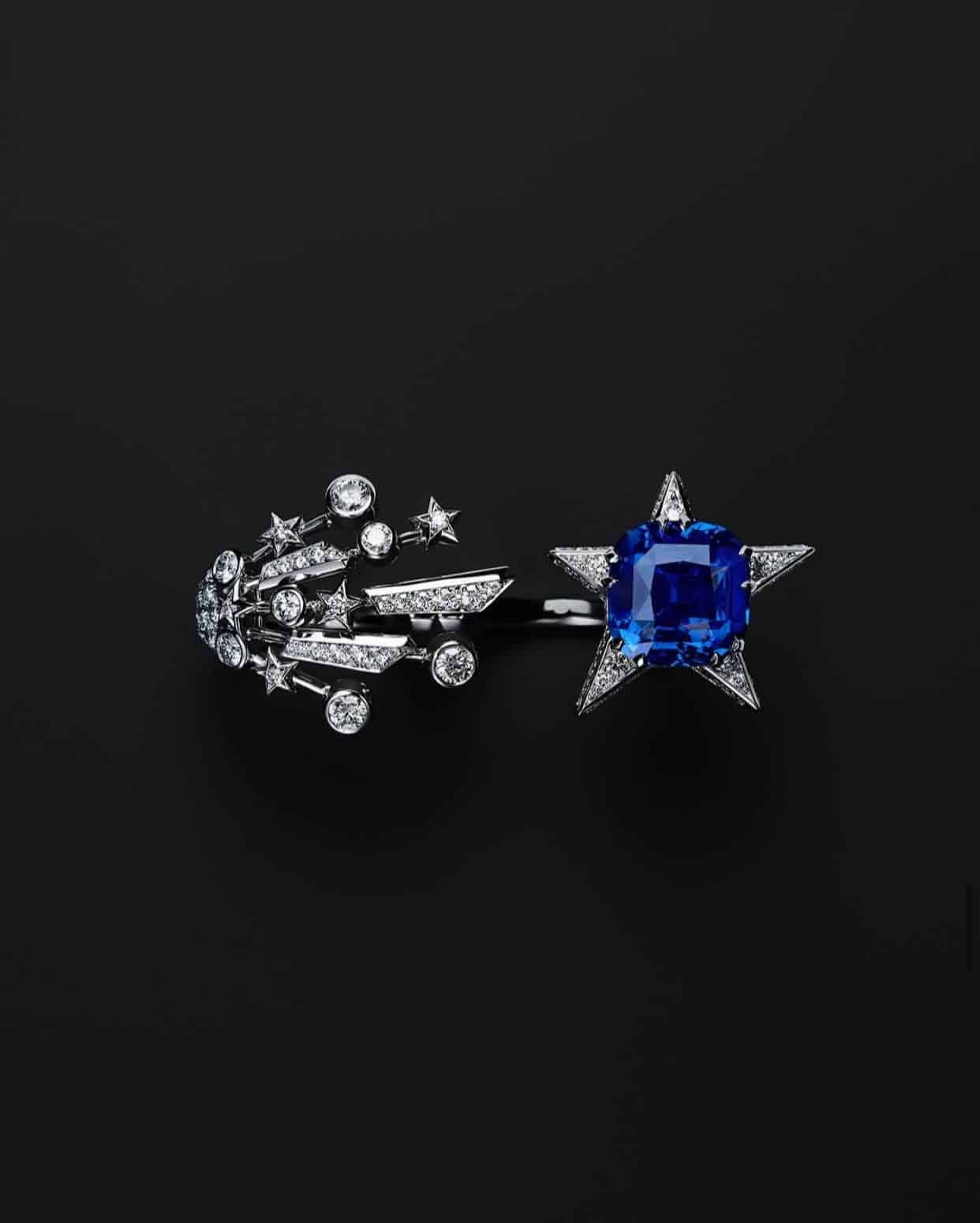
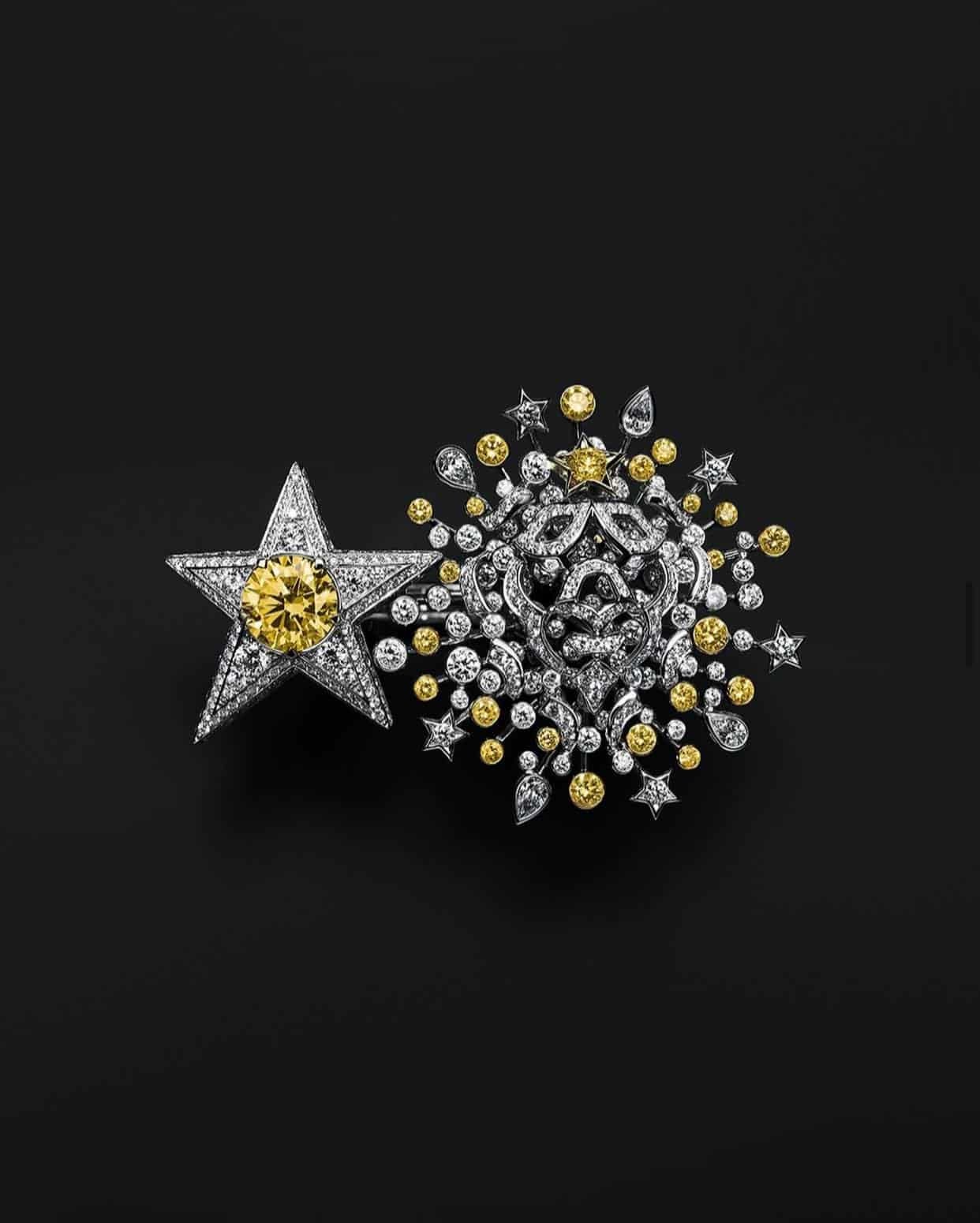
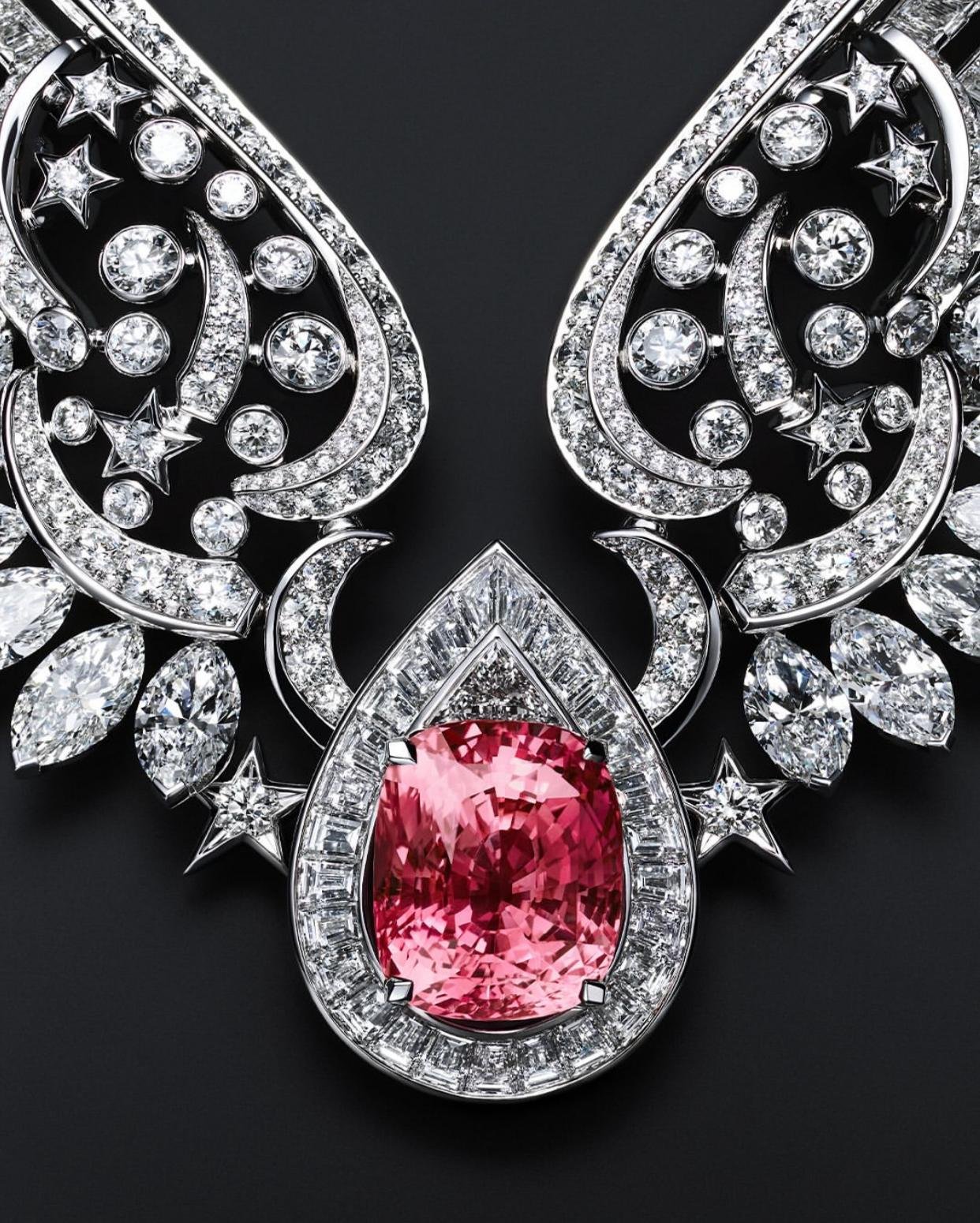
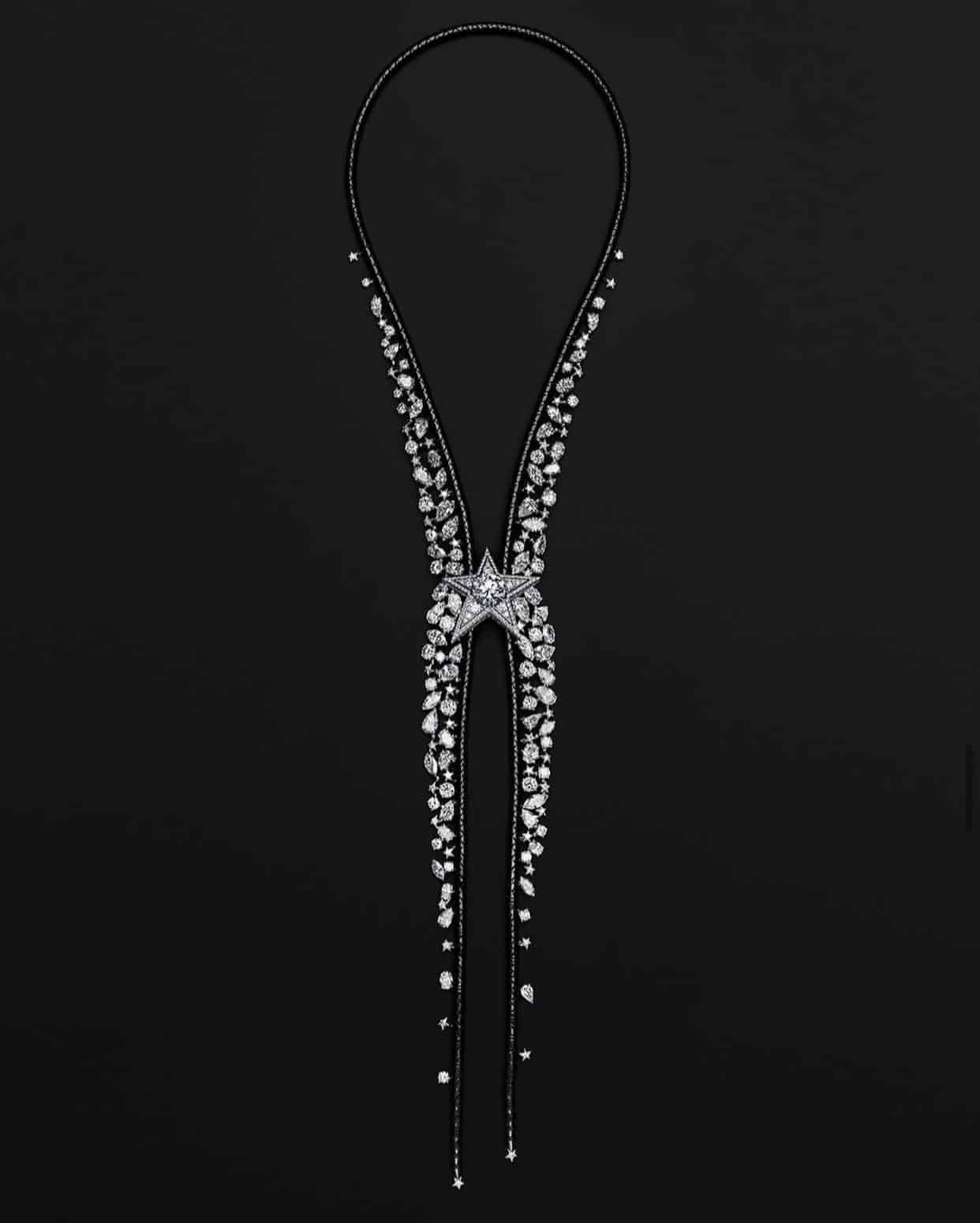
Gabrielle Chanel did not love jewellery in the sense her contemporaries understood it. She wrote: "I do not like the stone for the stone, the big navette diamond, the carafe stopper that constitutes a reference, an outward sign of wealth." What she loved was the line — the jewel on the body like a ribbon. In 1932, when the International Diamond Guild approached her, she conceived with designer Paul Iribe and a manifesto by Jean Cocteau a collection of a modernity that scandalised. Necklaces without clasps. Open rings that gave the impression that diamonds were floating on the fingers. A diamond fringe worn as a tiara. Stars, comets, suns — the map of the sky she had contemplated as a child in the mosaics of the Aubazine convent. All in diamonds, on platinum, with no visible setting. The exhibition was held in her private apartment at 29 Faubourg Saint-Honoré. She then had a large part of the pieces dismantled. The House would not return to it until 1993, when Karl Lagerfeld relaunched jewellery as a tribute to this collection. The 1932 collection, presented for its ninetieth anniversary in 2022, is the direct continuation of this founding gesture.
The Two Ginza Towers · Peter Marino · The Invented Glass
Peter Marino worked with Chanel for more than twenty-five years. The two Chanel towers on Ginza — the ten-storey main tower inaugurated in 2004 and the nine-storey Namiki tower opened in 2018 — are for him the buildings of which he is most proud. For the 2004 tower, Marino invented with Austrian engineers a new type of glass — a curtain wall that encapsulates an aluminium block in a tweed pattern, with seven hundred thousand light-emitting diodes integrated into the façade. At night, the fifty-six-metre building projects patterns and animations across its surface — the black and white tweed translated into luminous architecture. For the Namiki tower, he designed a slender nine-storey structure with a single room per floor, whose intentionally variable windows make the building a sculptural object. The artist Shuji Mukai, a member of the radical Gutai movement — a precursor of arte povera — created abstract panels for the façade at the time of opening.
The Chanel tower on Ginza, inaugurated on 4 December 2004, was at its opening the largest Chanel boutique in the world — spread across ten levels with a concert hall, a restaurant and exclusive retail spaces. The glass and aluminium façade in a black and white tweed pattern is the most direct architectural translation a House has ever made of its own fabric. Tweed is Chanel's founding material since 1924 — Gabrielle Chanel borrowed it from the Scottish male wardrobe, gave it ease, made it the sign of the free woman. Peter Marino translated it into three dimensions and seven hundred thousand diodes. At night, the tower comes alive on the Chuo-dori as an object of light whose programme changes with the seasons. The interior — white granite floors, gold leaf panels, lacquered tweed furniture, black marble staircase in a four-storey atrium — is the interior continuation of this logic: every material is a reference to the House.
The Namiki tower, opened in 2018 on the site of Chanel's first Tokyo boutique of 1994 — demolished because it did not meet earthquake resistance standards — is a slender nine-storey structure with a single room per floor. The intentionally irregular windows make the building a sculptural object whose reading shifts with the angle. The artist Shuji Mukai, a figure of the Gutai movement founded in Osaka in 1954 — one of Japan's most radical post-war art movements, founded on the direct contact between the artist and the material — created abstract panels for the façade during the first two months. The ninth-floor VIP salon is the space where Chanel presents its fine jewellery collections in Tokyo.
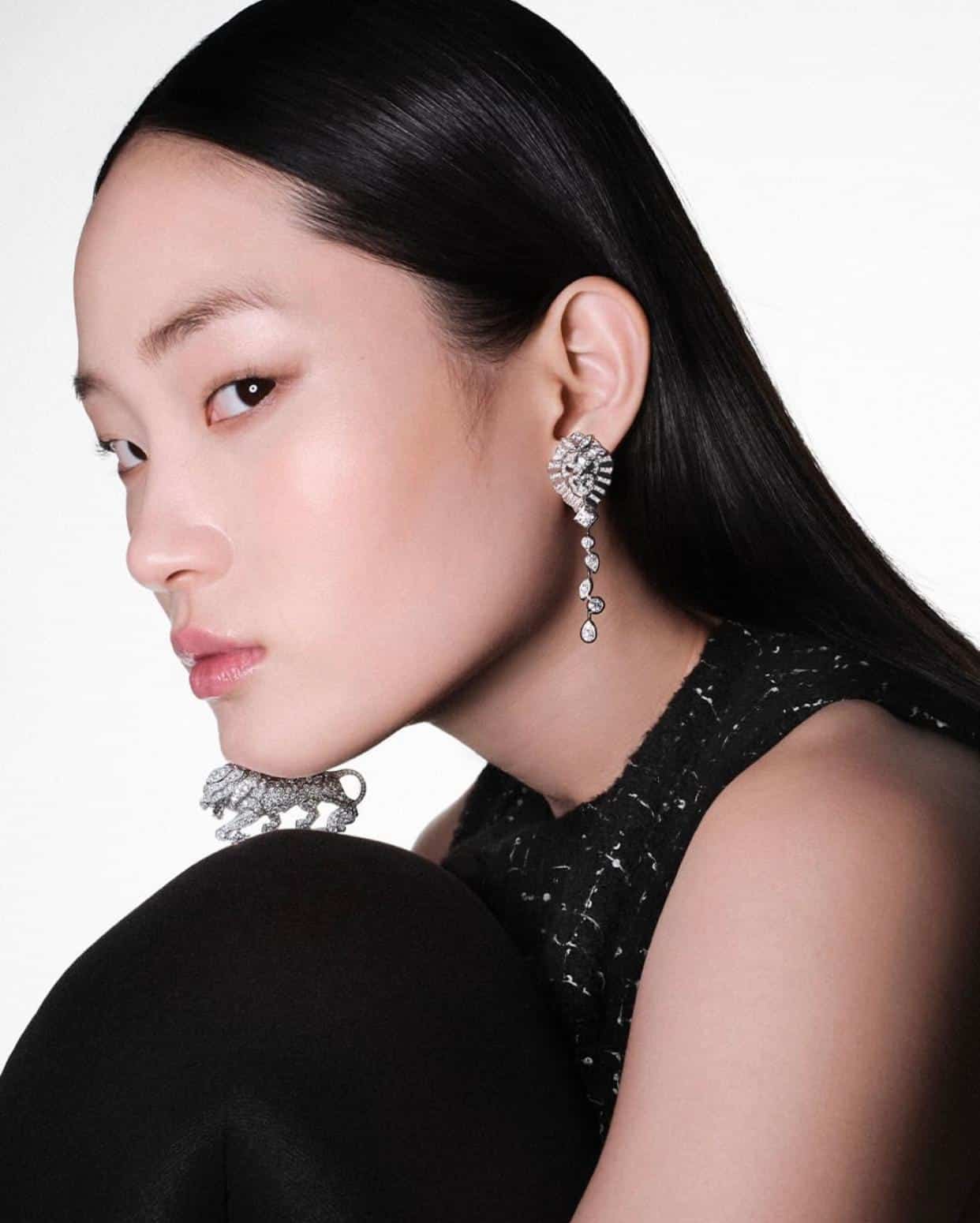
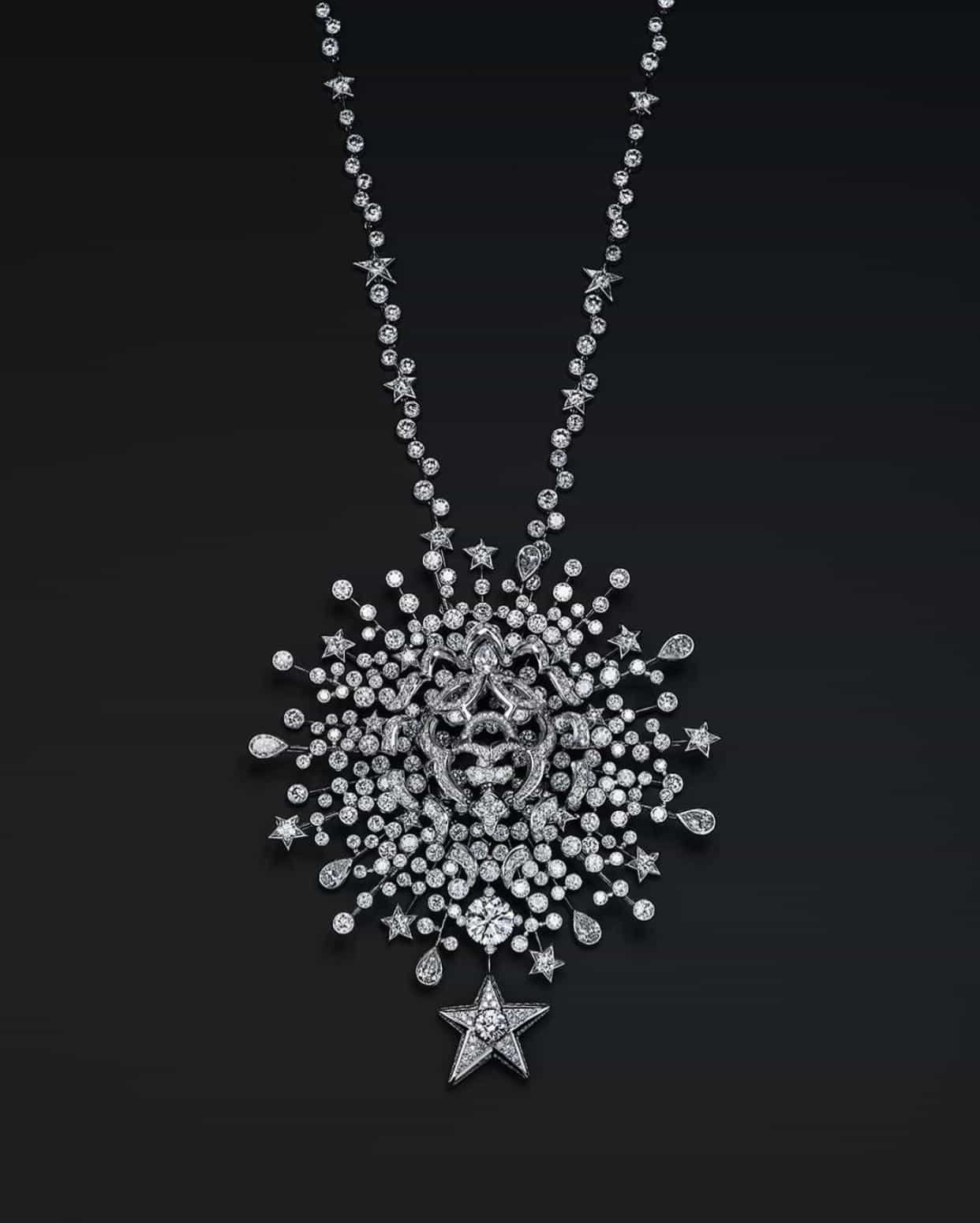
Chanel fine jewellery rests on six founding motifs — the Lion, N°5, the Comet, the Ribbon, the Feather and the Camellia — reinterpreted season after season by the Jewellery Creation Studio. Each motif carries a precise history. The Lion is Gabrielle Chanel's totemic animal, born under that sign. The Comet comes from the 1932 collection — the open necklace that streams around the neck. The Camellia, the flower without fragrance that Coco Chanel prized precisely for that reason: she wanted the jewel to shine, not to smell. Chanel is one of the rare fashion Houses to have a dedicated studio and ateliers for fine jewellery with its own address on the Place Vendôme. What Ginza receives comes directly from those ateliers.
Virginie Viard left the artistic direction of Chanel in June 2024 after five years in the role. The House had not yet officially confirmed her successor at the time of publication of this text. The House's fine jewellery — whose Creation Studio operates independently from the fashion collections — continues under the direction of Patrice Leguéreau, whose work rests on the six founding motifs. The Japanese clientele, which follows with particular attention the changes of creative direction at the great Houses, awaits the next appointment with the interest it accords to all the moments when a House must redefine itself without effacing itself.
The 19M is the Aubervilliers campus where eleven of Chanel's Houses of art and nearly seven hundred expert artisans have been brought together since 2022 — feather workers, embroiderers, glovers, tailors, bootmakers. A travelling version of its gallery was presented in Tokyo, conceived around the crafts of the hand and a collaboration between French and Japanese creators. The retrospective dedicated to Maison Lesage, Chanel's embroiderer for decades, celebrates a century of embroideries. This displacement of the 19M to Tokyo continues the logic inaugurated by the first Métiers d'art exhibition outside France on Ginza in 2004: to treat Tokyo with the same density of content as Paris, because its clientele knows how to read that density.
Chanel showed in Tokyo in 1978 — the very year Louis Vuitton opened its first stores in Japan. This is not a commercial coincidence: 1978 is the year when the great Parisian Houses understood that Japan deserved a personal visit. The first Chanel Métiers d'art exhibition outside France was held on Ginza in 2004 — the same year as the inauguration of Peter Marino's main tower. These two simultaneous events say something about the way Chanel thinks of Tokyo: not as an export market but as a reference address, at the same level as Paris. Forty-five years of continuous presence. Two towers. Six motifs. And the 1932 collection still shining.
In 1932, in the depths of the Great Depression,
Gabrielle Chanel presented
the first modern fine jewellery collection
structured around a theme
in her own apartment.
The Place Vendôme jewellers
were stunned.
She had a large part of the pieces dismantled.
Ninety years later,
the 1932 collection is still
the central axis of the House's fine jewellery.
In Tokyo, two glass towers
carry that history on Ginza.
At night, the tweed is illuminated
in seven hundred thousand diodes.
The gesture of 1932
is still shining.
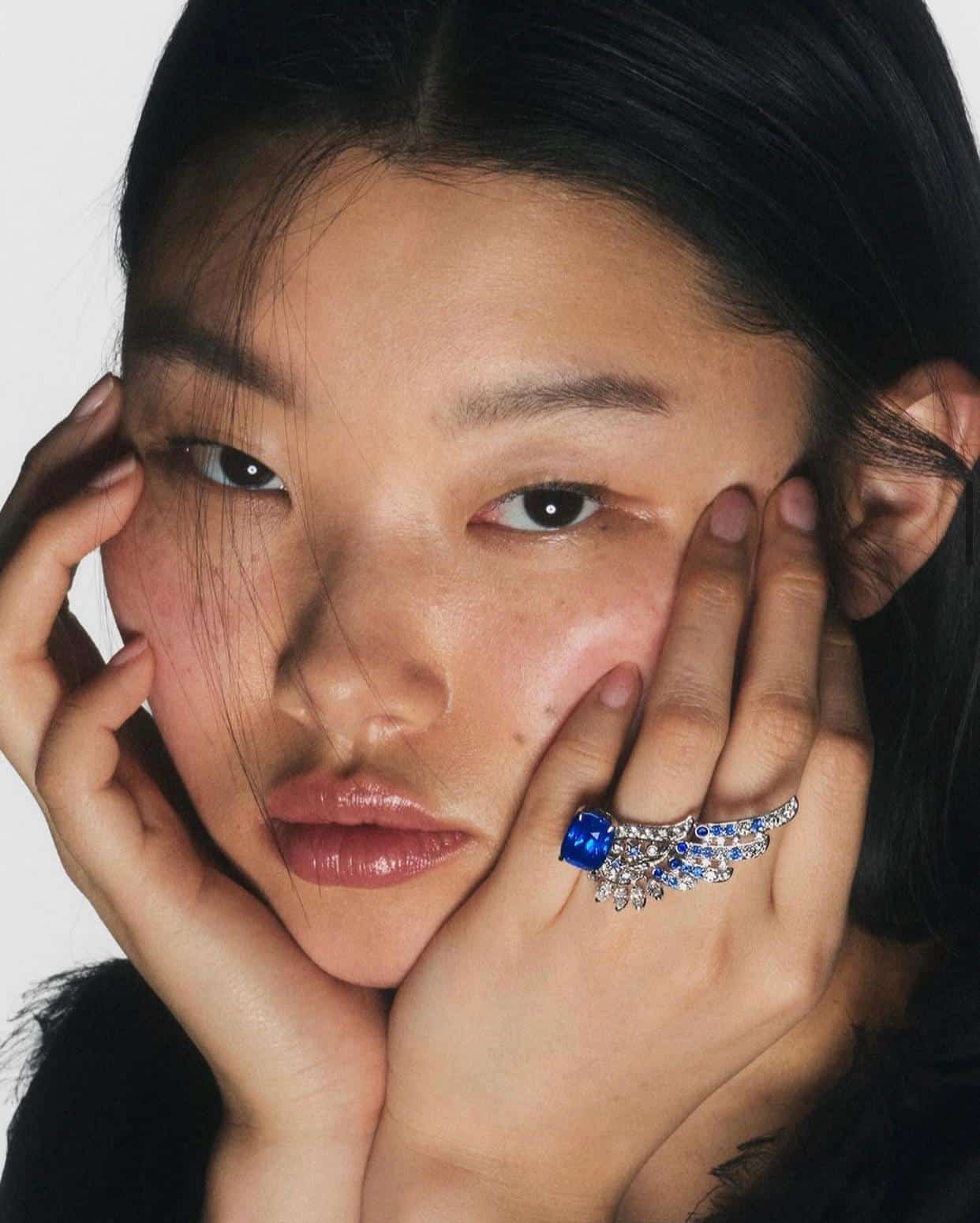
Chanel fine jewellery is singular not because it is the oldest or the most technically complex, but because it is the only one to have been founded by someone who was not a jeweller. Gabrielle Chanel brought to fine jewellery the principles of haute couture — the line takes precedence over the material, movement takes precedence over fixity, the jewel must exist on the body of a woman who moves. This conception — the jewel as ribbon, the comet as a necklace that opens across the bust, the ring without a claw setting that gives the impression that the diamond floats on the finger — is legible in every piece from the 1932 collection. In Tokyo, in the VIP salon of the Namiki tower, the fine jewellery pieces are presented according to this same logic: one tries them on oneself, in movement. Not in a display case. Not under a spotlight. On the body. The Tokyo clientele, which wears jewels with the same precision with which it wears clothing, understands this without being told.
Chanel Ginza
Chuo-dori · Ginza · Chūō-ku · Tokyo
Peter Marino · 2004 · 10 floors · LED tweed façade
Chanel Ginza Namiki
Namiki-dori · Ginza · Chūō-ku · Tokyo
Peter Marino · 2018 · 9 floors · Fine jewellery VIP salon
Chanel Isetan Shinjuku · Chanel Takashimaya Shinjuku
An apartment on the Faubourg Saint-Honoré
in November 1932.
Necklaces without clasps,
open rings,
a diamond fringe worn as a tiara.
A large part of the pieces dismantled afterwards.
Ninety years later,
two glass towers on Ginza
carry that memory.
At night, the tweed is illuminated.
The gesture of 1932
still shines in the Tokyo sky.
© Chanel
© Chanel
© Chanel
© Chanel
© Chanel

© Chanel
© Chanel
© Chanel
© Chanel
© Chanel
CHANEL
© Chanel