
© Van Cleef & Arpels
© Van Cleef & Arpels
© Van Cleef & Arpels
Van Cleef & Arpels
The first piece mentioned in the sales ledgers of Van Cleef & Arpels at the opening of the boutique at 22 place Vendôme in 1906 is a diamond heart. A House born of the marriage of Estelle Arpels and Alfred Van Cleef in 1895 — she the daughter of a precious stone merchant, he the son of a diamond dealer — whose first documented sale was a heart. The ampersand "&" in the name is not a typographic convention. It is the sign of this founding union, repeated in every piece for a hundred and twenty years. In 1974, Van Cleef & Arpels became the first French jewellery House to establish itself in Japan. Tokyo did not wait for the others.
The History · A Marriage · A Sign · A Boutique
Alfred Van Cleef and Estelle Arpels married in 1895 in Paris. They shared the same values — a sense of family, entrepreneurial spirit, passion for stones — and decided to unite their two names in a common project. In 1906, with Charles, Estelle's brother, they opened the first Van Cleef & Arpels boutique at 22 place Vendôme. Julien Arpels joined them in 1908, Louis in 1912. The House is a family affair in the most literal sense — built on a marriage, extended by brothers and daughters-in-law, transmitted from generation to generation until the Richemont group acquired the majority in 1999. The first piece in the ledgers is a diamond heart. This detail is not anecdotal — it says something about the way the House has thought of the jewel from the very beginning: not as an object of the demonstration of wealth, but as an object of feeling, charged with a precise emotional intention. In 1926, Renée Puissant, daughter of Alfred and Estelle, took the artistic direction. In 1933, with designer René Sim Lacaze, she registered the patent for the Serti Mystérieux — the technique that would define the House's jewellery identity for the following hundred years.
The Serti Mystérieux · The Technique That Changes Everything
The Serti Mystérieux, patented in 1933, is the technique that distinguishes Van Cleef & Arpels from every other jewellery House. Its principle: to set precious stones — rubies, sapphires, emeralds — in a metal mount rendered entirely invisible, so that the gemstones appear to float against one another without attachment, in a continuous surface, as if they had grown naturally in that configuration. To achieve this, each stone is cut individually to the exact required dimension, then slid into a metal rail — the crossed rail system — whose edges are lowered below the level of the stones to disappear visually. A Serti Mystérieux piece can take several hundred hours of work. A ten-square-centimetre ruby tile may require more than two hundred stones cut to a precision of a few hundredths of a millimetre. This technique is still produced today by hand in the ateliers at 22 place Vendôme, by craftspeople whose training takes several years. In Tokyo, Serti Mystérieux pieces — the flower brooches whose petals are entirely covered in rubies with no apparent metal, the clips with continuous sapphire surfaces — are read by the Japanese fine jewellery clientele with the precision of a technical reading: one looks for the invisible joins, measures the regularity of tone, evaluates the quality of the rail. Rarely has a jewellery technique found an audience as competent to read it.
The Ginza Maison is Van Cleef & Arpels' principal address in Tokyo — the space that welcomes the full range of jewellery, fine jewellery and timepiece collections in a setting conceived for the presentation of the House's most important pieces. Van Cleef & Arpels has been present in Japan since 1974 — before Cartier, before all the great French jewellery Houses that would arrive only in the years that followed. This precedence is not a chronological detail. It means that the Japanese fine jewellery clientele encountered Van Cleef & Arpels before encountering its direct competitors — and that the relationship between the House and the Japanese market was built over half a century, with the depth of anchorage that this duration produces. The Ginza Six boutique — also present in this network — completes the principal address within the environment of Tokyo's most frequented luxury mall.
In 2025, Van Cleef & Arpels presented at the Tokyo Metropolitan Teien Art Museum the Timeless Art Deco exhibition — two hundred and fifty jewels, watches and art objects selected from the House's heritage collection and private collections, accompanied by sixty archival documents. The exhibition commemorates the centenary of the 1925 Exposition internationale des arts décoratifs et industriels modernes, where Van Cleef & Arpels had won the Grand Prix for the Fleurs enlacées bracelet, red and white roses — a piece which constitutes, according to the House, one of the essential keys to understanding its vision in the Art Deco era. The Teien Museum, former residence of Prince Asaka, is itself an Art Deco masterpiece — built in 1933, the exact year Van Cleef & Arpels registered the Serti Mystérieux patent. The exhibition within this building says something precise: the House's Art Deco style and Japanese Art Deco developed simultaneously, in the same decade, with the same passion for surfaces, geometries and the mastery of materials.
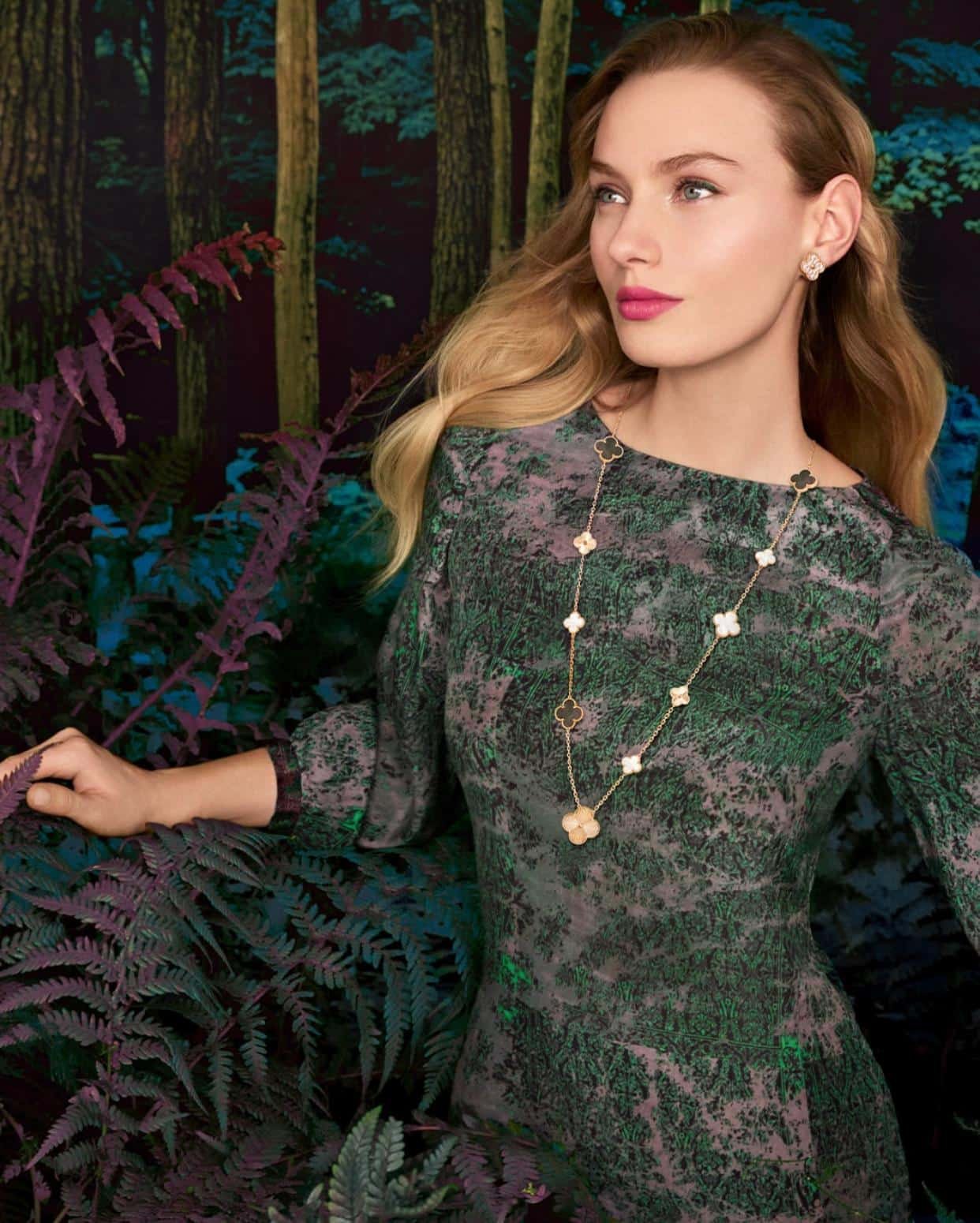
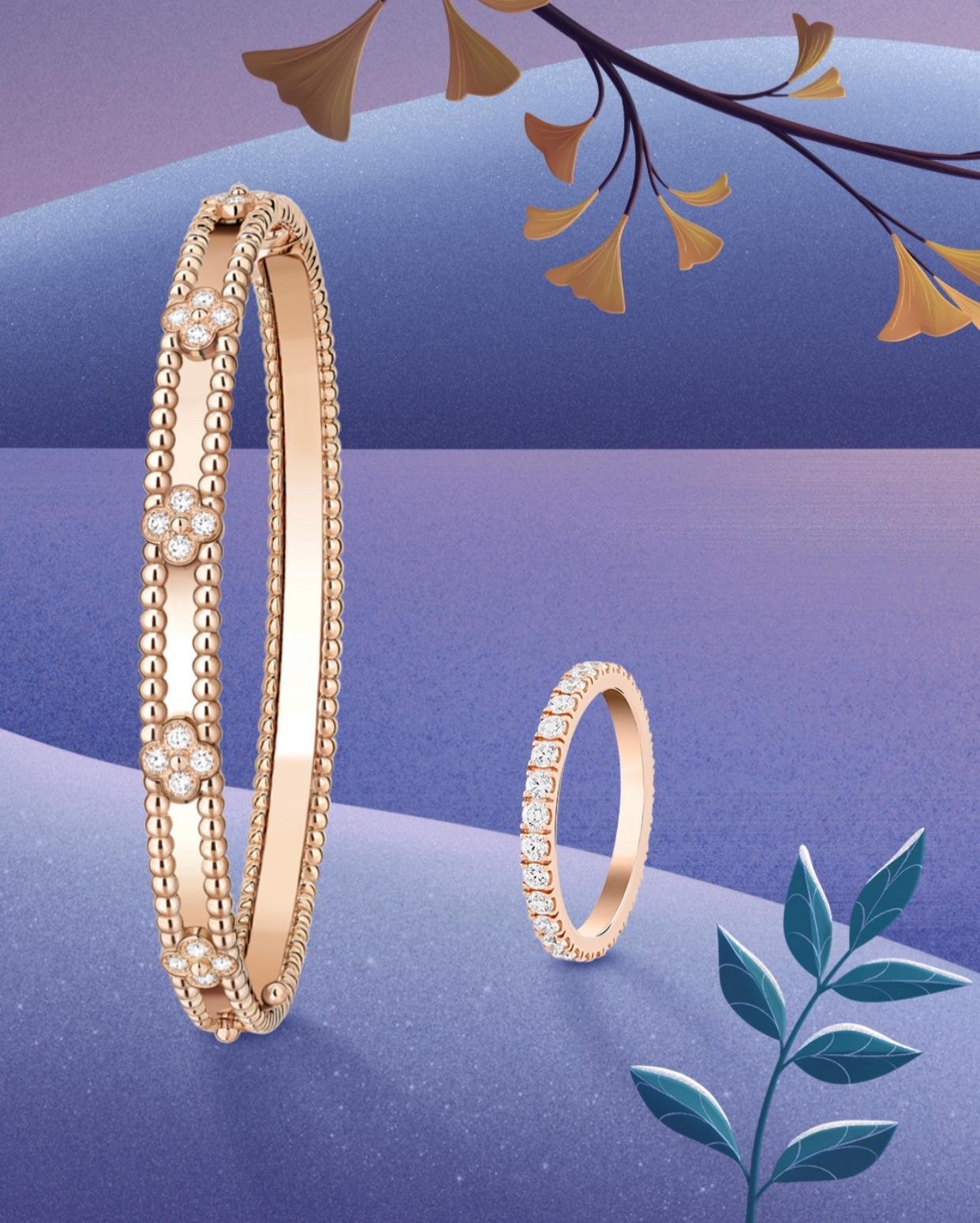
Van Cleef & Arpels fine jewellery is the only one of its kind to have made poetry — rather than technique, prestige or history — its primary register. The House's sources of inspiration are nature, dance, fairy tales, love, luck: emotional territories translated into jewels. The Alhambra, created in 1968 by Jacques Arpels, is a four-leaf clover — symbol of luck — declined since then in mother-of-pearl, onyx, malachite, coral, precious stones, in a fifty-seven-year continuity that makes it one of the longest-running jewellery collections in history. The Zip necklace, inspired by the Duchess of Windsor in 1939 and realised in 1951, is a zip fastener in diamonds and coloured stones that transforms into a bracelet — the transformable piece taken to its apogee. The ballerinas, born in the nineteen-forties in New York under the impulsion of Louis Arpels, passionate about dance, are platinum, gold and diamond clips representing dancers in their different positions — a narrative jewellery that resembles no other.
Louis Arpels had been passionate about dance since the nineteen-forties, when he created in New York the first ballet dancer jewels. His son Claude Arpels met George Balanchine, choreographer and co-founder of the New York City Ballet. From this encounter was born in 1967 the ballet Jewels — a work in three acts, each structured by a precious stone: Rubies, Emeralds, Diamonds. It is the first ballet to have been directly inspired by jewellery and to have made it its compositional principle. The collaboration between Van Cleef & Arpels and the world of dance did not stop there — in 2012, the House worked with Benjamin Millepied and his L.A. Dance Project company. This territory — dance as a source of jewellery inspiration — is consistent with the House's approach from its origins: Van Cleef & Arpels jewels are conceived for movement, for the body that moves, for the woman who dances rather than the one who poses. The Japanese clientele, in a country where dance and the bodily arts have a millennial tradition and a gestural precision recognised throughout the world, understands this logic in a particularly direct way.
The Minaudière was born of an observation by Charles Arpels. He saw his friend Florence Jay Gould — one of the great society figures of the interwar years — tipping indiscriminately into her evening bag a lipstick, a powder compact, cigarettes and a lighter. He proposed a precious metal box, compartmentalised, that would contain all of this with the elegance the situation required. The Minaudière was born — a rigid box in precious metal, with its interior compartments, carried in the hand or at the wrist like a small sculpture. Its name comes from the French verb "minauder" — to simper, to put on airs — because Charles Arpels had observed that women who carried it tended to show it off, to play with it, to place it ostentatiously on tables. Before the leather evening bag, before satin clutches, the Van Cleef & Arpels Minaudière was the first feminine fashion object to have organised the contents of an evening in a precious form. It is still produced today, in the ateliers at 22 place Vendôme, to order and as unique pieces for the House's most faithful clients.
In 2012, Van Cleef & Arpels founded in Paris the École des Arts Joailliers — a teaching and transmission space open to the public, offering introductory courses in jewellery, the history of precious stones, and atelier techniques. This is not a professional school for jewellers — it is a cultural institution whose mission is to share with the general public the knowledge of the savoir-faire that makes possible what the House produces. The École organises travelling exhibitions in several cities around the world, including Tokyo. This approach is consistent with the House's identity since its founding: Van Cleef & Arpels is the only great jewellery House to have systematically accompanied its commercial development with a cultural programme of transmission — exhibitions at the Musée des Arts Décoratifs, the Smithsonian, the Metropolitan Museum, and now the Teien Museum in Tokyo. Jewellery is not only an object to be bought. It is a practice to be understood.
The first piece sold in 1906
in the Van Cleef & Arpels ledgers
is a diamond heart.
The ampersand "&"
is the sign of this founding marriage.
In 1933, the Serti Mystérieux was patented —
stones with no apparent metal,
floating in a continuous surface.
In 1967, George Balanchine created the ballet Jewels
inspired by the House's stones.
In 1974, Van Cleef & Arpels established itself in Japan —
the first French jeweller to do so.
In 2025, two hundred and fifty heritage pieces
were exhibited at the Teien Museum in Tokyo.
A diamond heart.
A hundred and twenty years of the same conviction.
Van Cleef & Arpels is the jewellery House whose identity rests least on technical demonstration and most on poetic intention. Its founding motifs — the clover, the fairy, the ballerina, the butterfly, the heart — are symbols of luck, lightness, movement, love. They do not have the solemnity of Cartier's thematic collections, nor the baroque chromaticism of Bvlgari, nor the jewellery revolution of Chanel fine jewellery. They have something gentler and more precise — a way of looking at the world that privileges what is beautiful over what is impressive. The Japanese clientele, in a country whose aesthetic has always preferred suggestion to assertion, the flower to the fortress, the restrained gesture to the exclamation, recognises in this imagination something that belongs to it as well. It is no coincidence that Van Cleef & Arpels was the first French jeweller to establish itself in Japan in 1974. The House had understood before the others that this market was not looking for the grandeur of the Place Vendôme. It was looking for the poetry of the Place Vendôme. These are two different things.
Van Cleef & Arpels Ginza Maison
Ginza, Chūō-ku, Tokyo
Fine Jewellery · Jewellery · Timepieces
In Japan since 1974
Van Cleef & Arpels Ginza Six
Ginza Six · 6-10-1 Ginza, Chūō-ku, Tokyo
Van Cleef & Arpels Ginza 1-Chome
7-10 Ginza 1-chome, Chūō-ku, Tokyo
A diamond heart sold in 1906.
A typographic sign
that speaks the union of two families.
Stones with no apparent metal
since 1933.
A ballet inspired by rubies, emeralds and diamonds
in 1967 in New York.
The first French jewellery House in Japan
in 1974 — before all the others.
Two hundred and fifty pieces
at the Teien Museum in Tokyo in 2025.
Van Cleef & Arpels did not come
to find Japan.
It had already recognised it.
© Van Cleef & Arpels
© Van Cleef & Arpels

© Van Cleef & Arpels
© Van Cleef & Arpels

© Van Cleef & Arpels
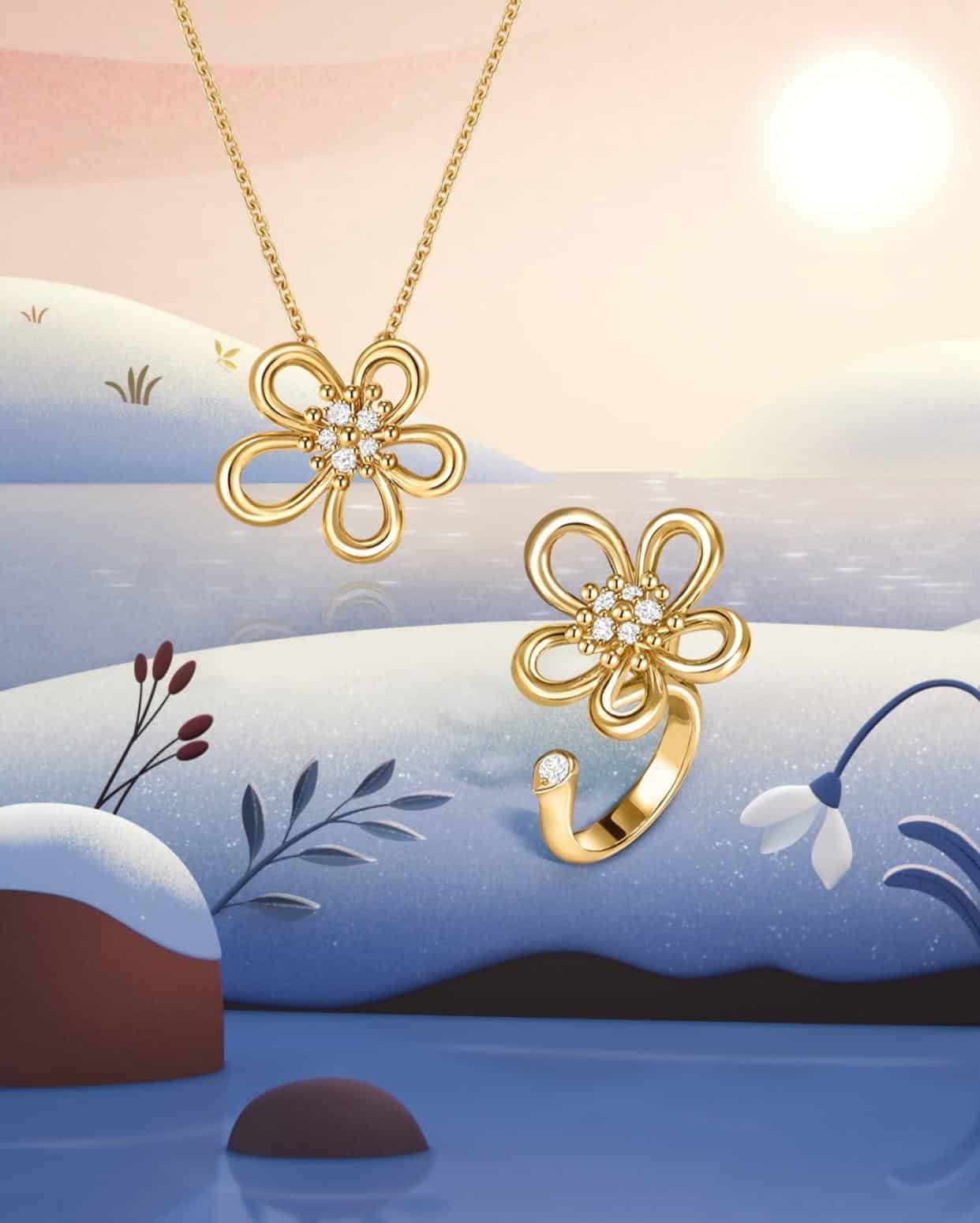
© Van Cleef & Arpels
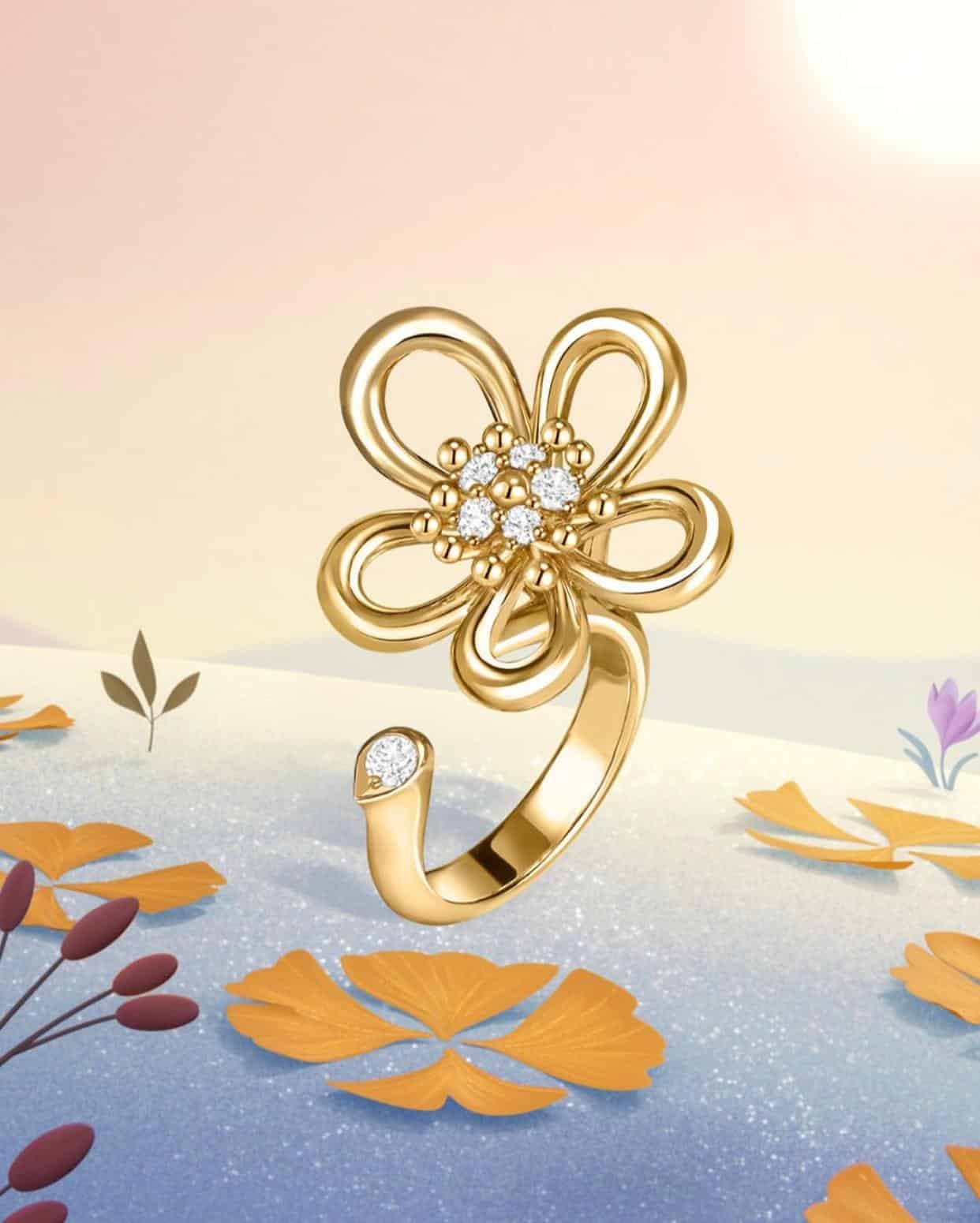
© Van Cleef & Arpels
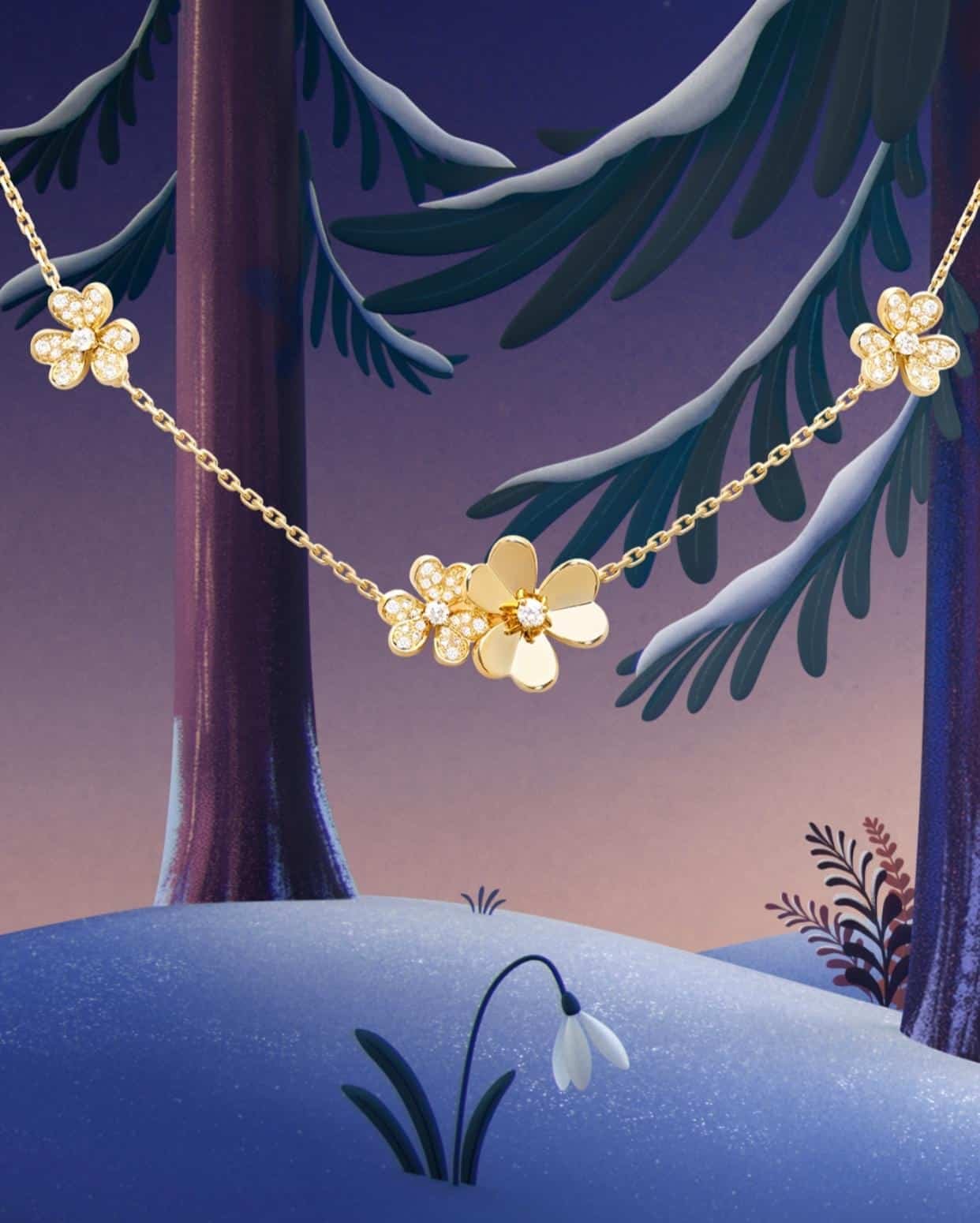
© Van Cleef & Arpels
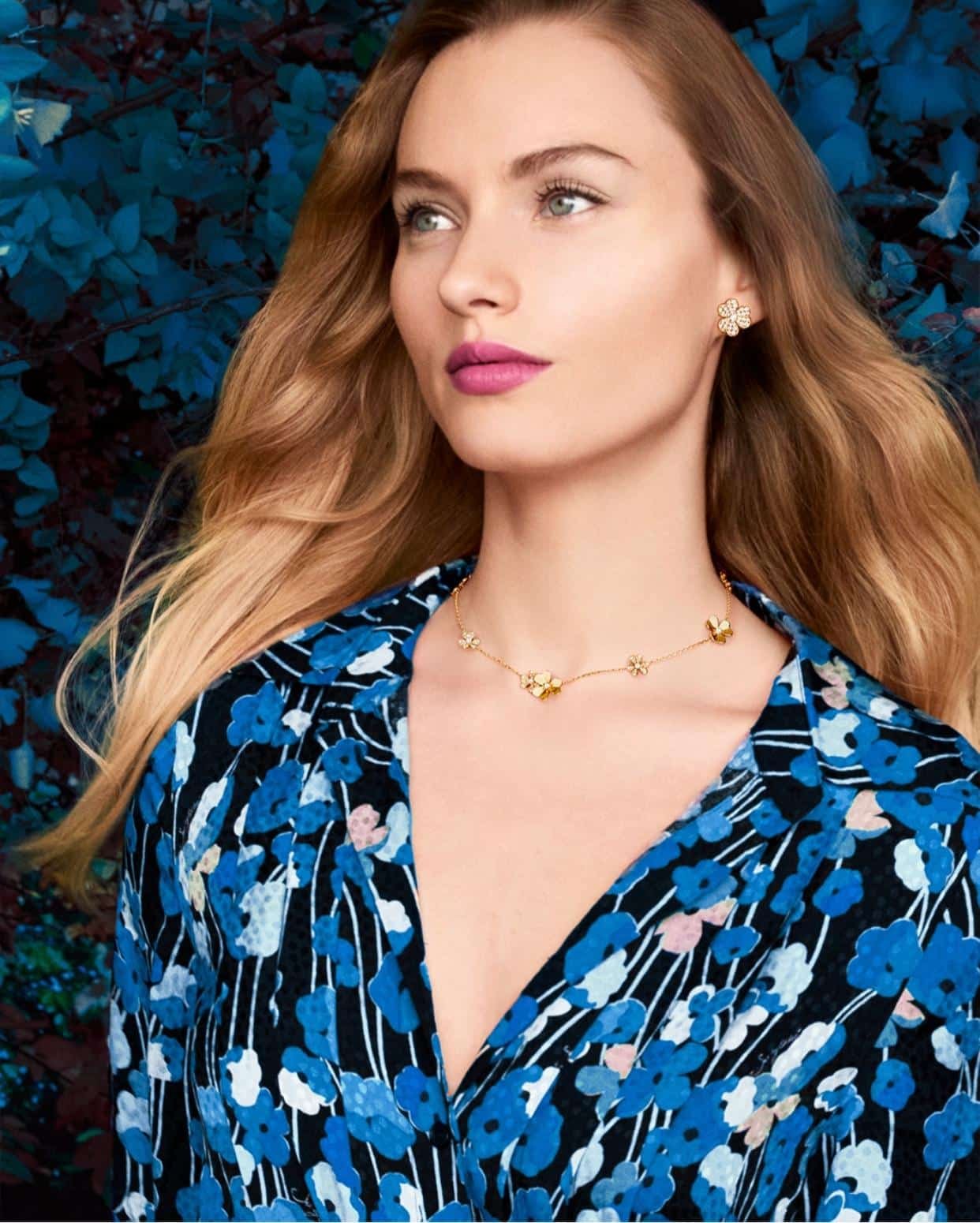
© Van Cleef & Arpels

© Van Cleef & Arpels

© Van Cleef & Arpels
© Van Cleef & Arpels
© Van Cleef & Arpels
© Van Cleef & Arpels
© Van Cleef & Arpels
© Van Cleef & Arpels
© Van Cleef & Arpels
© Van Cleef & Arpels
© Van Cleef & Arpels

© Van Cleef & Arpels
© Van Cleef & Arpels
© Van Cleef & Arpels
© Van Cleef & Arpels
© Van Cleef & Arpels
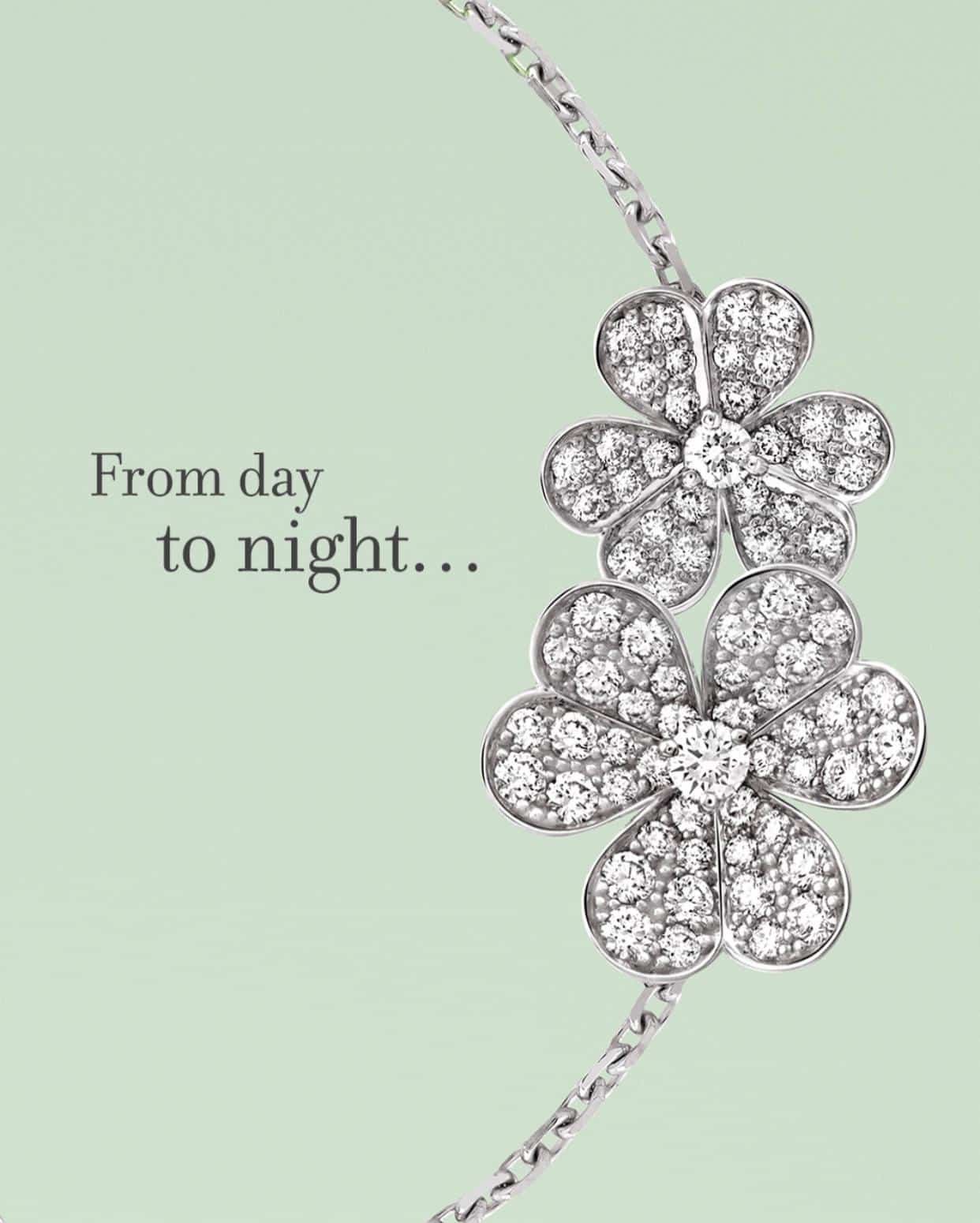
© Van Cleef & Arpels
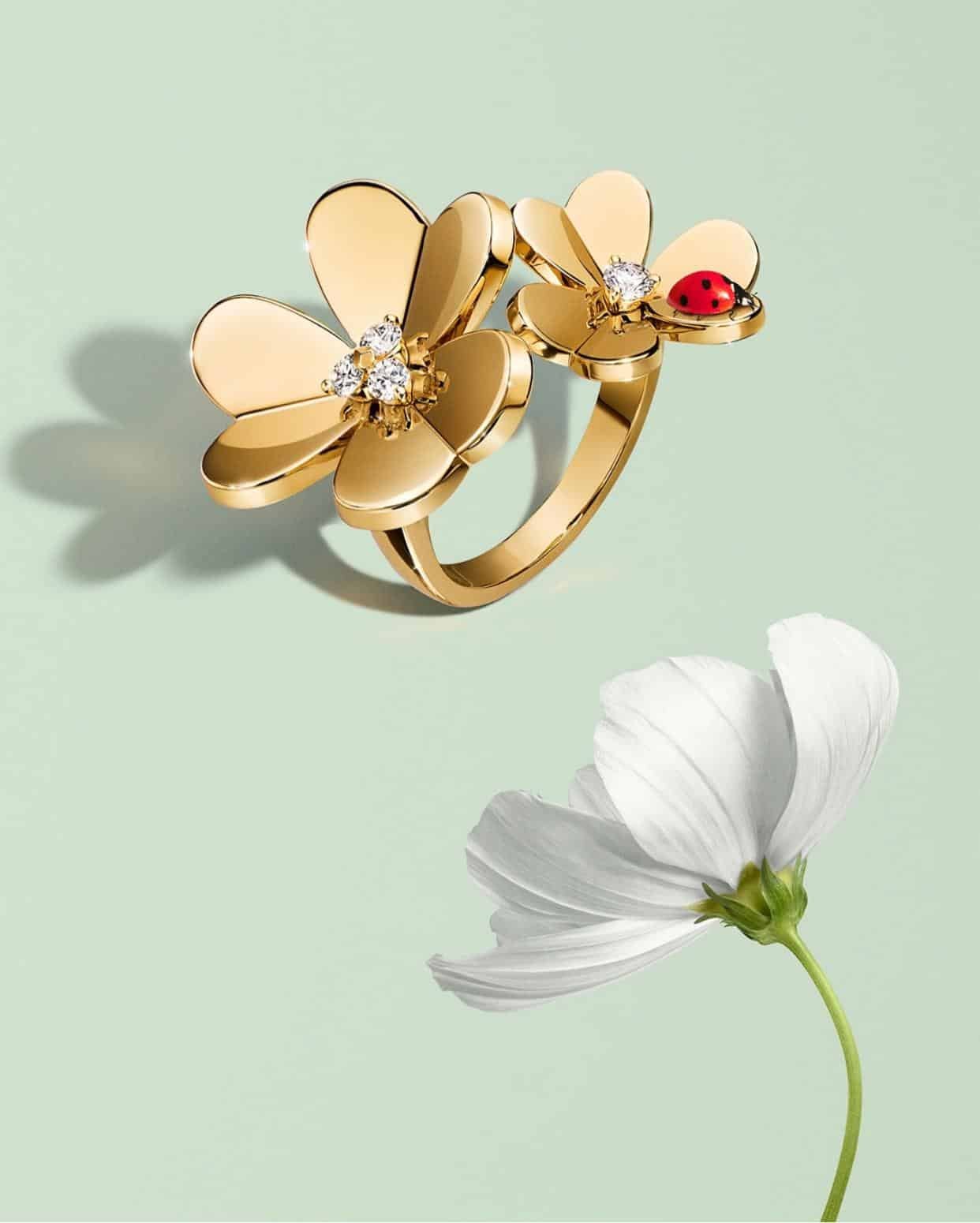
© Van Cleef & Arpels
VAN CLEEF & ARPELS
© Van Cleef & Arpels