

© Hermès

© Hermès

© Hermès
Hermès
In 1911, Prince Kan-In, commander-in-chief of the Japanese Imperial Cavalry, ordered from Hermès in Paris harnesses specially designed for the Imperial Court. The House had no presence yet in Japan — no boutique, no distributor, no local representative. Just a royal commission for harnesses, crossing several thousand kilometres because the reputation of a craftsman on the rue du Faubourg Saint-Honoré had reached the Imperial Cavalry. This is not an anecdote. It is a summary of everything the Hermès-Japan relationship still is today.
The History · Two Traditions That Recognise Each Other
Patrick Thomas, former CEO of Hermès, was once asked why the House had never created in Japan the equivalent of Shang Xia — the brand founded in China to revive local artisanal savoir-faire through the Hermès lens. His answer is the most precise that exists on the nature of the relationship between the two: "The Japanese artisanal tradition is too alive. Japan did not need Hermès." This is not modesty. It is a diagnosis of recognition — two cultures of excellence regarding each other as equals, neither needing the other to validate itself. This is why Japan became, over the decades, the largest market for Hermès in the world — not because the House imposed its model, but because Japanese clients recognised in the way Hermès treats material, duration and gesture something they already knew from their own tradition. The Imperial Cavalry commission of 1911 was the first sign of this recognition. Japan would continue to give them for more than a century.
La Maison Hermès Ginza · Renzo Piano · The Magic Lantern
The Maison Hermès on Ginza, built between 1998 and 2001 and inaugurated in June 2001, is one of the most accomplished buildings that luxury has ever commissioned from an architect. Renzo Piano, Pritzker Prize laureate 1998, received a brief simple in its terms and almost impossible in its execution: to build on Ginza — Tokyo's most dense and visually saturated commercial district, where façades compete for attention in a permanent visual noise — a building that would be discreet without being invisible, present without being aggressive, and Japanese without ceasing to be Hermès. His answer: thirteen thousand blocks of translucent glass enveloping the entire façade. By day, they filter natural light and give the building an almost mineral quality — a surface that shifts according to the hour and the angle. At night, they are illuminated from within like a lantern — the image Piano had in mind from the start, that of the traditional Japanese paper lanterns that transform night into something gentle rather than spectacular. In the visual noise of Ginza, La Maison Hermès does not shout. It glows. Which is exactly what the objects it sells do.
La Maison Hermès on Ginza is not simply a flagship — it is the headquarters of the Japanese subsidiary, with ateliers, exhibition spaces, a gallery — the Forum — and a direct connection to Ginza metro station two levels below. The building rises twelve floors on a site only twelve metres wide by forty-five metres long — an urban constraint that Piano transformed into an advantage, dividing the long façade by an interior courtyard that creates a vertical axis separating the structure into two volumes. Inside, the sixteen Hermès métiers are distributed across several floors — leather goods, ready-to-wear, jewellery, timepieces, silk, equestrian, fragrances. The boutique was decorated by Rena Dumas. The Forum, which occupies the top two floors, hosts temporary exhibitions that do not necessarily bear a direct relationship to the collections — a decision that says something about what Hermès believes itself to be, in Japan more than anywhere: a cultural institution as much as a fashion House.
In 2024, Hermès opened a new boutique at Azabudai Hills, the new mixed-use district in Minato-ku developed around the Mori Tower — one of the most significant urban development zones in Tokyo in decades. The boutique, designed by the Paris-based RDAI agency, is wrapped in a semi-transparent glass façade adorned with washi paper — the traditional Japanese paper technique which, like the glass blocks on Ginza, creates a play of light that makes the building into a lantern at nightfall. It is no coincidence that two generations of different architects, working twenty years apart on two Hermès boutiques in Tokyo, arrive at the same image: the Japanese lantern as a metaphor for what the House wants to be in this city. The interior draws on local materials — cherry wood, dark green bamboo, carpets in the colours of autumn leaves — around the Faubourg motif, with works from the Émile Hermès collection integrated throughout the spaces. All sixteen métiers are present, separated into menswear and womenswear universes, with a VIP salon opening onto a terrace.
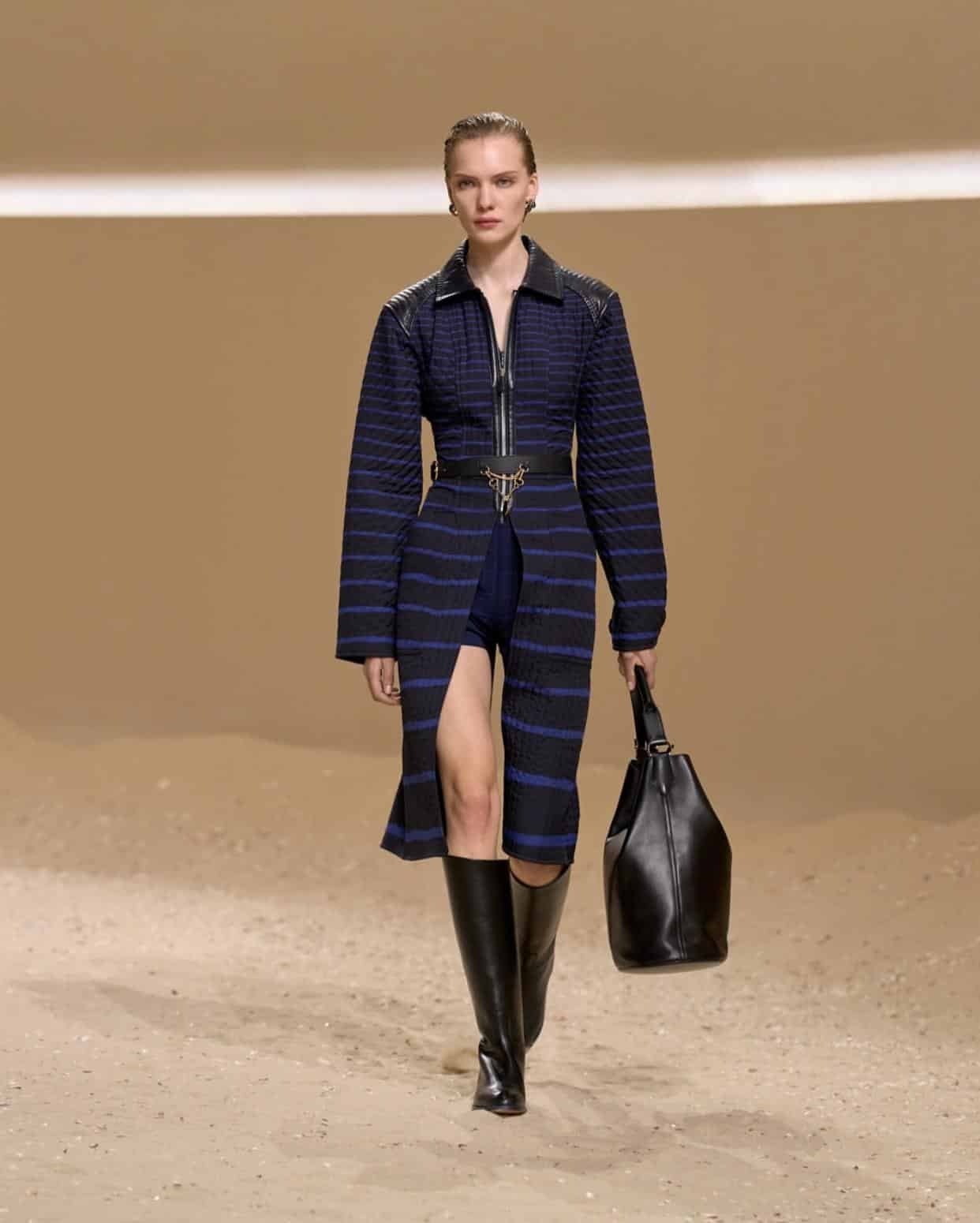
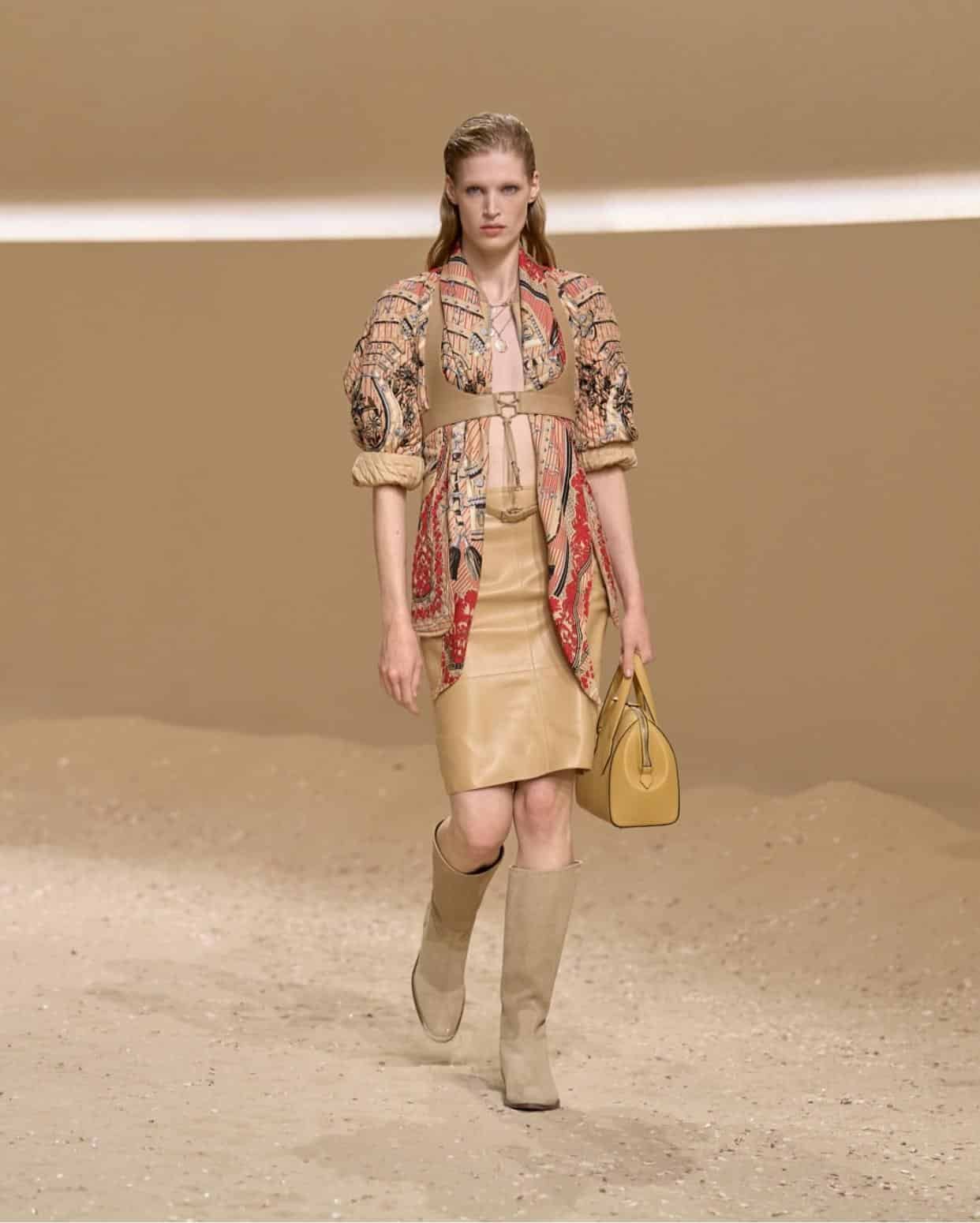
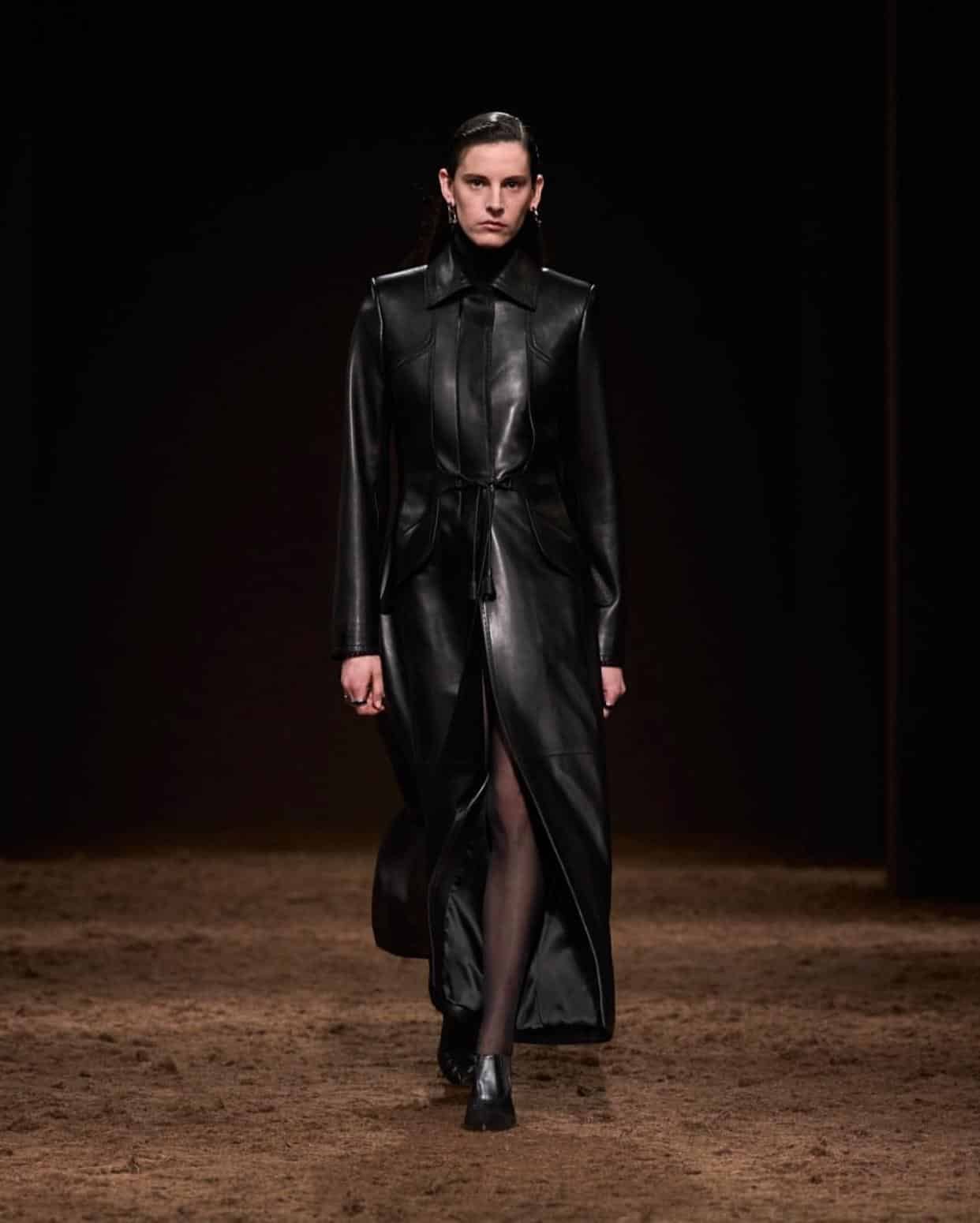
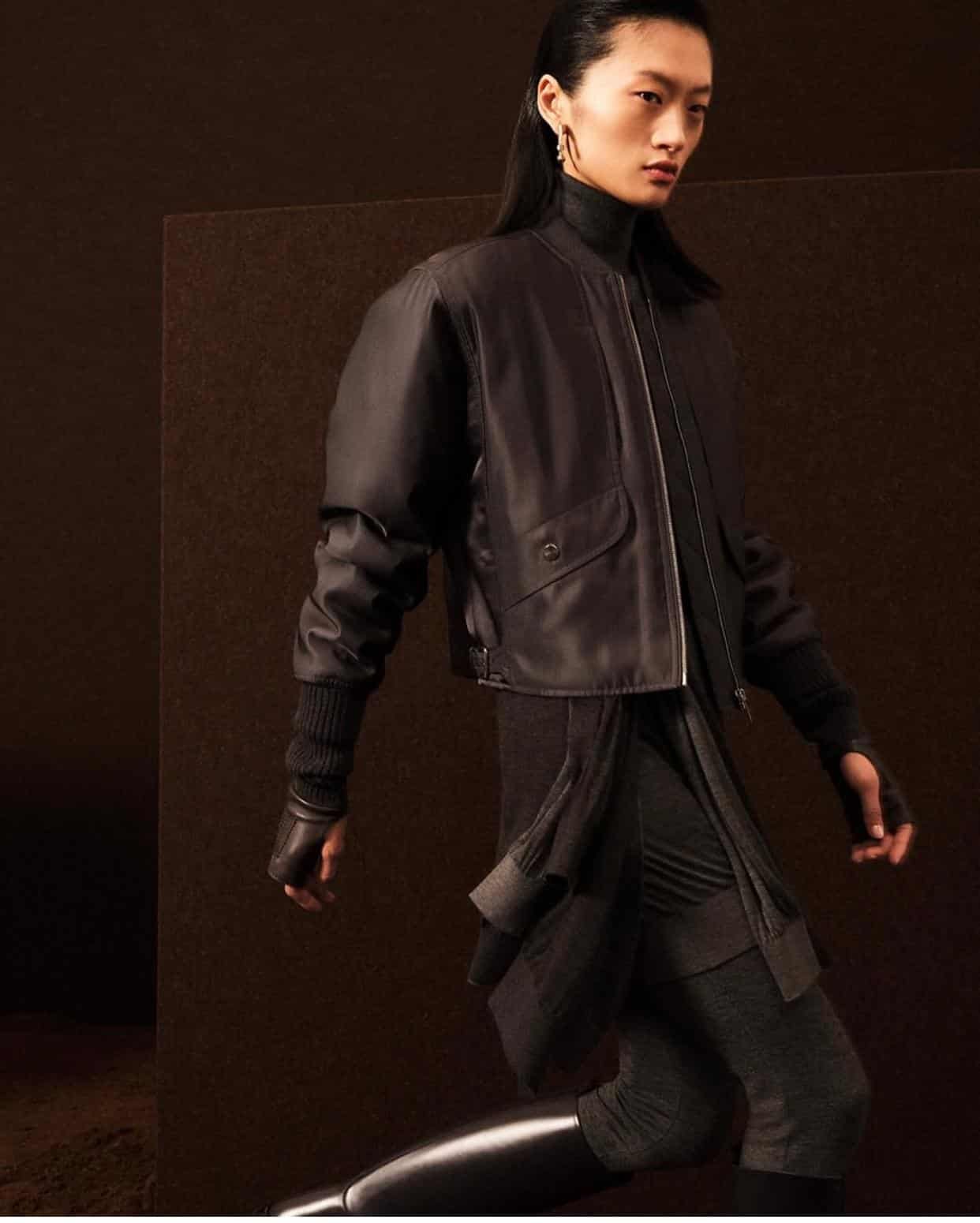
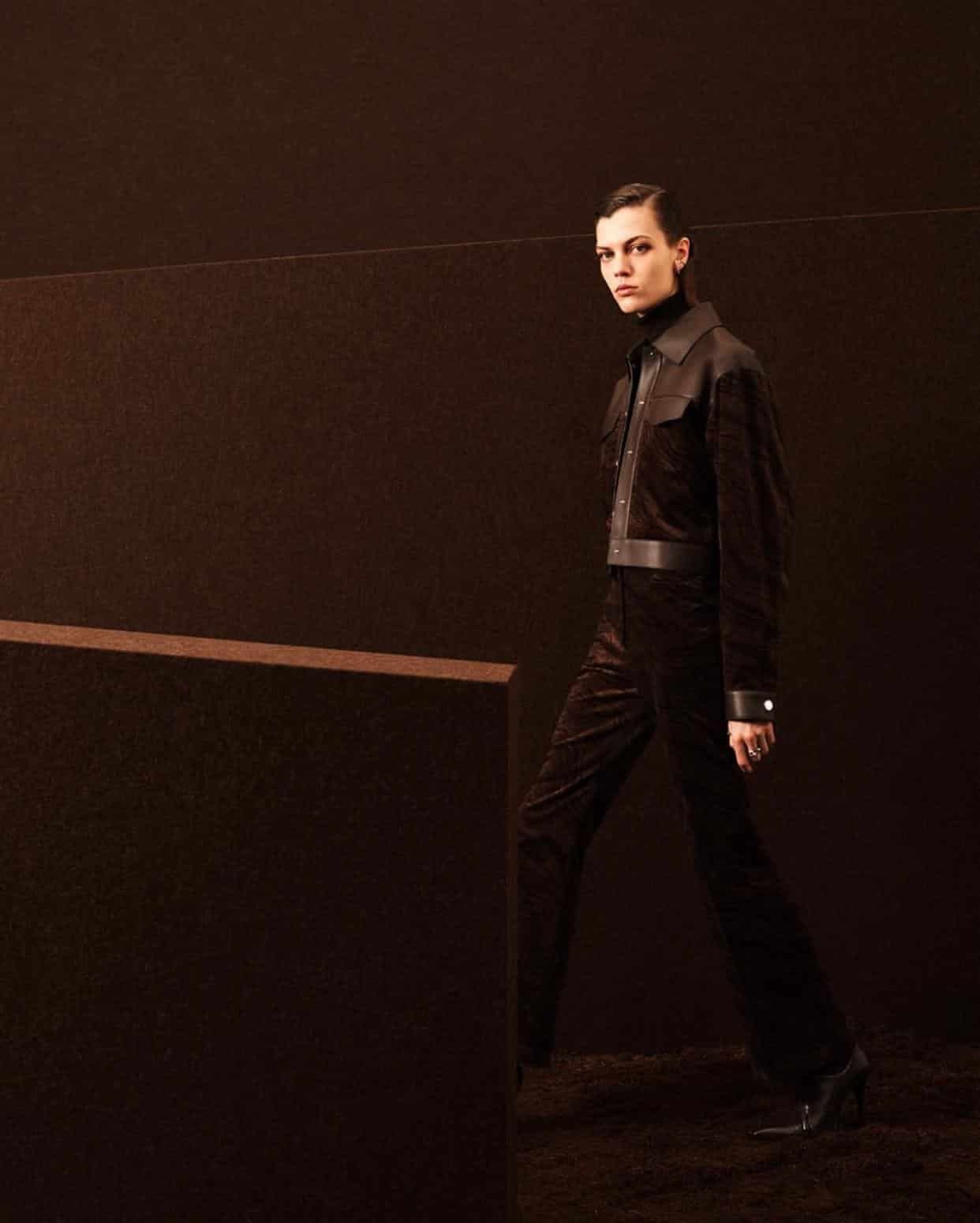
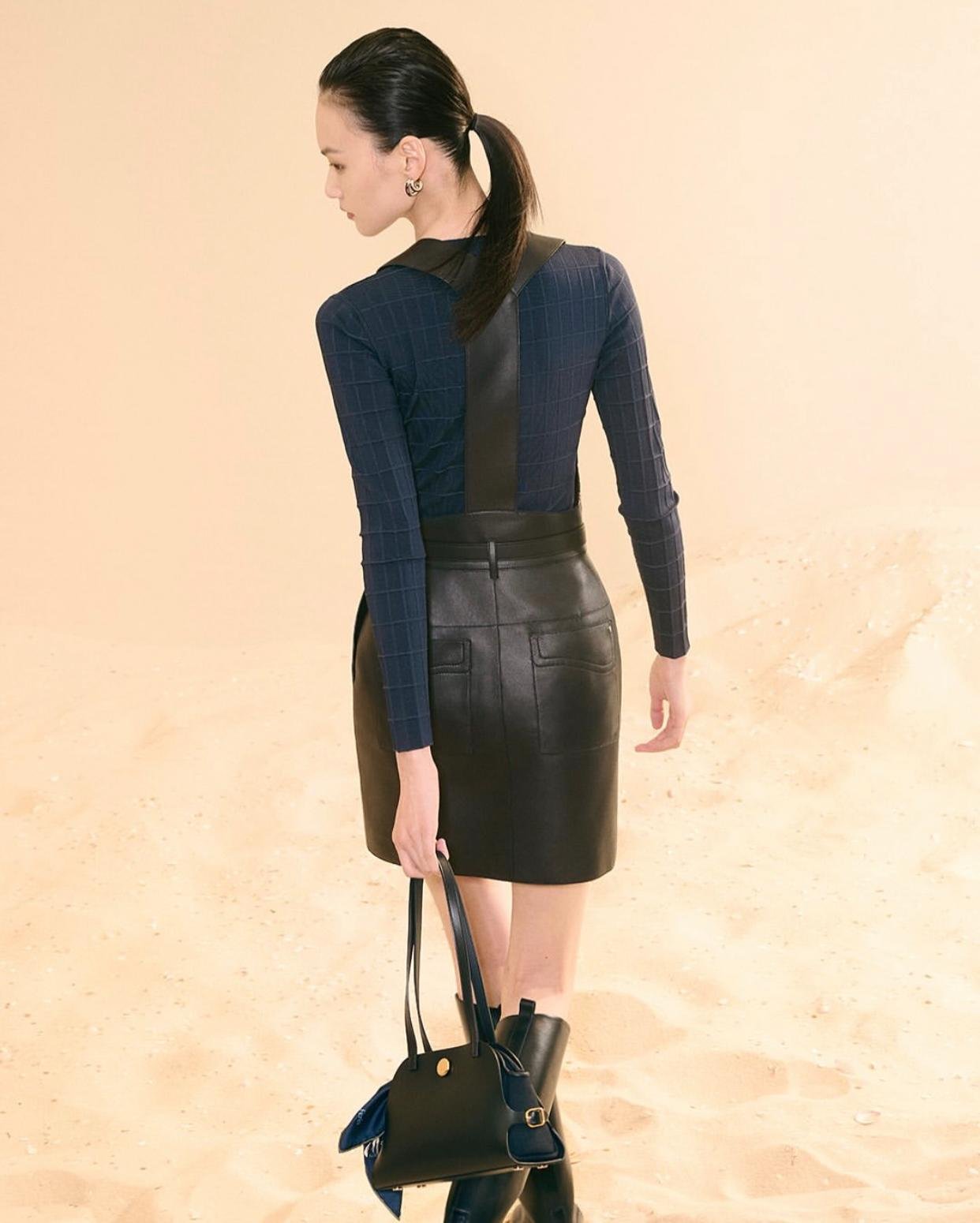
Hermès fashion is not read in Tokyo as seasonal fashion. It is read as a collection of materials — the silk of the scarf, the leather of the bag, the cashmere of the coat — in which construction and durability are as important as the silhouette. This is precisely how the Japanese clientele buys luxury clothing — with an attention to interior finishes, seams, linings, buttonholes, that surpasses what most Western markets accord them. The womenswear collection, under the artistic direction of Nadège Vanhee, and the menswear collection, under that of Véronique Nichanian — who has directed the men's line since 1988, a duration that says something about the way Hermès conceives of creative continuity — offer garments whose luxury is invisible to the eye but immediate to the touch. These are clothes for people who already know what they want, who do not need the garment to announce it on their behalf. Tokyo is full of such people.
Japan accounts for approximately ten per cent of Hermès' annual revenue — a figure almost identical to that of France, the House's historic market. In 2023, sales in Japan grew by nearly twenty-six per cent, to 1.26 billion euros. Hermès has thirty-seven points of sale there, around twenty in the Tokyo metropolitan area. These numbers are not the consequence of an aggressive distribution strategy — Hermès has no licences, does not outsource its production, does not cede the management of its points of sale to local partners. They are the consequence of an alignment between what the House proposes and what the Japanese clientele has always sought: objects made by craftspeople whose training takes years, in materials whose provenance is known, according to methods that have not changed because they do not need to. This is what Patrick Thomas meant when he said Japan did not need Hermès. He meant that Japan understood Hermès better than almost any other market in the world — and that this understanding was reciprocal.
The Forum, which occupies the top two floors of La Maison Hermès on Ginza, is the exhibition space that perhaps better than any other gesture justifies the nature of Hermès' presence in Japan. It hosts exhibitions of contemporary art, design and craft — Japanese and international — that do not necessarily bear any direct relationship to the House's collections. Japanese artists have exhibited works there with no visible connection to leather or silk. Artisans from local traditions have been presented as equivalents — not as inspirations — of the craftspeople of the Faubourg. This decision says something essential: Hermès does not come to Japan to teach what luxury is. It comes to recognise another version of what excellence can be — and to show it to its own clients as a reference, not an exotic curiosity.
Every Hermès bag is made by a single craftsperson from start to finish — a rule that applies in the ateliers of the Faubourg Saint-Honoré, in the manufactures of Pantin, Seloncourt, Sayat — and that applies in the same way for pieces sold on Ginza as for those sold in Paris. The saddle stitch — the sewing technique inherited from equestrian saddlery, sewn with two needles simultaneously through holes pierced with an awl, producing a seam in which each stitch is secured by the one that follows and which does not unravel if one stitch gives way — is the same on a bag destined for a client on Ginza as on one destined for a client on the Faubourg Saint-Honoré. This is not a detail. It is the foundation of Hermès' legitimacy in Japan — a country whose craftspeople have applied exactly the same logic to their own techniques for centuries: the right gesture, repeated, transmitted, without concession to speed or scale. In 1911, the Imperial Cavalry commissioned harnesses from Paris because they had recognised something in the way a French craftsman worked. That something has not changed.
In 1911, the Japanese Imperial Cavalry
ordered harnesses from Hermès in Paris.
The House had no boutique in Japan yet.
Sixty years later,
Patrick Thomas was asked why
Hermès had never created in Japan
the equivalent of Shang Xia.
His answer:
"The Japanese artisanal tradition is too alive.
Japan did not need Hermès."
This is not modesty.
It is a diagnosis of recognition.
Two cultures of excellence
regarding each other as equals.
That is why Japan became
the largest Hermès market in the world.
There is a way of testing the solidity of a luxury House that consists of looking at how it behaves in the market that understands it best. Japan is that market for Hermès — a country whose clients know how to read a seam, recognise the quality of vegetable-tanned leather, distinguish a silk scarf printed in Lyon from one printed digitally, and whose demands for service and quality of presentation are the highest in the world. In this context, Hermès has no special performance in Tokyo. It simply has the same performance as everywhere else — and this performance is enough, because it is exactly level with what the Tokyo clientele requires. The Renzo Piano lantern glowing in the night of Ginza is not trying to impress. It is trying to be what it is, legibly, in an environment that knows how to read such things. That is all Hermès has ever done. And all Japan has ever recognised.
La Maison Hermès Ginza
5-4-1 Ginza, Chūō-ku, Tokyo
Renzo Piano · 2001 · 12 floors · Le Forum gallery
Hermès Azabudai Hills
Azabudai Hills, Minato-ku, Tokyo
RDAI · 2024 · Washi façade · Sixteen métiers
In 1911, harnesses ordered from Tokyo
to a saddler on the Faubourg Saint-Honoré.
In 2001, a glass lantern
glowing in the night of Ginza
without trying to impress.
In 2024, a washi façade at Azabudai Hills
saying the same thing another way.
Japan did not need Hermès.
Hermès needed Japan
to know it was understood
by someone who truly knew how to read.
The commission is still open.
© Hermès
© Hermès
© Hermès

© Hermès

© Hermès
© Hermès

© Hermès

© Hermès
© Hermès

© Hermès
© Hermès
© Hermès

© Hermès

© Hermès
© Hermès
© Hermès

© Hermès

© Hermès

© Hermès

© Hermès

© Hermès

© Hermès
HERMÈS
© Hermès