

© Esquisse
© Esquisse
© Esquisse
ESqUISSE
In 2006, Michel Troisgros — chef and inheritor of La Maison Troisgros in Roanne, three Michelin stars — decided to open his first restaurant outside France. He chose Tokyo. He called his sous-chef Lionel Beccat, born in Corsica, raised in Marseille, and asked him to run it. He gave him twenty-four hours to decide. Beccat said yes. Six years later, in June 2012, Beccat left to open his own restaurant on the ninth floor of the Royal Crystal building in Ginza. He named it ESqUISSE — the French word for sketch, for a drawing that does not claim to be finished. Five months after opening, it received two Michelin stars. It has held them without interruption since.
The Philosophy · The Menu Spontané · Cuisine As Unfinished Drawing
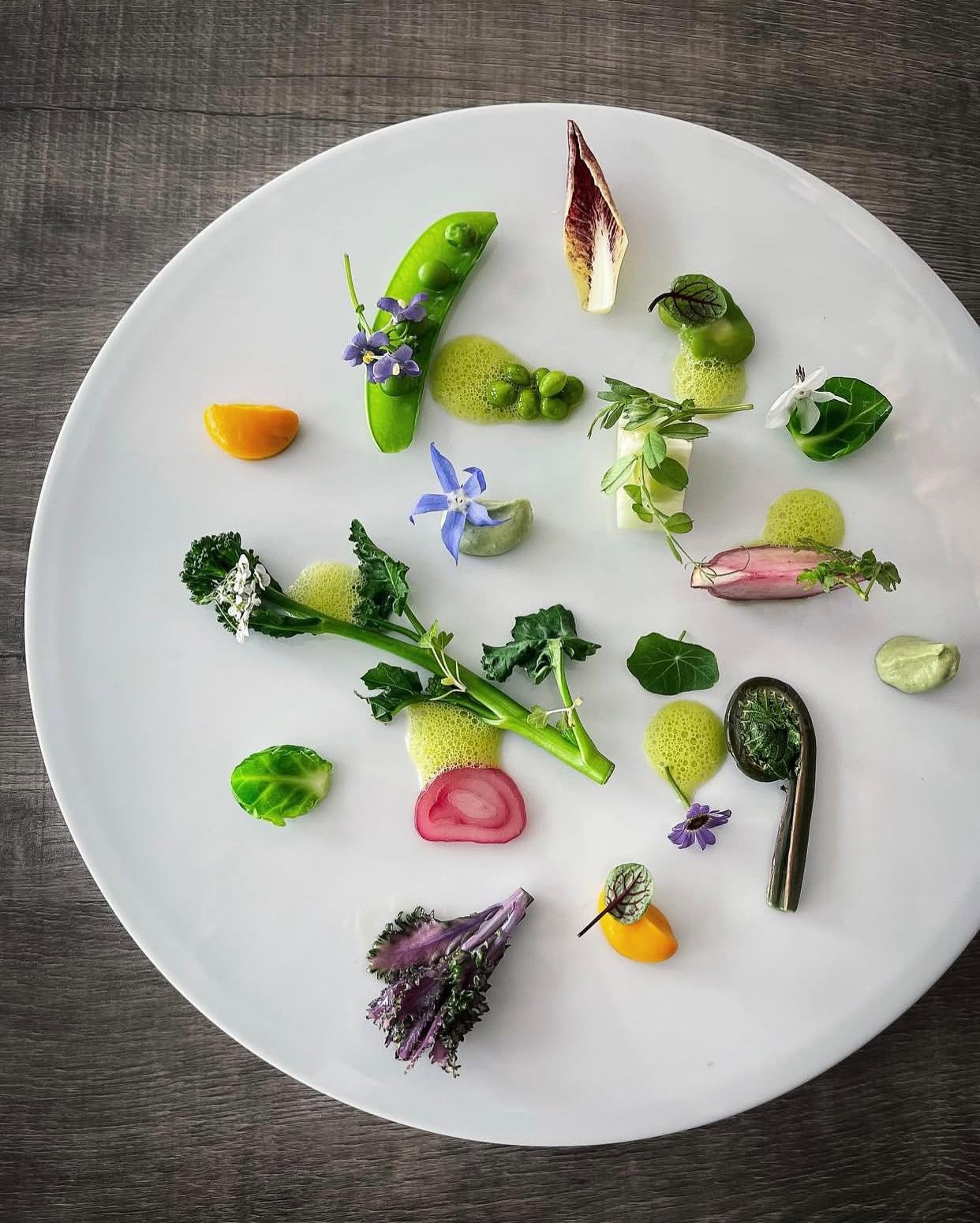
The name is the programme. A sketch does not impose. It proposes — with the understanding that the person looking at it will complete it through their own perception. Beccat applies this logic to the menu with structural consistency: there is no fixed carte, no printed sequence announced in advance. The menu spontané changes daily, assembled in response to what the morning's markets and the restaurant's forty-plus producers have made available. The guest receives a sequence of courses whose architecture is determined by the ingredients at their precise moment of readiness — not by a creative concept imposed six months earlier and maintained regardless of season. In this, Beccat has resolved a tension that French haute cuisine rarely addresses directly: the tension between the chef's authority and the season's authority. At ESqUISSE, the season wins. The chef interprets. The guest completes.
The Hook · The Wall · Five Layers Of Plaster, Sand, And Pebbles
The most precise material statement in ESqUISSE's interior is not the table setting or the lacquerware or the lighting. It is the wall. Designed by Shinichiro Ogata — whose studio, Simplicity, has built a reputation across Japan for the translation of traditional craft into contemporary hospitality spaces — and executed by Naoki Kusumi, the wall was built in five to six successive layers of traditional sakan plaster, applied with the same technique used for centuries in Japanese tea houses and storehouses. Once the density was sufficient, Kusumi shaved the surface — removing the outer layer to expose the sand and pebbles embedded within, revealing a cross-section of the earth's material rather than a surface applied over it. Kusumi is the third generation of a plasterwork artisan family. He began learning the craft at three years old. The wall at ESqUISSE took him decades of accumulated knowledge to produce. It takes a diner approximately three seconds to notice, and considerably longer to understand what they are looking at.
Lionel Beccat spent five years as sous-chef at La Maison Troisgros — the three-starred house in Roanne that Michel Troisgros inherited from his father Pierre, and that had been one of the foundational institutions of nouvelle cuisine since the 1960s. In those five years, Troisgros trusted him with the kitchen's operational logic and technical standard. When the Tokyo commission arrived, he chose Beccat over chefs with more senior titles. The twenty-four-hour offer — come to Tokyo, run my first restaurant outside France — was not a casual proposition. It was a judgement about who could hold a standard in a city whose culinary culture neither of them knew well. Beccat arrived in 2006, led Cuisine[s] Michel Troisgros Tokyo to two Michelin stars, and in 2012 opened ESqUISSE with the accumulated understanding of six years' immersion in Japanese ingredients, markets, and producers. The restaurant now sources from more than forty producers — approximately half of whom Beccat first met at the weekend farmers' market in front of the United Nations University in Aoyama.
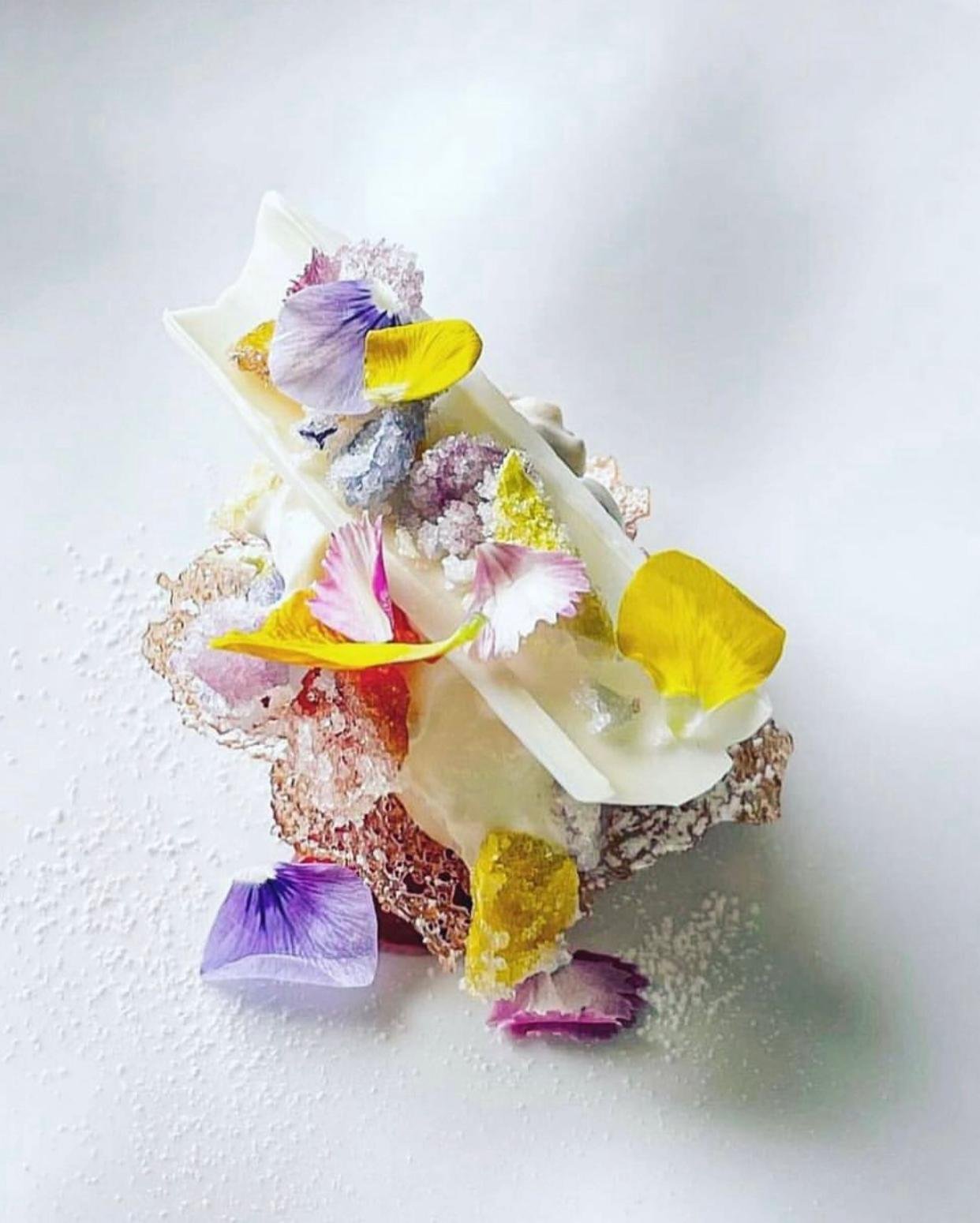
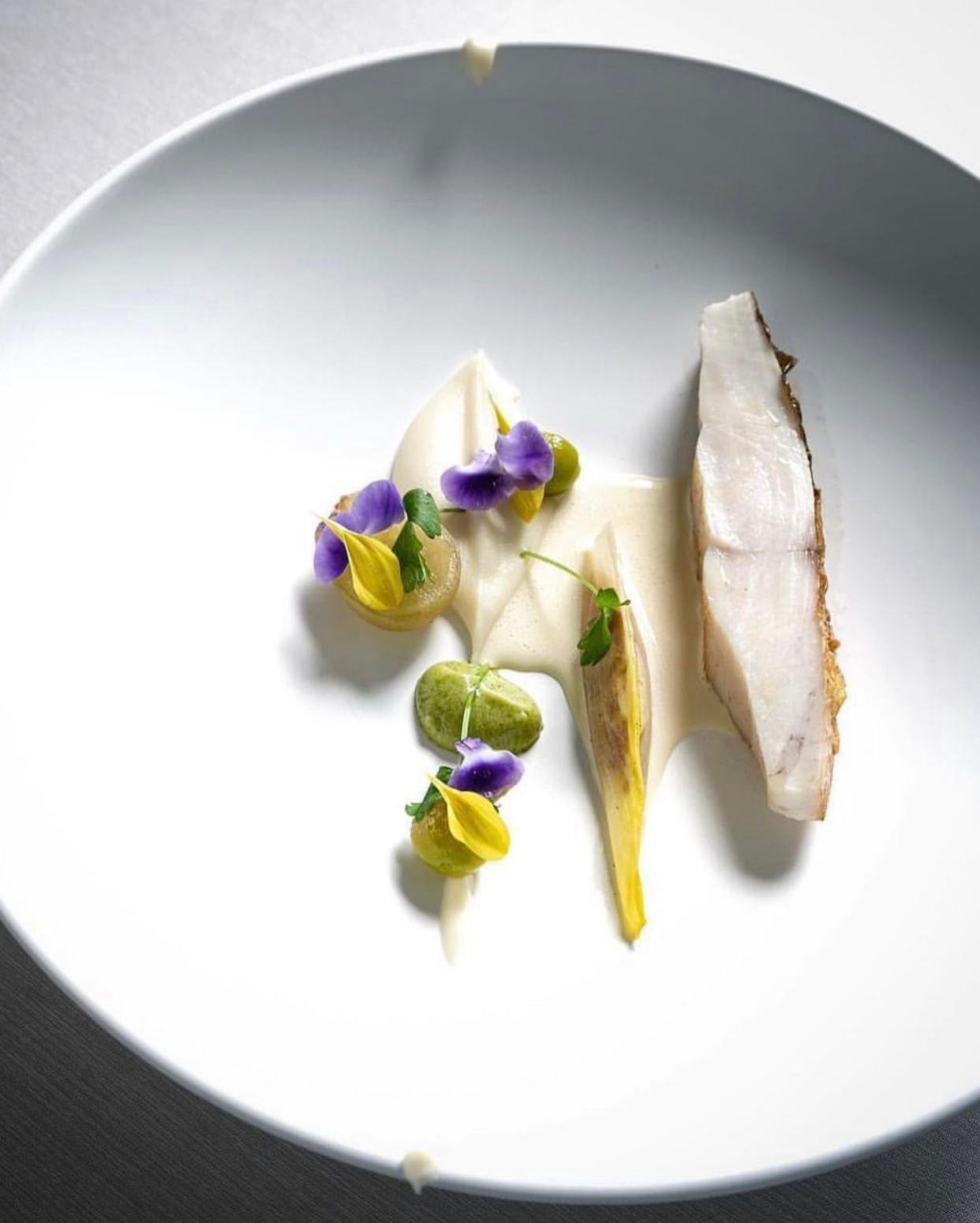
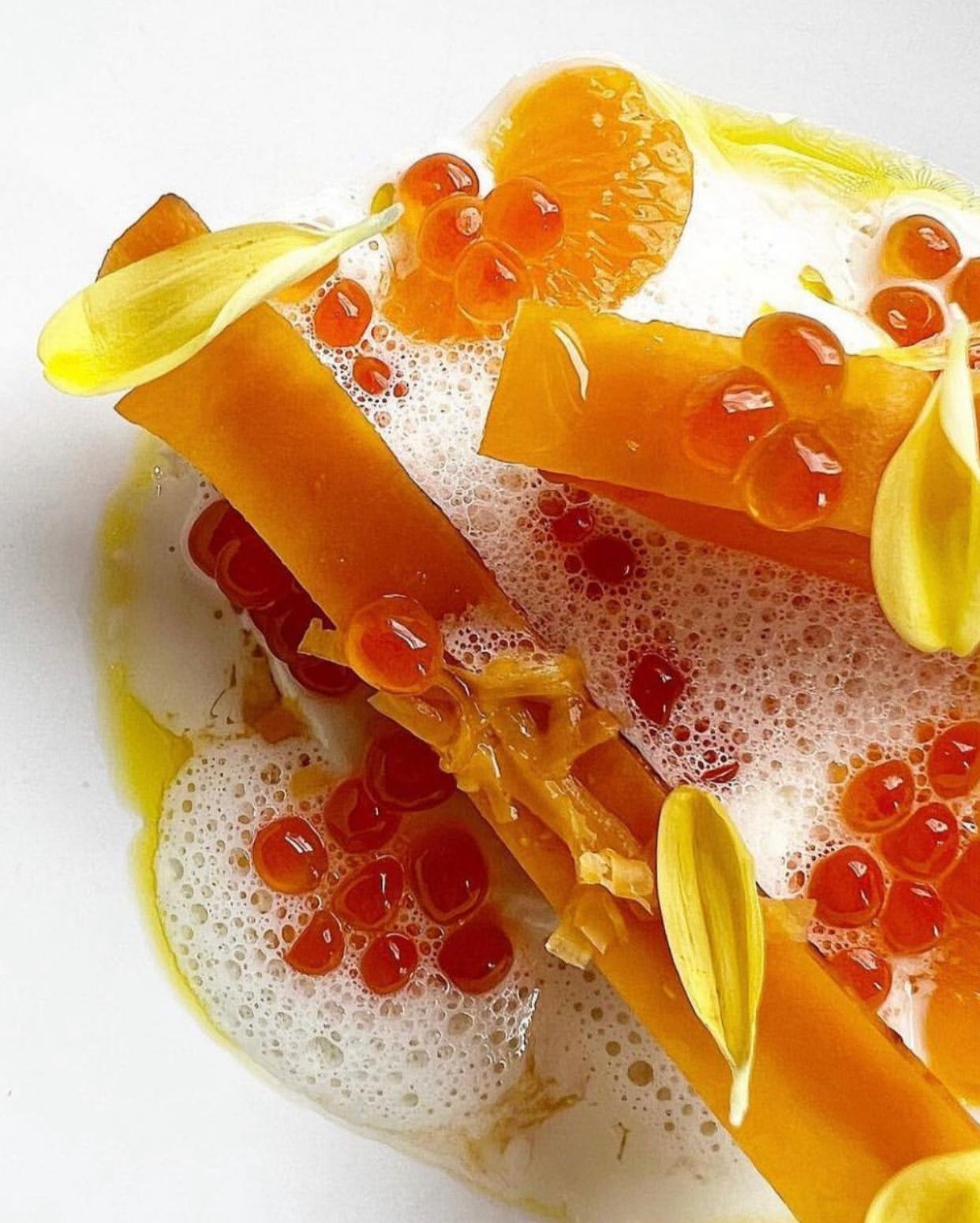
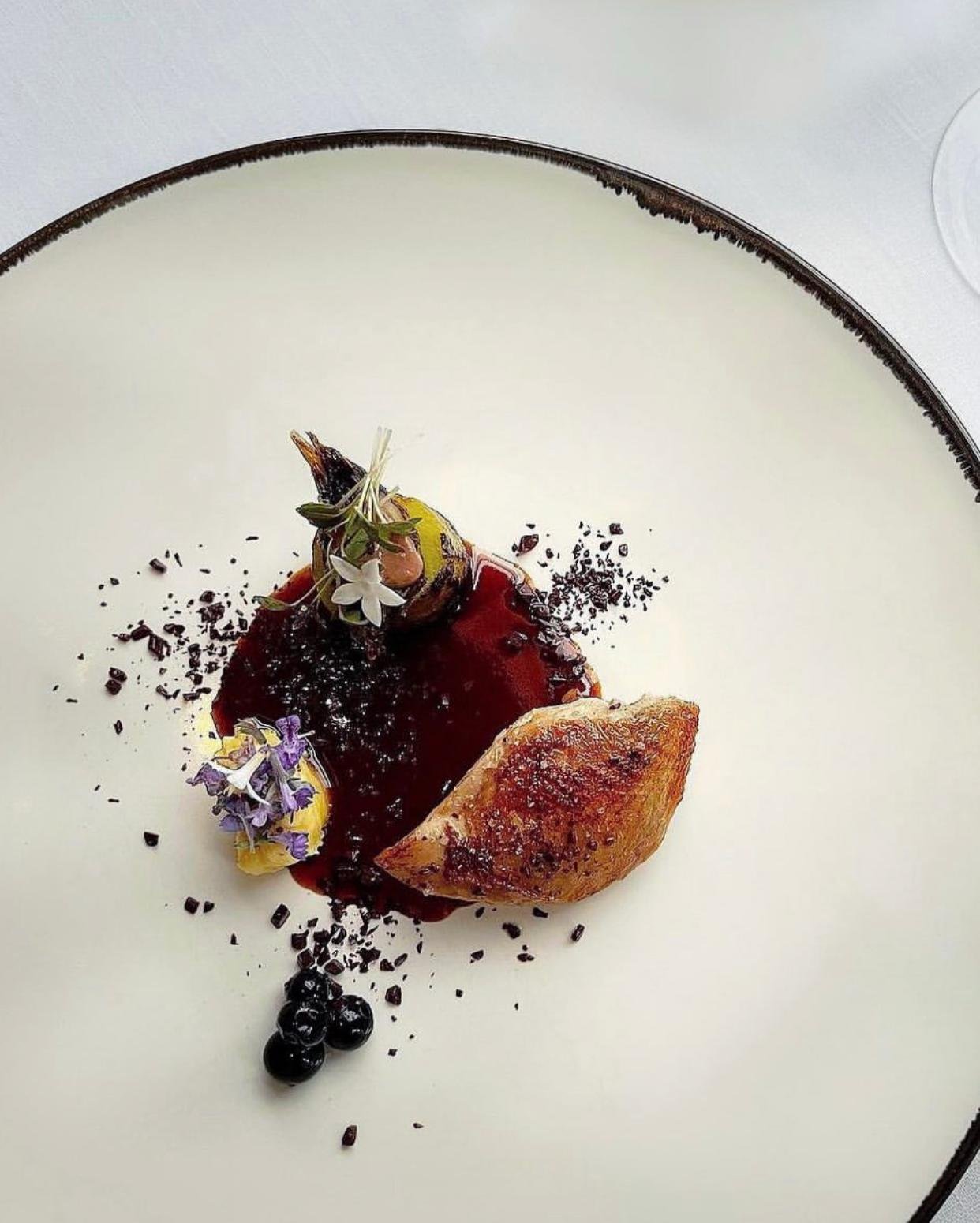
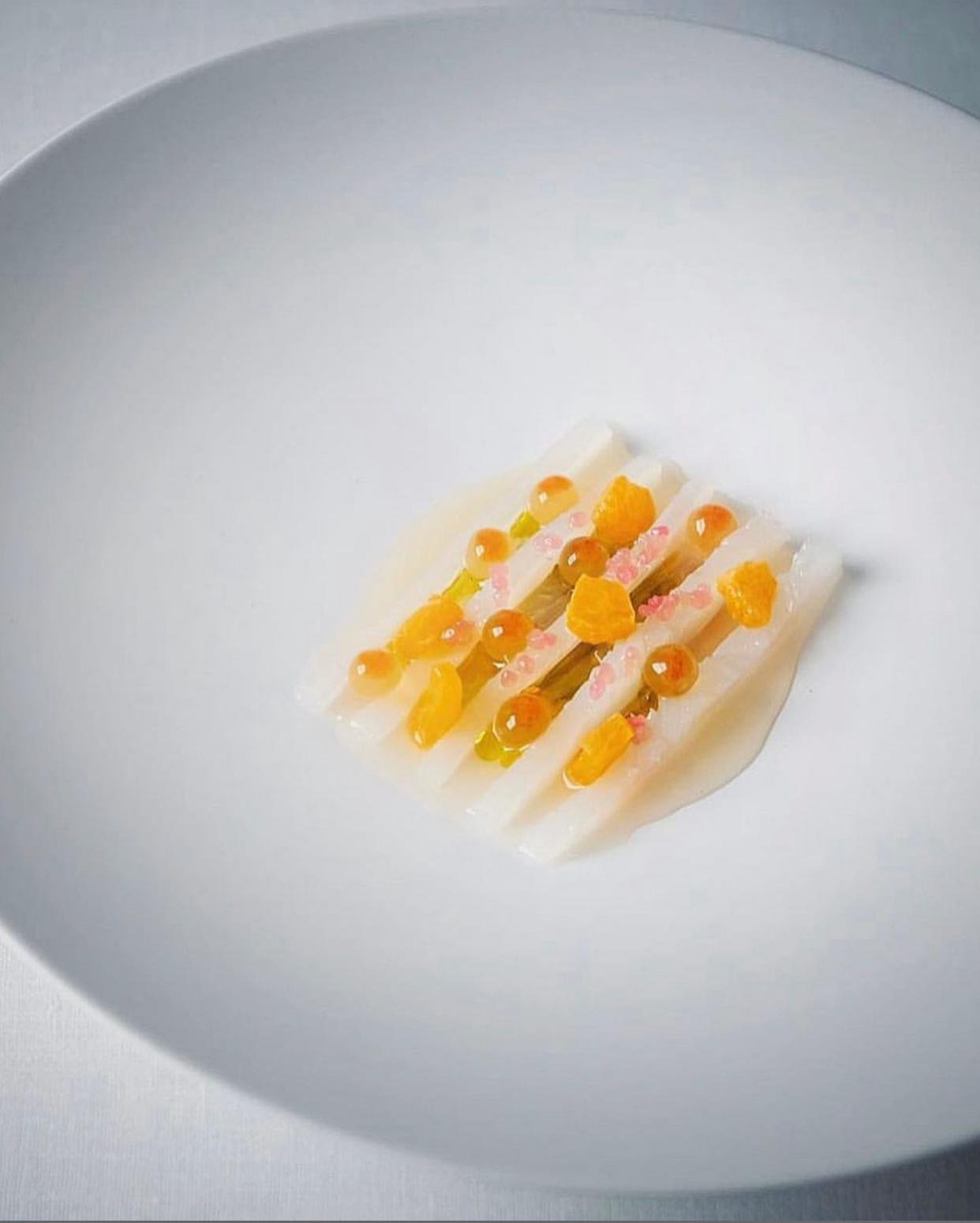
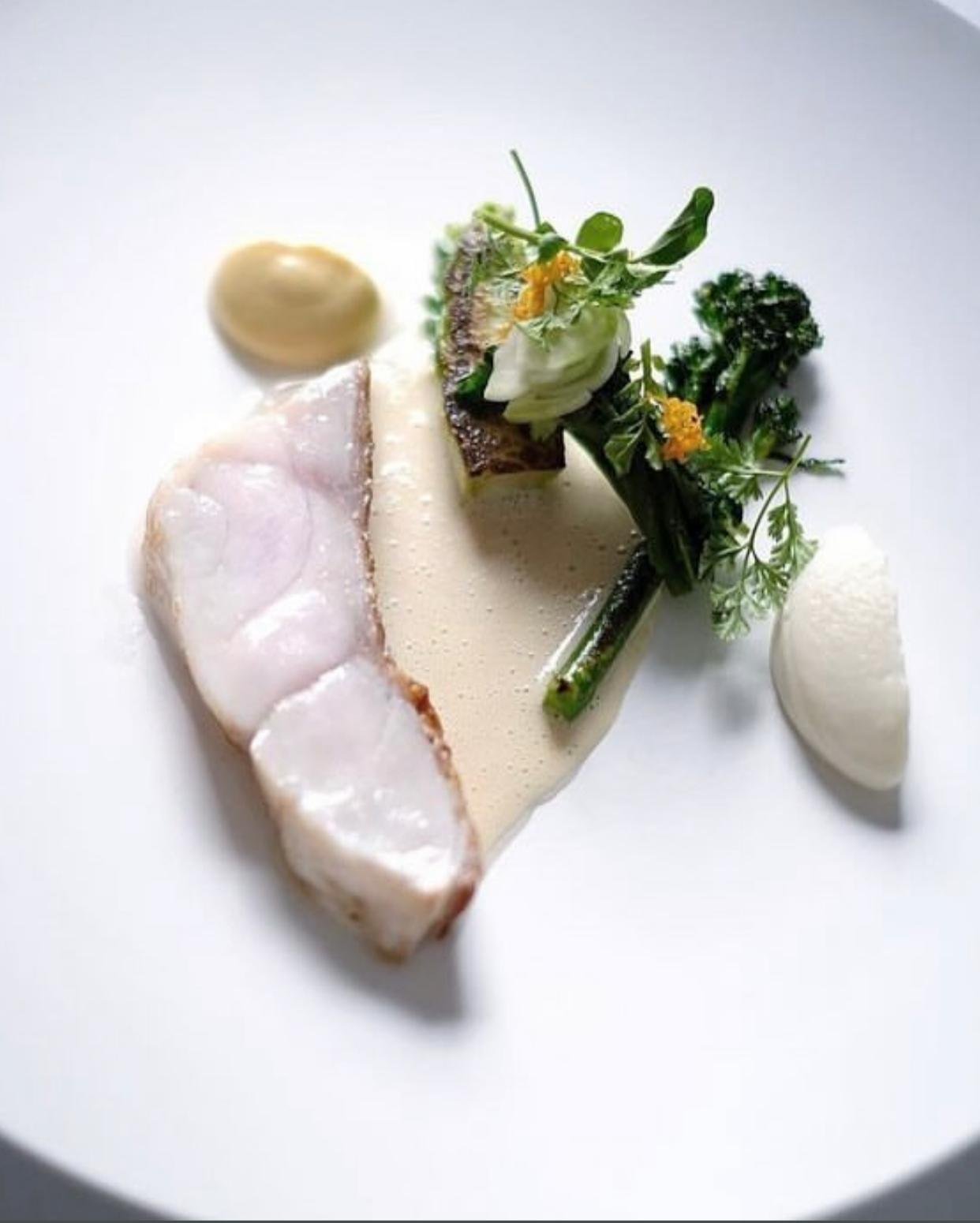
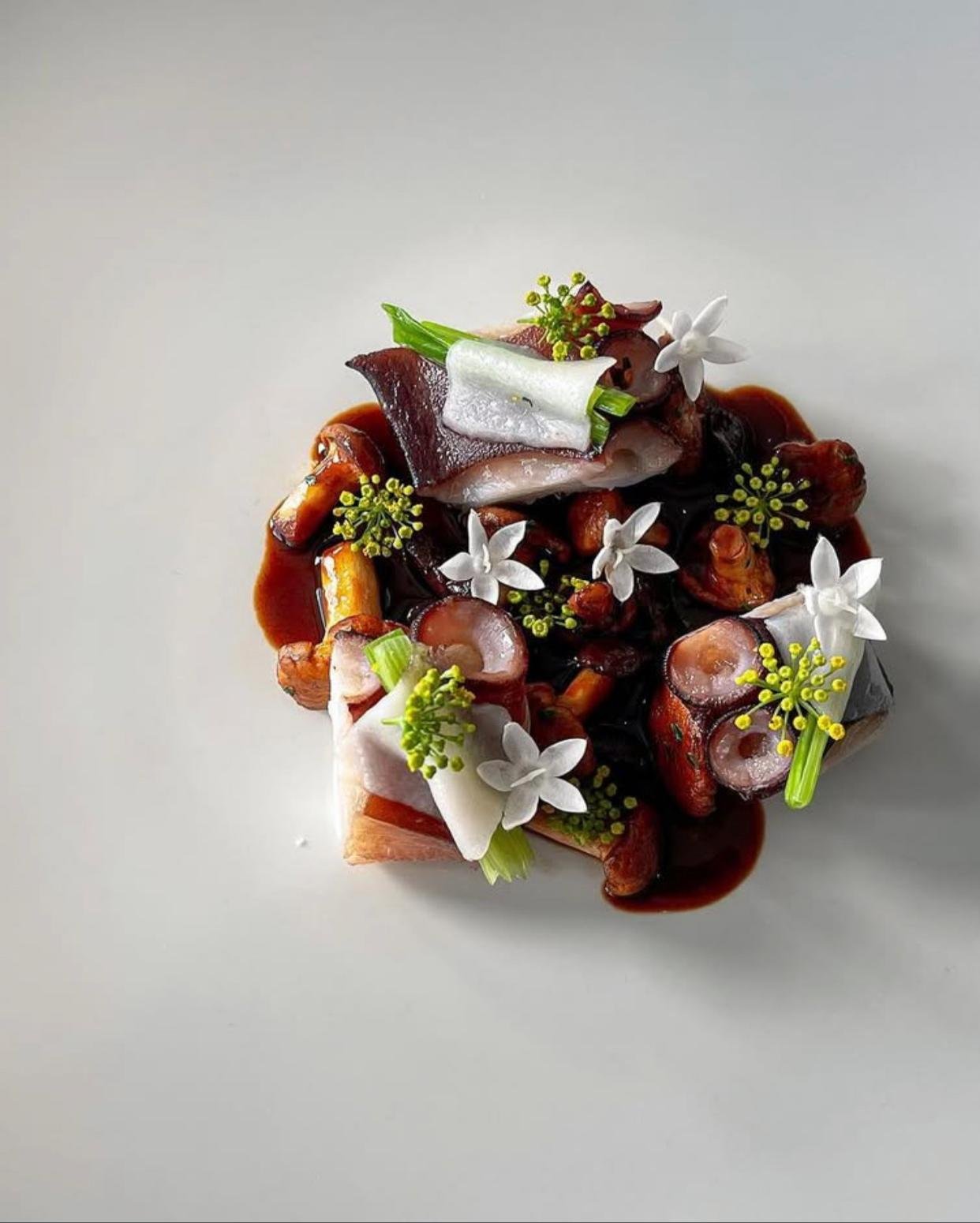
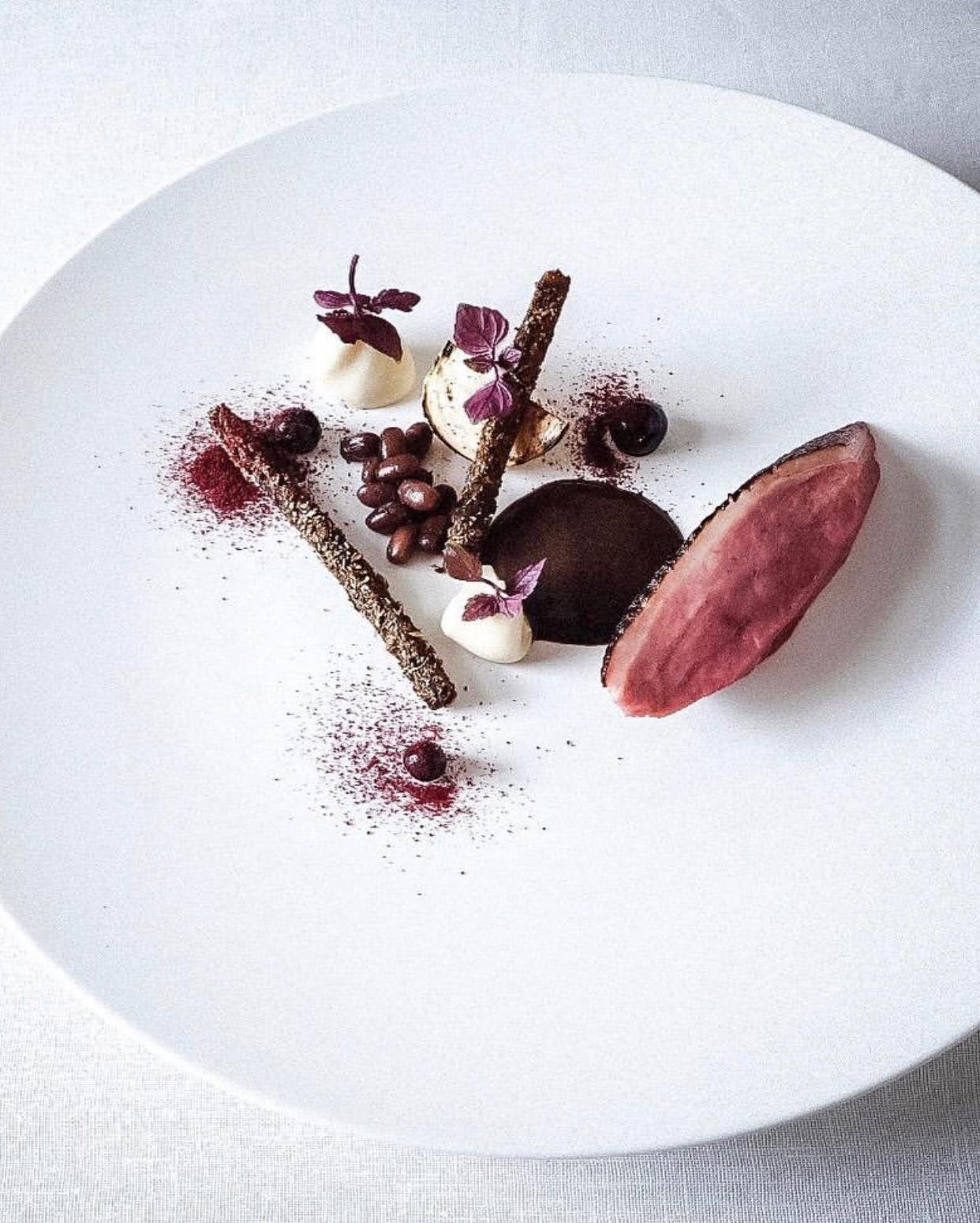
The twenty-four seasonal divisions of the Japanese calendar — koshu, the system inherited from Chinese astronomy that divides the solar year by the celestial longitude of the sun rather than by month — are not a decorative reference at ESqUISSE. They are the naming system for the menu's courses. Each dish is titled after the solar term that governs the moment of its service: Risshun, the beginning of spring; Shōman, the grain fills; Taisho, the great heat. The name is not a description of the dish. It is a placement of the dish in a larger natural sequence — an indication that what is on the plate exists in relationship to where the sun is in its arc, and that this relationship is the primary fact about the ingredient. A halibut aged four days. An amadai steamed to retain its freshness. A duck magret cooked to a caramel skin. Bergamot butter in the sauce. The French technique is precise and confident. The Japanese ingredient is sovereign.
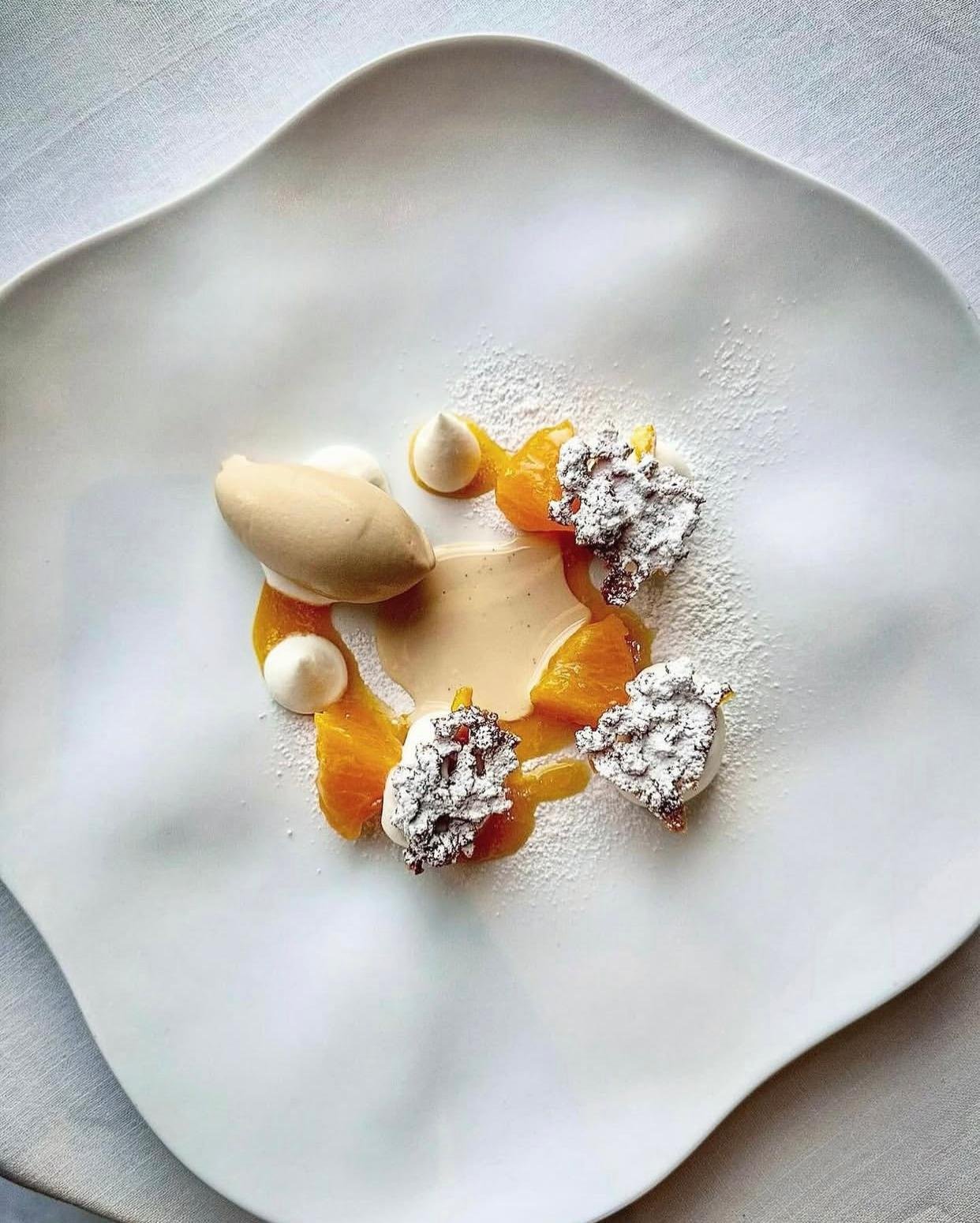
Kazutoshi Narita trained across six countries — with Pierre Hermé in Paris, with Tateru Yoshino, and in the kitchens of Joël Robuchon — before joining ESqUISSE at its opening in 2012. In 2017, he received the Asia's Best Pastry Chef award at the Asia's 50 Best Restaurants ceremony in Bangkok. His desserts at ESqUISSE are not a conclusion to the meal. They are a parallel argument — composed with the same seasonal logic as the savoury courses, executed with a vocabulary of sugar work, soufflé, and textural contrast that is entirely his own. His rice pudding with olive ice cream has become a reference point in Tokyo's fine dining conversation — a dish that uses two of the most familiar ingredients in French and Japanese tradition and finds in their combination something that neither tradition had thought to look for. Since 2016, he also runs ESqUISSE Cinq, a dedicated dessert counter in Ginza, where guests may arrive for the sweet course alone.
Eiji Wakabayashi received the inaugural Sommelier Award of the Michelin Guide Tokyo 2025 — a distinction that acknowledged not merely his technical knowledge but his understanding of wine as a narrative element in the meal's structure. At ESqUISSE, the wine programme is built on the same principle that governs the menu: the pairing is not a complement to the dish but a counterpoint, chosen to reveal something in the food that the food alone does not say. Wakabayashi includes Japanese selections — among them bottles from Kusaka Vineyards — alongside the French canon, on the same grounds that Beccat includes Japanese ingredients alongside French technique: because the combination produces something that neither tradition produces in isolation. The service, led by Maître d' Lionel Lavernhe, moves between the formality of the French dining tradition and the attentiveness of Japanese hospitality without settling into either register entirely — which is precisely the equilibrium that ESqUISSE, in all of its decisions, is trying to hold.
Lionel Beccat photographs. Not as a hobby appended to a culinary identity, but as a parallel practice whose relationship to cooking he has thought through with precision. His position: photography and cooking require the same seven elements — skill, vision, materials, awareness, feeling, passion, and luck. The only structural difference is permanence. A photograph stays. A dish vanishes at the moment of its consumption. Beccat does not call either cooking or photography art. They are craft — and the decision about whether they constitute art belongs to the person who receives them. This is not a modest disclaimer. It is a consistent application of the same philosophy that names the restaurant ESqUISSE: the work proposes, the recipient completes. A chef who understands his cuisine this way does not need to explain what he is doing. He needs only to do it well enough that the explanation is unnecessary.
The ninth floor of the Royal Crystal building in Ginza is not an obvious location for a restaurant of ESqUISSE's register — no street presence, no visible facade, access by elevator from a lobby shared with other tenants. The room holds forty-two seats, with a private space for groups of up to twelve. By day, the light entering through the windows gives the interior a clarity that reads as refreshment; after dark, the same space contracts into an intimacy whose defining material is the Kusumi wall — present at every hour, but visible in a different way depending on the light it receives. The 2019 renovation maintained the essential spatial character while deepening the connection between the interior's materials and the earth's natural textures — the same connection that Beccat maintains between his kitchen's sourcing and the seasonal logic of the Japanese calendar. The restaurant and its room are in agreement about what they are trying to do. That agreement is, in itself, a form of precision.
In 2006, Michel Troisgros called Lionel Beccat.
He was opening his first restaurant outside France.
He chose Tokyo.
He gave his sous-chef twenty-four hours to decide.
Six years later, Beccat opened his own room
on the ninth floor in Ginza.
He named it ESqUISSE.
A sketch. An unfinished drawing.
The wall behind the tables
was built in five layers of plaster,
then shaved open
to show what was inside —
sand and pebbles,
the earth's own material,
laid bare.
Two Michelin stars. Five months after opening.
The stars have not moved since.
In the landscape of Tokyo's starred French restaurants, ESqUISSE occupies a position that its competitors cannot replicate — not because of its technical standard, which is shared by several houses in the city, but because of the consistency of its philosophical position. The name, the menu system, the wall, the photography practice, the wine programme: each element of the restaurant applies the same governing logic, which is that a work of craft proposes and the recipient completes. A sketch does not insist on its meaning. It provides the marks and trusts that the person receiving them will find what is there. Beccat has built a two-Michelin-starred restaurant on this premise, in a city whose own culinary culture — the omakase counter, the kaiseki sequence, the seasonal ingredient at its precise peak — operates on exactly the same logic. The encounter between his Mediterranean formation and Tokyo's shokuninship produced something that neither tradition could have produced alone. Five months. Two stars. Twelve years of the same two stars. The sketch, it turns out, was finished from the beginning.
Ginza, June 2012.
Ninth floor. Forty-two seats.
A wall built in five layers,
then opened to show the earth inside.
A menu with no name,
titled after where the sun is
in its arc across the sky.
A Corsican chef in Tokyo
who says he does not know
what his cuisine is —
and does not want to know.
The stars have been here since November 2012.
They have not asked for an explanation either.
© Esquisse
© Esquisse
© Esquisse
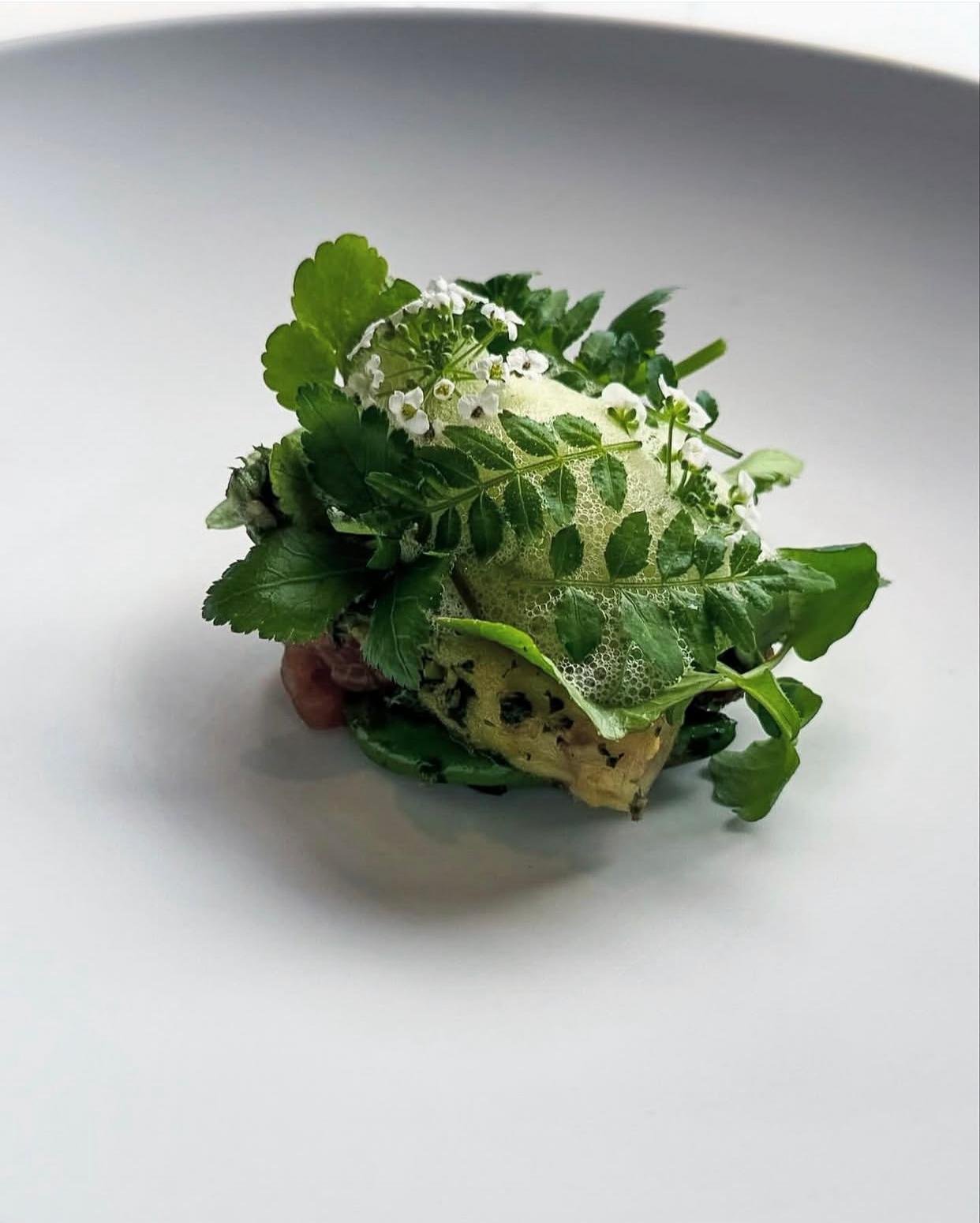
© Esquisse
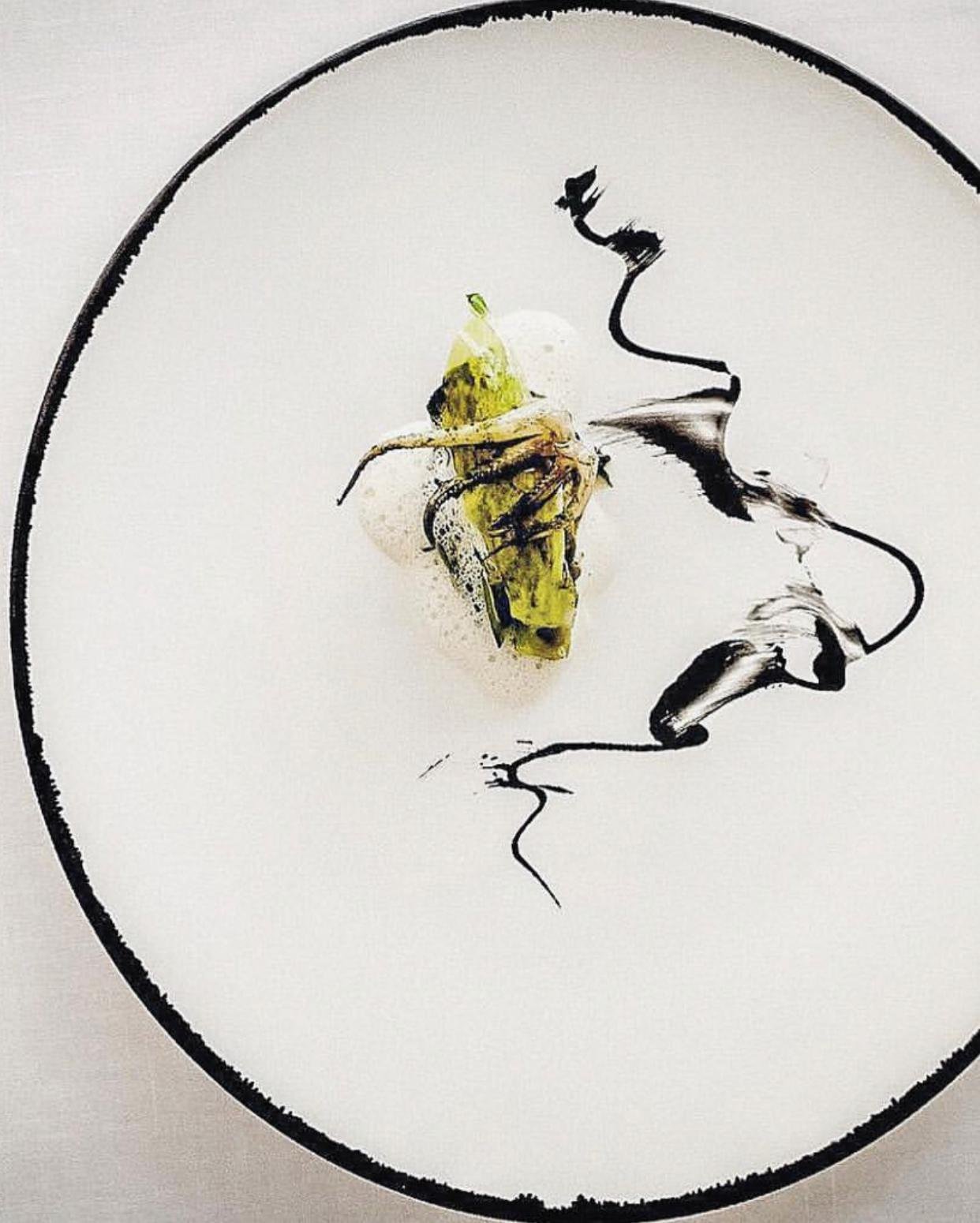
© Esquisse
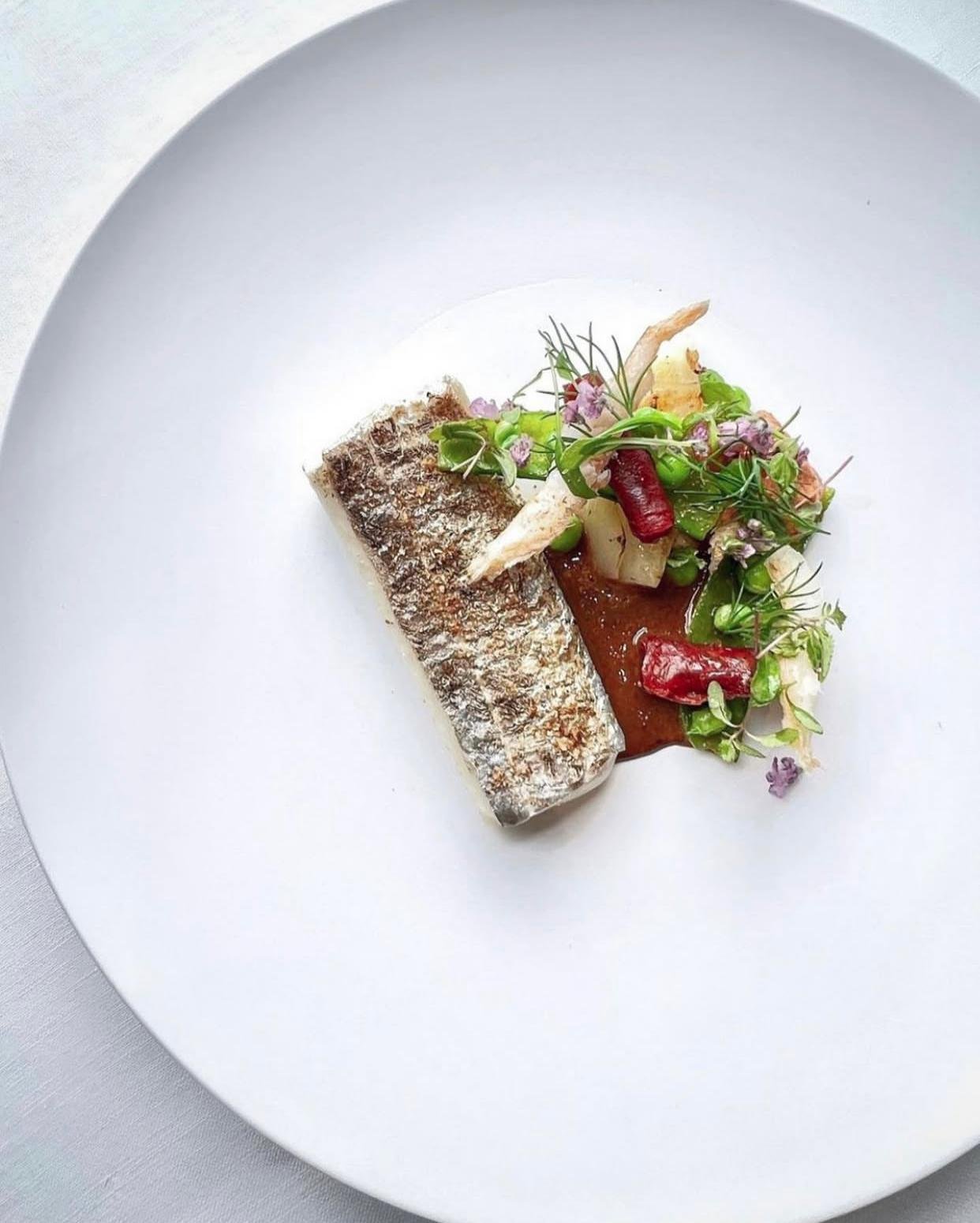
© Esquisse
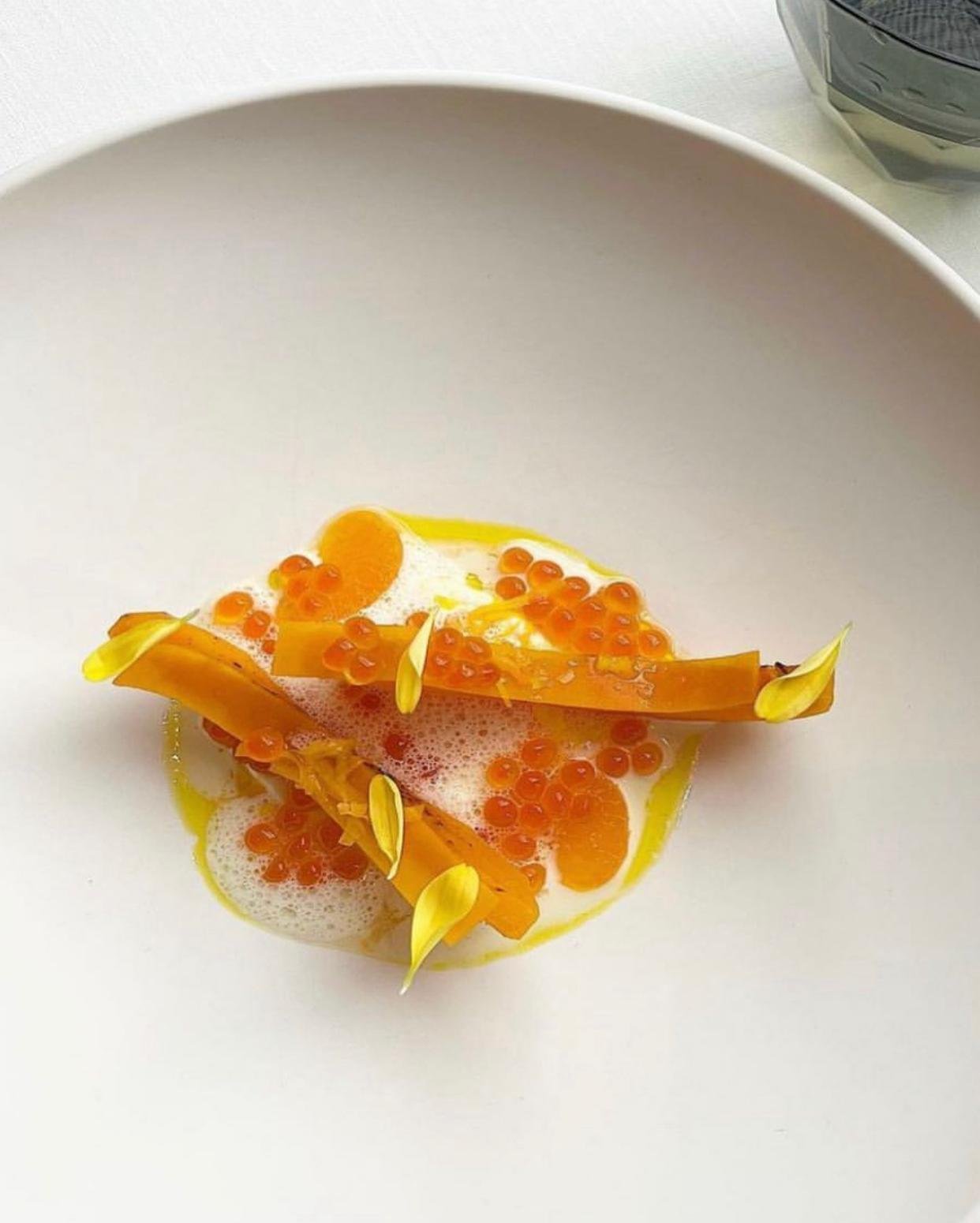
© Esquisse
© Esquisse
© Esquisse
© Esquisse
© Esquisse

© Esquisse
© Esquisse
© Esquisse
© Esquisse
© Esquisse
© Esquisse
© Esquisse
FAQ — Esquisse Tokyo
· • • • ·
1. Where is Esquisse located, and why is this address decisive?
Esquisse sits in the heart of Ginza — Tokyo’s most disciplined and geometric district.
In this ultra-structured environment, cuisine gains clarity:
— calm streets,
— vertical light,
— a steady rhythm.
Ginza imposes a silent rigor.
Esquisse fits naturally within it.
· • • • ·
2. What is the restaurant’s overall atmosphere?
The atmosphere is minimalist, stable, and absorbing.
No showcase, no excess.
— precise lighting,
— controlled silence,
— slow movements,
— intentional neutrality.
Everything serves one purpose:
to create a mental space where every detail reads clearly.
· • • • ·
3. What is Esquisse’s culinary philosophy?
Esquisse develops a conceptual yet disciplined cuisine built on three principles:
— pure Japanese products,
— sharp French technique,
— sober contemporary composition.
The cuisine does not seek surprise.
It seeks to organize taste.
· • • • ·
4. How can Esquisse’s dishes be described?
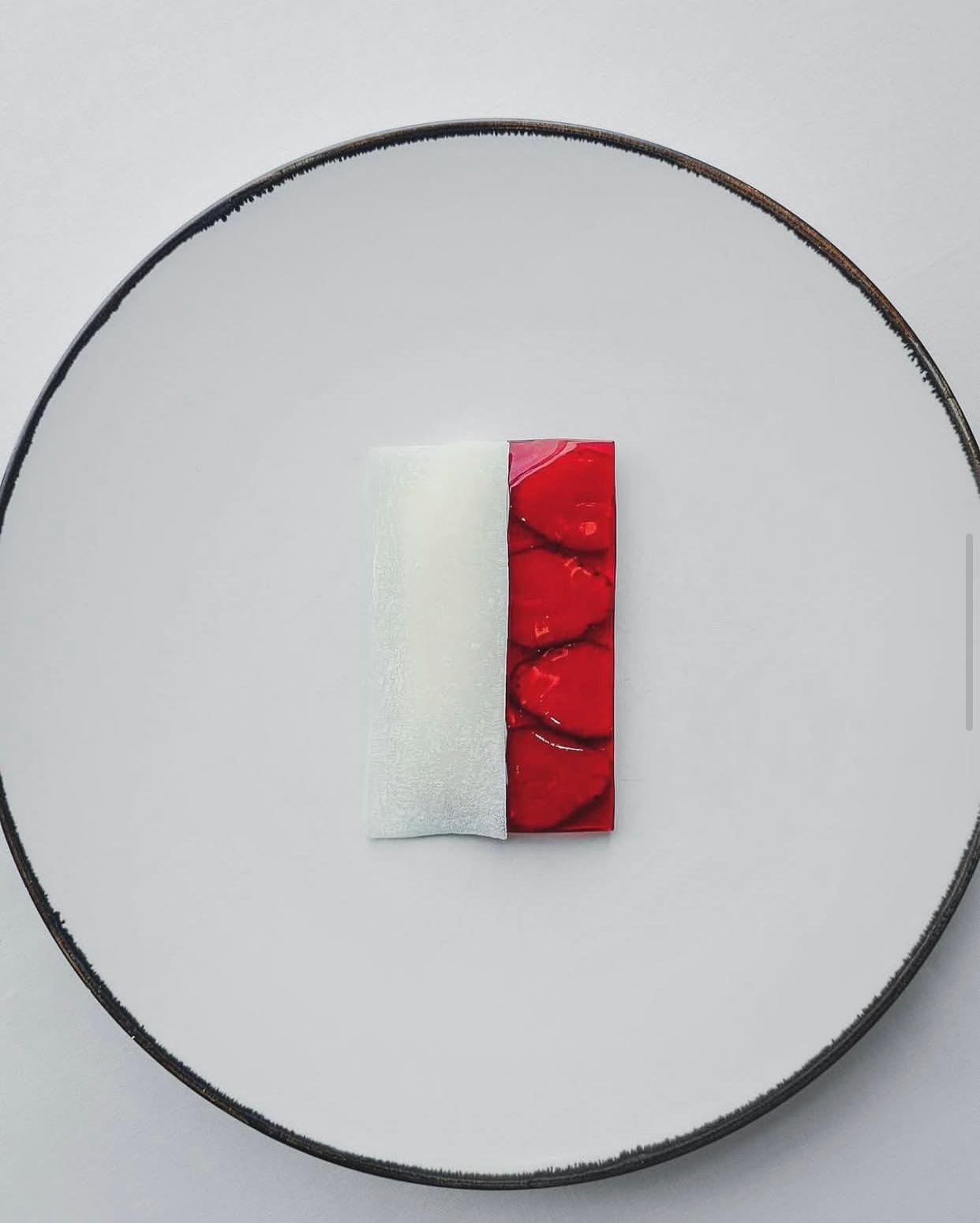
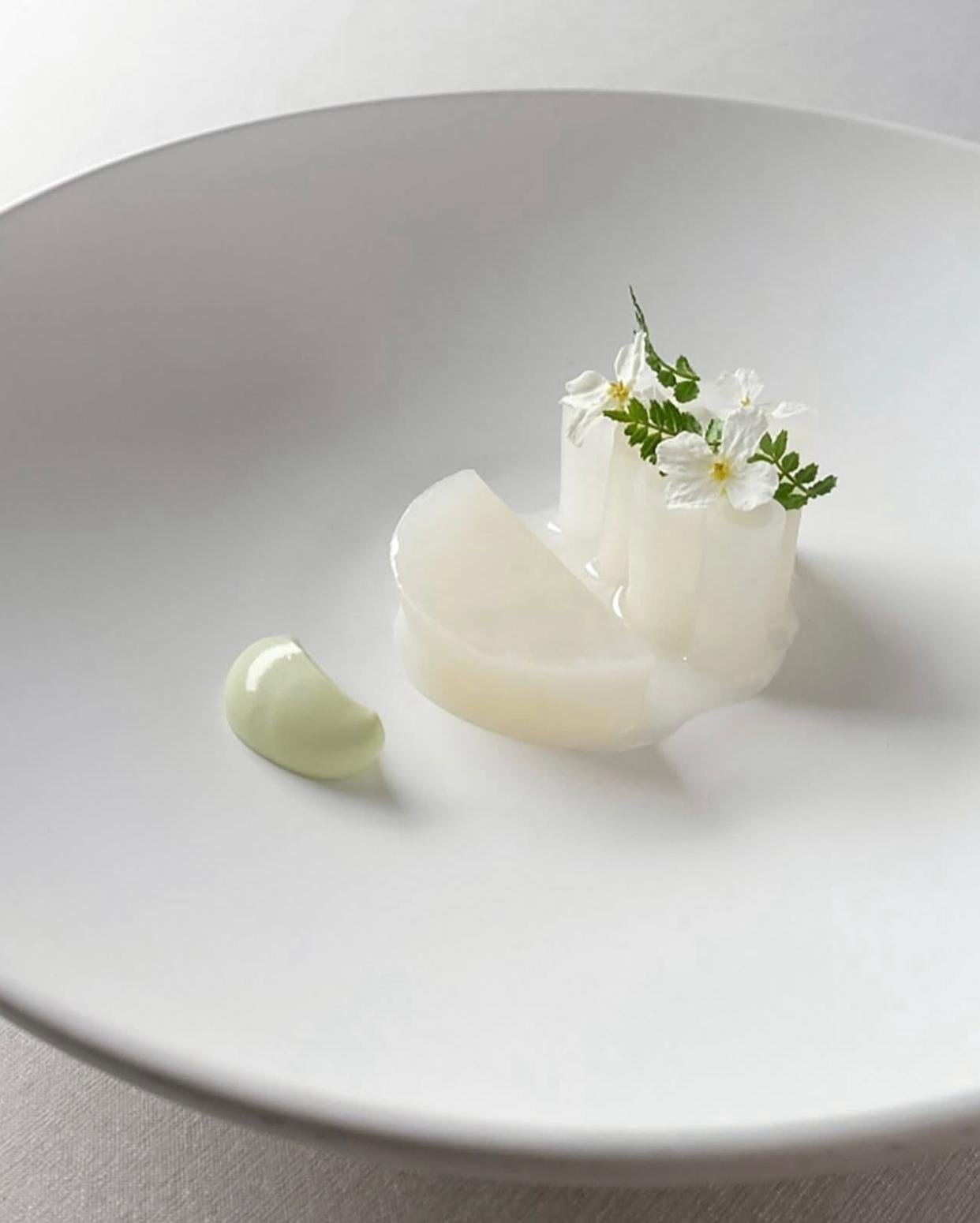
Each dish is a construction:
— few elements,
— graphic lines,
— layered textures,
— millimetric volumes,
— controlled colors.
Every plate follows its own internal logic.
Nothing is added without function.
· • • • ·
5. Is the cuisine emotional?
No.
It is analytical.
The chef offers a reading of taste:
what is deep, what is light, what brings tension.
The meal functions as a method of understanding,
not a narrative.
· • • • ·
6. How does the service operate?
Service follows Tokyo’s codes:
— precision,
— discretion,
— no emphasis,
— clean gestures.
It does not seek to communicate.
Its goal is to stabilize the experience.
· • • • ·
7. Are portions small?
Yes — by principle.
Esquisse values exact density, not quantity.
Portions are designed to support:
— flavor concentration,
— controlled variation,
— rhythmic consistency.
· • • • ·
8. What does the progression of a menu look like?
It is a mental sequence:
— ascent,
— cut,
— breath,
— final balance.
The progression is never decorative.
It is designed for clarity.
· • • • ·
9. Is the restaurant suitable for business meals?
Yes.
It is one of Ginza’s best environments for serious conversations:
— spaced tables,
— perfect acoustics,
— stable rhythm,
— silent service.
Esquisse allows full concentration.
· • • • ·
10. What is Esquisse’s sustainability approach?
A technical, sober responsibility:
— strict selection of Japanese ingredients,
— rigorous seasonality,
— millimetric material usage,
— real waste limitation,
— deep understanding of local cycles.
Responsibility is integrated into every step —
never displayed.
· • • • ·
11. Why does Esquisse attract so much attention from international gastronomes?
Because it offers a rare form of cuisine:
conceptual, precise, contemporary, and perfectly aligned with Tokyo’s sensibility.
Each dish has a form, a line, a trajectory.
Its coherence is immediately recognizable.
· • • • ·
12. Why does Gloss Tokyo highlight Esquisse?
Because the restaurant aligns perfectly with the core framework:
— 50% gastronomic luxury conceived as structure,
— 30% exact craftsmanship in every gesture,
— 20% integrated technical sustainability.
Esquisse represents a clear, disciplined, fully modern cuisine.
A model of precision within Tokyo’s dining scene.
· • • • ·
ESQUISSE
© Esquisse