


© Hermès

© Hermès

© Hermès
HERMÈS
Hermès Ready-to-Wear Tokyo
Majestic Sobriety Under a Light That Accepts Only What Is True
· • • • ·
The Spirit of the Place — Tokyo, the City That Approaches Hermès as Functional Art
Tokyo does not view a Hermès garment as fashion.
It treats it as a utilitarian object — a lifelong companion, an aesthetic tool built to endure.
In a city where every gesture carries meaning, where precision is a language, where beauty is measured through stability and accuracy, Hermès finds a rare resonance.
Japanese light — neutral, controlled, almost meditative — reveals:
— the stability of leather,
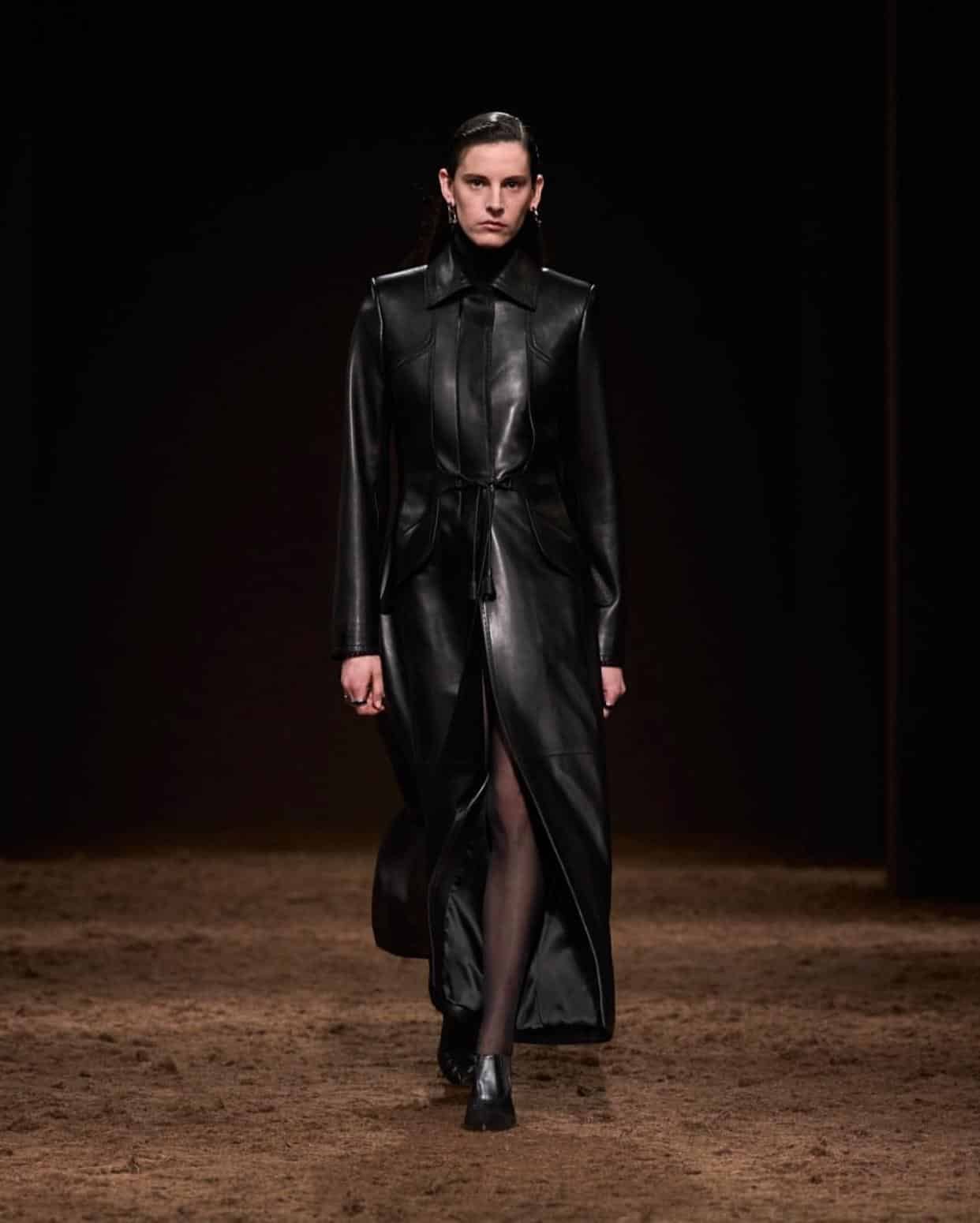
— the verticality of a coat,
— the density of cashmere,
— the purity of a hand-sewn seam.
Hermès fashion is never a demonstration.
In Tokyo, it becomes a quiet presence, an exactness, an evidence.
· • • • ·
Signatures — Materials, Lines, Codes
1. Materials — The Sense of the Hand Before the Eye
Tokyo has a tactile culture.
People touch, weigh, evaluate.
Hermès, the Maison of absolute material mastery, finds here its natural environment:
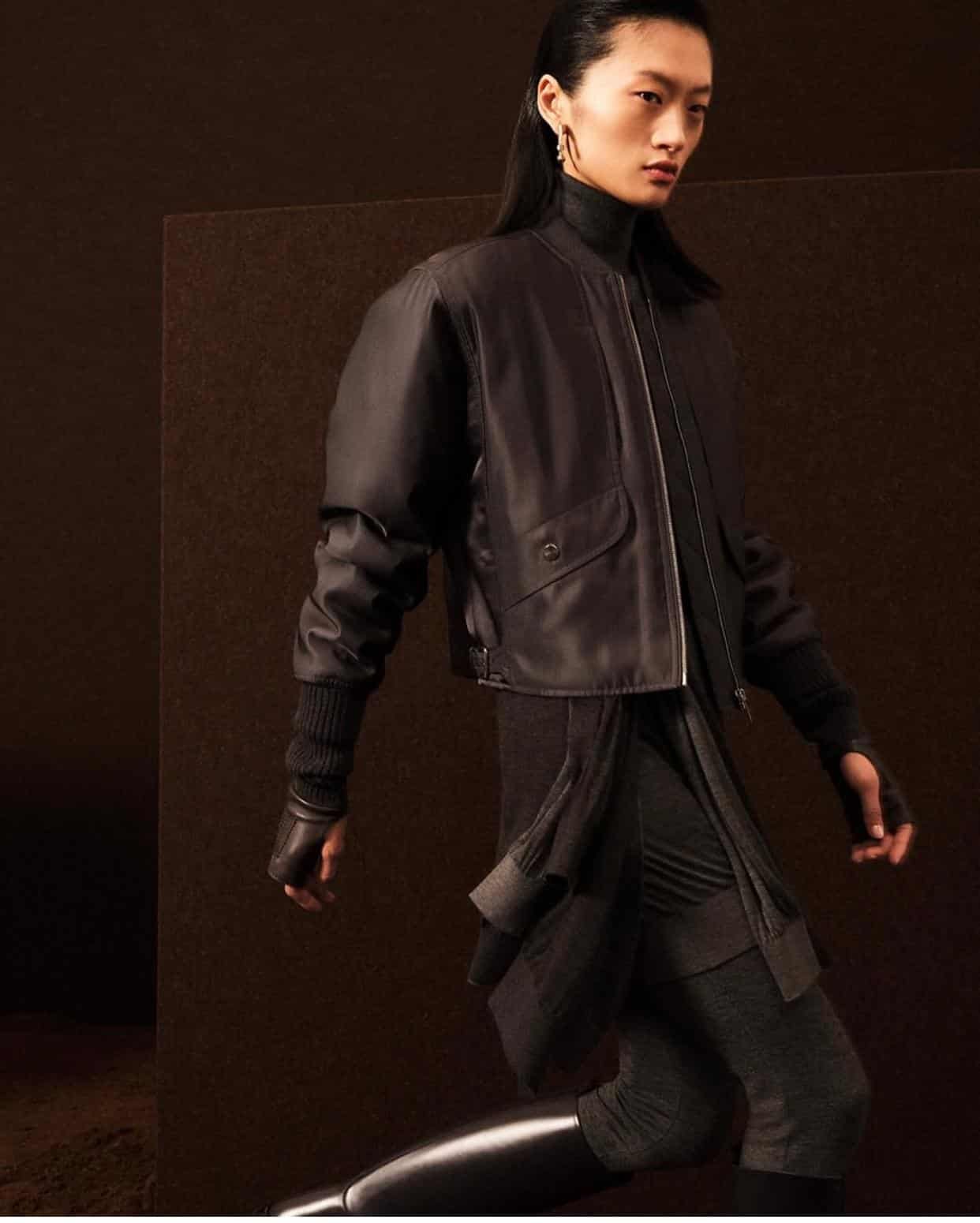
— smooth or grained leathers with disciplined touch,
— deep, structured silks,
— dense cashmeres,
— cottons with impeccable weave,
— wool fabrics that retain their stability in movement.
Japanese light does not amplify.
It confirms quality.
In Tokyo, a Hermès fabric is not judged for style —
it is evaluated for truth.
2. Lines — Purity Becoming an Inner Silhouette
At Hermès, the cut is silent.
No effect, no excess, no unnecessary tension.
Tokyo understands this absence of noise.
In a city of precise gestures, a Hermès line reads as a just form, a controlled breath, a fundamental equilibrium.
Hermès garments have a rare quality:
they live with the body instead of imposing style onto it.
Tokyo values exactly this.
3. Codes — From the Horse to Abstraction
Hermès codes are not displayed.
They whisper.
The Horse
→ An internal movement, not an emblem.
Hermès Color
→ Not brightness, but mineral depth.
The Carré
→ A textile architecture, not decorative motif.
Leather
→ Functional nobility, not outward signal.
In Tokyo, this deliberate restraint is perceived as a superior form of elegance.
· • • • ·
Experience — Hermès Through the Japanese Gaze
In Hermès boutiques in Tokyo, silence is a form of respect.
Light is soft, volumes are open, distances are measured.
The garment is not staged.
It is made available to the eye.
Japanese clients observe:
— the density of a yarn,
— the precision of saddle stitching,
— the behavior of a coat in movement,
— the stability of a dye,
— the internal logic of a cut.
Here, Hermès is not luxury.
It is visual and tactile discipline.
· • • • ·
Durability — The Nobility of Long Time
In Tokyo, durability is a cultural virtue.
One does not consume.
One chooses.
One keeps.
One repairs.
One transmits.
Hermès has followed this logic since the beginning:
— noble, traceable materials,
— omnipresent repairability (saddlers, leatherworkers, Hermès Japan artisans),
— garments designed as durable objects,
— optimized cutting,
— controlled dyeing,
— excellence of traditional gestures.
Hermès does not need to explain responsibility.
It is embedded in every fiber, every stitch, every hide.
Tokyo recognizes this truth.
· • • • ·
Conclusion Gloss Signature™
Hermès Ready-to-Wear Tokyo is:
— material speaking before style,
— a line readable under the most demanding light,
— sobriety with its own quiet majesty,
— craftsmanship that is visible and verifiable,
— durability understood as nobility,
— elegance that never seeks effect.
In Tokyo, Hermès is not a garment.
It is a life companion,
an object of accuracy,
a form of truth.
The city does not ask for spectacle.
It asks for mastery.
Hermès responds with incomparable depth.
· • • • ·
© Hermès
© Hermès

© Hermès

© Hermès

© Hermès

© Hermès

© Hermès

© Hermès
© Hermès

© Hermès
© Hermès

© Hermès

© Hermès

© Hermès
© Hermès

© Hermès

© Hermès

© Hermès

© Hermès

© Hermès

© Hermès

© Hermès
FAQ — Hermès Ready-to-Wear Tokyo
· • • • ·
1. Why is Tokyo such a natural environment for Hermès fashion?
Because Tokyo values the same principles as Hermès:
precision, sobriety, and truth in craftsmanship.
Japanese light — neutral, stable, disciplined — reveals:
— the density of cashmere,
— the regularity of saddle stitching,
— the steadiness of a cut,
— the stability of natural dye.
Tokyo does not seek effect.
It seeks coherence.
And Hermès, a Maison of long time, aligns naturally with this expectation.
· • • • ·
2. How does the perception of Hermès differ between Paris and Tokyo?
In Paris, Hermès is seen as quiet luxury —
the heir to rare, noble craftsmanship.
In Tokyo, Hermès is viewed as a tool for life,
an aesthetic truth,
a durable companion.
Japanese clients read:
— the cut,
— the structure,
— the material,
— the logic of use.
Where Paris admires elegance,
Tokyo measures accuracy.
· • • • ·
3. Why do Hermès materials gain such presence in Japan?
Because Tokyo has a tactile culture.
One touches leather.
One weighs fabric.
One evaluates thickness, density, stability.
Hermès materials — heavy cashmere, structured silk, saddle leather, technical wool —
all withstand this demanding interpretation.
Material becomes a language.
And Hermès speaks it better than anyone.
· • • • ·
4. Are Hermès codes perceived differently in Japan?
Yes — because Tokyo sees essence, not appearance.
The Horse
→ an internal movement, a line, a controlled energy.
The Carré
→ a piece of textile architecture.
Hermès Color
→ not brightness, but mineral depth and chromatic stability.
Leather
→ functional nobility, not symbolism.
Tokyo understands Hermès restraint.
This mastered simplicity is considered one of the highest forms of elegance.
· • • • ·
5. Why is the Hermès line described as “silent”?
Because it never tries to attract attention.
The Hermès line is designed to:
— accompany the body,
— stabilize the silhouette,
— respect movement,
— last.
This visual silence is perceived in Japan as mastery:
a garment that does not need to speak loudly is a garment you can trust.
· • • • ·
6. Are Hermès pieces specially adapted for the Japanese market?
No.
They are selected with rigor.
Tokyo requires:
— stable materials,
— readable lines,
— impeccable structure,
— strong restraint,
— coherence in use.
The pieces offered are those that naturally express this exactitude.
Hermès does not modify its creations.
It chooses the most fitting for Tokyo.
· • • • ·
7. Why do Japanese clients appreciate Hermès so deeply?
Because Hermès aligns with their fundamental values:
— durability,
— calm,
— visual discipline,
— noble craftsmanship,
— uncompromised quality.
They know that:
a Hermès knit preserves its line,
a Hermès silk stabilizes over the years,
a Hermès leather ages with dignity.
Tokyo values objects that accompany a lifetime.
Hermès is built for that.
· • • • ·
8. How is Hermès craftsmanship perceived in a city as technical as Tokyo?
As a form of poetic engineering.
Every saddle stitch,
every calibrated lining,
every selected hide,
every hand-rolled scarf
is read as a gesture of high precision.
Tokyo values not only the beauty of the gesture —
but the consistency of the gesture.
Hermès is seen as one of the few artisans capable of sustaining such discipline.
· • • • ·
9. Is the Hermès experience different in Tokyo?
Yes — quieter, more measured, more exact.
Boutiques prioritize:
— diffuse light,
— deep calm,
— open spaces,
— carefully controlled visual distance.
There is no spectacle.
There is access to reality.
Japanese clients want to see the truth of the garment.
Hermès presents it to them.
· • • • ·
10. How does Hermès Ready-to-Wear Tokyo follow the Gloss City matrix (50% luxury / 30% craftsmanship / 20% sustainability)?
50% Luxury
— pure line,
— chromatic depth,
— discreet nobility of materials,
— calm presence.
30% Craftsmanship
— saddle-stitch precision,
— refined hand-finishing,
— perfect cuts,
— unique textile and leather expertise.
20% Sustainability
— traceable materials,
— embedded repairability,
— exceptional longevity,
— culture of long time.
Hermès Ready-to-Wear Tokyo may be the most accurate expression of the Gloss City model:
quiet luxury,
readable craftsmanship,
natural responsibility.
· • • • ·
HERMÈS
© Hermès